

A shopper decides she wants a new pair of running shoes. She doesn’t open Google. She asks an AI. Thirty seconds later, she has a recommendation—three options compared by cushioning and heel drop, a note on which holds up best for marathon training, and a direct link to buy.
Your brand may be in that answer. But your website almost certainly didn’t put it there.
AI brand visibility is shaped by third-party voices, not your owned content. According to McKinsey’s 2025 research on AI-powered search, a brand’s own website accounts for just 5–10% of what AI search actually draws from—the rest comes from publishers, affiliate sites, and user-generated content. In categories such as consumer packaged goods and financial services, third-party share exceeds 65%.
That gap is the Answer Era.
I’ve spent the last year working with brands that poured budget into owned content and technical SEO while the conversation about their products played out in creator reviews, publisher comparisons, and affiliate-enabled content they didn’t commission and couldn’t measure.
The question AI changes for marketing leaders isn’t whether to keep investing in SEO. It’s whether you’re investing in the voices AI actually draws from when someone asks about your brand.
SEO still matters. It’s just no longer the whole game. Owning your content layer remains important—but AI draws its answers from a much wider pool, and that pool is dominated by third-party voices.
Your affiliate partners and influencer creators have always driven traffic and conversions. Now they have a second job: shaping how AI describes and recommends your brand before a consumer ever decides to search.
What actually changed about AI search and brand discovery
The shift from search to AI isn’t a user experience upgrade. It’s a structural change in how discovery works.
Search produced a ranked list of links. You competed for position. The playbook told you to optimize your content, earn domain authority, land in the top three, and capture the click.
It worked.
AI produces a single synthesized answer. There is no position two or position three. There is the answer—assembled from sources the AI already trusts—and everything else.
The Wall Street Journal framed it as a billion-dollar question hanging over the marketing industry: when AI answers the question, who earns the citation, and why? The answer isn’t random. AI systems draw from the web’s most credible, most frequently cited voices on a given topic—the creators who reviewed the product in depth, the publishers who built comparison tools over years of consistent coverage.
Street Fight also noted the game moved from ranking in AI results to influencing them. Ranking is algorithmic. Influencing is relational.
The brands that understood this early—the ones that had already invested in creator programs and built real relationships with publisher partners—found themselves with an advantage they hadn’t planned for. Their partners were already being cited, and their brand was already in the answer.
The era shift at a glance
| Search Era | Answer Era | |
| How discovery works | Ranked list of links | Single synthesized answer |
| What you competed for | Position in results | Presence in the answer |
| The winning strategy | Optimize your own content | Invest in third-party voices |
| What earns it | Domain authority | Affiliate and creator credibility |
| The metric that matters | Click-through rate | AI search visibility |
Where AI answers come from: affiliate content, publishers, and creators
Evertune’s analysis of the top 10,000 content sources referenced across major AI models found that more than 40% of that content either contains affiliate links or is sponsored. The AI citation layer and the partnership network aren’t running in parallel.

They’re the same thing. The content your affiliate partners and creator collaborators produce isn’t just driving conversions—a significant share of it is being indexed, trusted, and cited by the systems shaping purchase decisions before a consumer ever reaches your website.
Adobe’s data, cited in the impact.com x Evertune partnership announcement, shows the scale of what’s shifting: traffic to US retail sites from generative AI sources surged 4,700% year-over-year as of July 2025. That’s a redistribution of brand discovery at a speed the industry hasn’t seen since mobile.
That shift is already showing up in how brands are building their programs. According to impact.com’s 2025 Global State of Affiliate Marketing report—a survey of 818 marketers across eight countries—content and review partners are projected to see a +11 percentage point net growth in brand collaborations over the next year, one of the fastest-growing partner types tracked. Most brands driving that growth haven’t yet connected it to AI search visibility. The mechanism is already working for them.
This is the context in which generative engine optimization (GEO) enters the conversation.
Why affiliate and creator partnerships are your AI visibility strategy
Partnership marketing has always been about activating trusted third-party voices to speak credibly about your brand. That mechanism didn’t change. What AI did was elevate the stakes and make it visible in a new way.
The brands that had already built strong affiliate and creator programs before AI Overviews became a fixture of the search experience are watching their partners show up in AI answers now.
Not because they planned for it. Because they built real relationships with credible voices, and AI systems draw from those voices to answer questions in their category.
I saw this play out firsthand recently. I’ve decided it’s time to take my jogging seriously and train for a marathon (a first for me). Not knowing where to start, I did what most people do now: I asked an AI.
Specifically, I asked which shoes are best for marathon runners. The answer came back with a solid list of recommendations. When I looked at the source data behind the response, the LLM cited an article from Tom’s Guide, a publisher that uses affiliate links to drive traffic to shoe retailers and earns commissions on resulting sales. One question, one AI answer, one affiliate article at the center of it.
The measurement frame hasn’t caught up yet. Most programs still optimize for last-click attribution—who closed the sale. AI rewards something different: who shaped the answer before the consumer ever started comparing options. Those are often the same affiliate partners and influencer creators. We’re just not paying them like it.
That misalignment is already costing programs. According to impact.com’s report, 74% of brands increased their affiliate investment due to rising costs in paid channels. The pressure driving that reallocation and the AI visibility opportunity are pointing in the same direction. Brands that connect those two dots will move faster than those treating them as separate problems.
It’s worth pausing on why affiliate marketing keeps winning these moments. The channel predates the internet. It has outlasted search algorithm overhauls, the rise and fall of social platforms, the death of the cookie, and every declared obsolescence of the affiliate model itself.
That durability isn’t luck. Affiliate marketing was built around a mechanism that doesn’t break—a trusted third-party voice recommending something to someone who already trusts them. That’s word of mouth with accountability built in. AI is just the latest environment that mechanism has walked into, and it’s thriving here for exactly the same reason it always has. The channel adapts because the human behavior underneath it doesn’t change.
As agentic commerce develops—AI systems that don’t just answer questions but complete purchases—the content produced by affiliate and creator partners becomes even more consequential. The brands with a consistent presence in the AI citation layer today will have a durable advantage when AI moves from answering to acting. That window is open now.
How to build AI brand visibility through your partnership program
None of this is useful if it stays at the level of framing. Here’s where I’d focus.
Audit who’s already generating AI citations for your brand. You can’t invest strategically in what you can’t see. The first move is understanding which affiliate partners, influencer creators, and publishers are already being cited when AI systems answer questions in your category—and whether your brand appears in those answers at all. The impact.com integration with Evertune connects that AI search visibility data directly to the partner relationships you can act on. Start there.
Invest in partners who are shaping the narrative, not just closing the sale. Most programs are built around last-click optimization. AI has shifted where brand preference is set—it’s now happening during the research phase, the comparison, and the shortlisting, before a consumer has visited any brand’s website directly.
The citation dynamic works differently from how search does, too. In search, you needed to be in the top three links. In AI, what matters is how consistently your brand appears across a wider network of high-quality sources because AI synthesizes from many voices, not a ranked few. According to Evertune, the quantity of credible sites citing your brand is a key factor in whether you surface in AI-generated answers. That means the partner breadth question stretches into visibility.
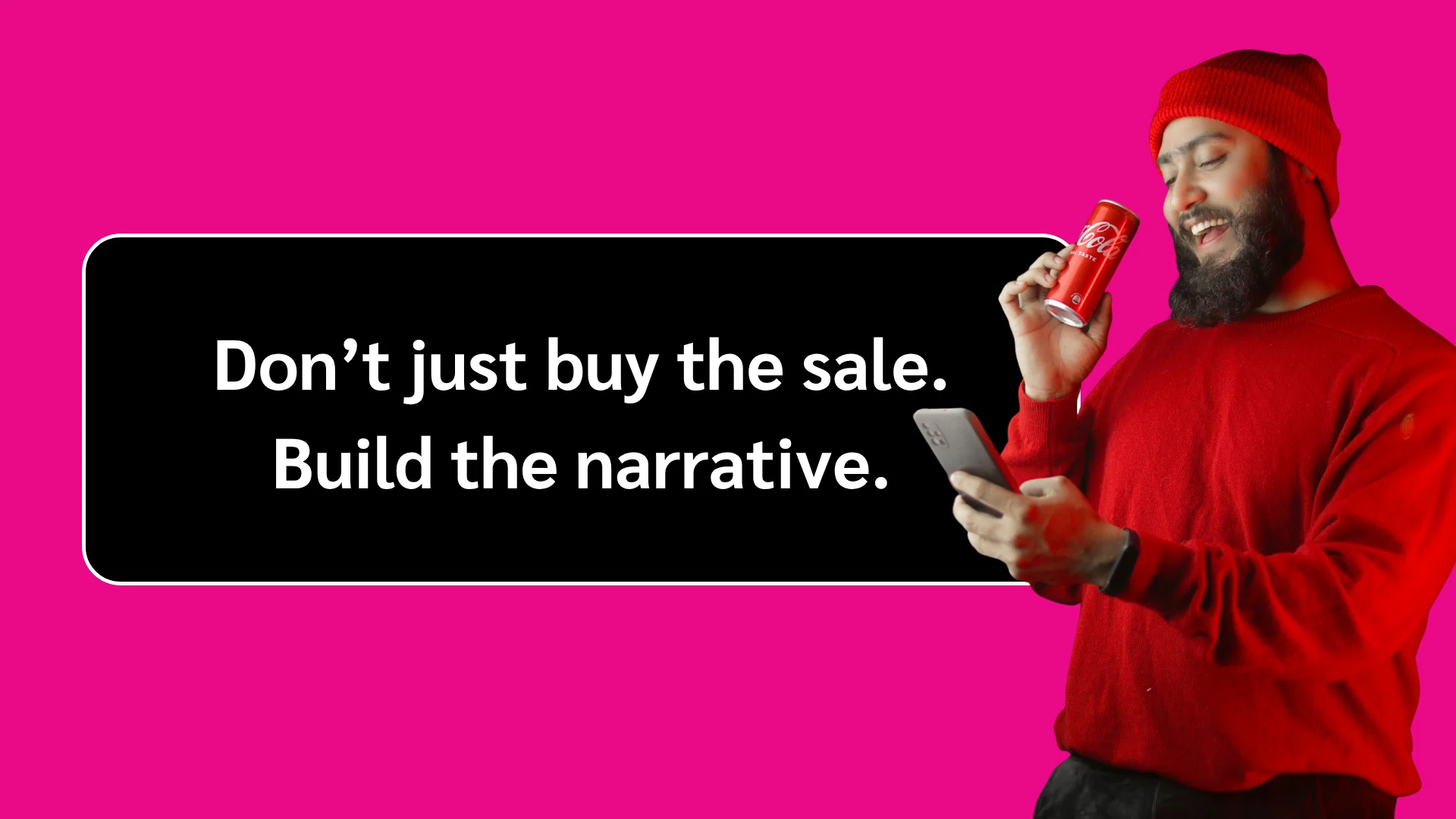
Affiliate partners and influencer creators with established credibility in your category are doing more work for your brand’s AI visibility than a last-click model reflects. The measurement gap is real. So is the opportunity.
Treat your affiliate and creator program as your GEO strategy. You probably already have what you need—affiliate relationships, creator partnerships, a publisher network with editorial credibility built across years of consistent content.
The question isn’t whether to build a GEO marketing strategy from scratch. It’s whether you’re running your existing program with the understanding that it’s doing more than driving revenue. It’s shaping your brand’s AI search visibility. That changes which partners you prioritize and what you measure. It changes the conversation internally about what a partnership program is actually for.
Three moves that shift your program from revenue channel to AI visibility strategy
| Action | What it changes | Where to start |
| Audit AI citations | Reveals which affiliate partners and creators are shaping your AI presence—and whether your brand appears at all | impact.com + Evertune AI visibility data |
| Invest in narrative partners | Shifts budget toward the top-of-funnel authority that drives AI search visibility—not just last-click conversions | Prioritize and activate content publishers and expert creators already in your program who hold category credibility. Then recruit where gaps exist. |
| Reframe as GEO strategy | Changes internal measurement, partner prioritization, and the conversation about what affiliate and creator programs are for | Redefine success: AI citations and brand presence alongside conversions |
Frequently asked questions
The Answer Era is the shift from search-based brand discovery—where AI produces a ranked list of links—to answer-based discovery, where AI produces a single synthesized response drawn from trusted third-party sources. In the Answer Era, brands compete for visibility in the AI answer itself, not position in a results page. According to McKinsey’s research on AI-powered search, brand-owned sites account for just 5–10% of what AI draws from—the rest is affiliate content, publisher sites, and user-generated content.
Generative engine optimization (GEO) is the practice of ensuring your brand appears accurately and consistently in the synthesized answers AI systems produce. Unlike traditional SEO, which focuses on ranking your own pages, GEO works by ensuring the third-party content AI draws from—affiliate partners, influencer creators, and publishers—represents your brand credibly and frequently. GEO marketing is the discipline that treats partnership investment as a core component of AI search visibility strategy.
Affiliate and influencer partners drive AI brand visibility because AI systems draw most of their answers from third-party content—the same content your partners produce. Evertune’s analysis of the top 10,000 sources cited by AI models found that over 40% of that content either contains affiliate links or is sponsored. Brands with strong, credible affiliate and creator networks are the ones appearing consistently in AI-generated answers. For a deeper look, see why offsite content increases brand visibility in AI search.
SEO (search engine optimization) focuses on ranking your own website’s content in traditional search results. GEO marketing (generative engine optimization) focuses on ensuring your brand is accurately represented in the synthesized answers that AI systems produce—which predominantly draw from third-party sources like affiliate content, publisher reviews, and creator-generated content, not brand-owned pages. A brand can have strong SEO but poor AI search visibility if it hasn’t invested in the affiliate partners, influencer creators, and publishers that AI systems cite. Both disciplines are necessary; they target different layers of modern brand discovery.
The constant is trust
AI scales discovery. It cannot manufacture trust.
The voices AI cites most consistently are the ones people already trusted before AI existed—the creator whose review helped someone decide on a purchase, the publisher whose comparison tool they’d bookmarked for years, the affiliate-enabled content that surfaced every time they researched a product category. Trust accumulates slowly. It compounds over time. No optimization shortcut replaces it.
The brands that will hold the AI citation advantage aren’t the ones chasing every new feature. They’re the ones that invested in real relationships with credible affiliate partners, influencer creators, and publishers—and built programs that treat those relationships as growth infrastructure.
We’re still in the early innings of understanding how AI actually shapes purchase decisions—at what stages, through which voices, with what lead times. That data is coming. The brands building their partnership programs now won’t just be ready when it arrives. They’ll already be in the answer.
The work starts now.
Cristy Garcia is the Chief Marketing Officer at impact.com.
Related reading
- Why offsite content increases brand visibility in AI search and overviews (blog)
- impact.com x Evertune: AI search visibility for affiliates (press release)
- How to find affiliate marketing partners at scale through AI-powered discovery (blog)
- impact.com’s 2025 Global State of Affiliate Marketing report (research report)