

Your affiliate program has a ceiling, and if it’s built on coupon and cashback partners, you’ve probably already hit it. That’s what happened to Elite Supplements.
Rising CPCs and heavier retail competition made paid search and social an increasingly expensive way to grow—and the affiliate program that had built the Australian retailer’s 140-store business hadn’t scaled with it. More than 50 partnerships were running through spreadsheets, payments were getting missed, and no one could tell which partners were actually driving growth.
The fix wasn’t a bigger budget. It was treating affiliate management as a relationship-driven channel instead of a transactional one: margin-based commissioning, weekly optimization cycles with partners, and one platform instead of spreadsheet chaos.
According to the impact.com and Elite Supplements case study, affiliates became Elite Supplements’ second-largest revenue channel, delivering 10+ ROAS month over month.
To scale in the modern market, your brand must abandon the transactional view of affiliate marketing and manage its program as a high-value, relationship-driven business development channel.
- Brianna Doe, Founder, Verbatim
- Graeme Boase, Account Director, Growth HQ
- Lindsey Gamble, Influencer Marketing & Creator Economy Consultant and Advisor
- Sam Kimmel, Senior Director of Co-Marketing Partnerships, Hello Sunshine
- Stephanie Harris, CEO, PartnerCentric
- Brian Klais, CEO of URLgenius
The strategic blueprint: 6 expert tips for modern affiliate program management
Programs stuck at a transactional plateau aren’t failing for one reason. They’re making the same mistake in six different places by treating partnerships as transactions to close rather than relationships to build.
- Too much revenue riding on too few partner types.
- Choosing short-term transactions over long-term trust.
- Stifling growth with outdated compensation models.
- Micromanaging content instead of granting creative control.
- Relying on single metrics rather than goal-aligned KPIs.
- Getting bogged down in manual tasks rather than using automation.
Start with whichever gap costs your program the most today, but treat the fix as one operating shift, not six separate projects.
Tip 1: Diversify beyond the “Top 20%” with a full-funnel portfolio strategy
Concentration risk is where the transactional model shows up first. Most affiliate programs run on the Pareto principle that a small group of partners drives most of the revenue. Where you concentrate your partner base determines your risk.
If your top performers are almost all coupon and cashback sites, a single algorithm change or a terms shift can gut your revenue overnight. Boase has watched what happens when brands skip it (as mentioned on the Partnership Economy Podcast). “You’re kind of drying up that funnel without much control over what else is gonna happen.”
The fix is diversifying by funnel stage, not just partner count:
| Funnel stage | Partner type | Role | Signal you’re under-invested here |
|---|---|---|---|
| Lower-funnel | Coupon, cashback, loyalty | Captures demand at the point of purchase | Conversions are strong, but revenue feels capped, no matter how much you spend to acquire |
| Mid-funnel | Review sites, comparison publishers, BNPL | Builds consideration | Traffic looks healthy, but the same few partners get all the credit for closing it |
| Upper-funnel | Creators, influencers, B2B affiliates | Generates net-new awareness | Growth has plateaued and your program can’t explain where new customers are coming from |
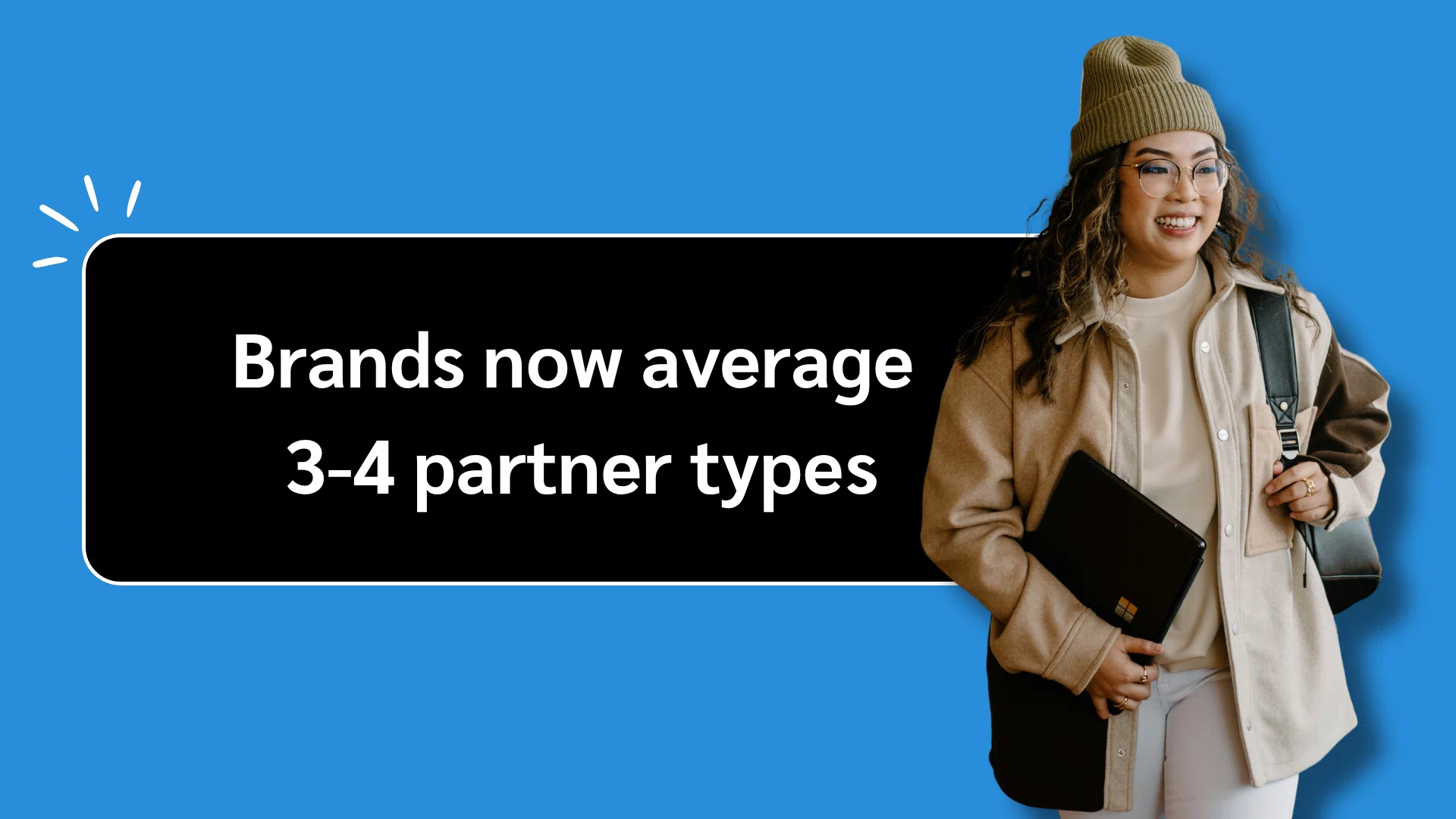
The top layer creates net new demand, while the lower layers exist to capture and convert it. According to impact.com’s 2025 Global State of Affiliate Marketing report, brands now average three to four partner types mapped to the full customer journey. Elite Supplements built this kind of portfolio and grew revenue 3.4% and average order value 3.8% while cushioning against paid media volatility.
Statistic source: impact.com’s 2025 Global State of Affiliate Marketing report
When you find affiliate marketing partners at each funnel stage, the recruitment process becomes strategic rather than volume-based.
Tip 2: Prioritize high-trust, long-term partnerships over one-off campaigns
The relationship deficit isn’t just about partner count. It’s also about depth. A partner who has promoted your product for six months has built credibility with their audience that a single sponsored post cannot buy. Their followers have seen the product in context, across multiple pieces of content, and the recommendation feels organic because it is.
Kimmel called one-off social campaigns “forgettable” on the same podcast. “The ROI is much greater when you have a year-long collaboration,” she said, because sustained relationships build brand equity that “gets buried under so much other noise” when you run one-offs instead.
| What you lose with one-off campaigns | What you gain with long-term partnerships |
|---|---|
| Content that reads as sponsored and gets scrolled past | Recommendations that read as organic because they are |
| A new onboarding cycle every time you activate a partner | Partners who already know your product, tone, and compliance requirements |
| Negotiation and contracting overhead on every campaign | Partners who negotiate once and execute repeatedly |
| A partner relationship that resets to zero after each post | A partner who becomes a self-sufficient brand champion over time |
Creators feel the same shift from the other side of the relationship. Gamble described on the impact.com podcast how a brand invested in him early in his career. “They invested in me as a creator when I was early on, and helped me work with them and put money in my pocket,” he said. Years later, he still spends on their products before a competitor’s, even when the competitor is cheaper.
Offer long-term commitment, and you attract the best partners and keep them when a competitor waves a higher payout. But long-term commitment is a hard sell when your compensation model punishes the partners you want to retain most.
Tip 3: Evolve compensation with hybrid and value-driven models
The compensation gap is where the relationship-driven model either gets funded or quietly reverts to a transactional model.

Last-click attribution punishes top-of-funnel partners. A content creator who drives the awareness that leads to a sale gets nothing if a coupon site captures the last click. Over time, your best upper-funnel partners leave, and your program concentrates further into the coupon partners you were trying to diversify away from.
According to the same impact.com report, first-click and last-click are now the least-used attribution approaches, and adoption of hybrid compensation is accelerating.
Gamble described the logic on the podcast. “It’s like being a salesperson. You have a base that might be lower, but there’s so much more upside.” The base pays for the content, and the upside keeps ROI accountable.
Hybrid compensation pairs two revenue streams for the partner.
Elite Supplements put this into practice when they moved from a blanket 10–14% CPA to margin-based dynamic commissioning with differentiated rates for new vs returning customers. Higher commissions for new customer acquisition incentivized partners to drive the growth Elite Supplements needed, while protecting margins on repeat purchases.
Top partners expect more than fair compensation. They expect creative respect.
Tip 4: Co-create and equip partners with creative control and shared values
Creative control is the foundation of the relationship you’re trying to build. The transactional mindset shows up in content production as micromanagement. It appears as scripted messaging, mandated talking points, and approval loops that strip the partner’s voice out.
Creative micromanagement is one of the fastest ways to drive away the upper-funnel partners your relationship model depends on. The same impact.com report found that 77% of creators agree that brand-curated communities encourage genuine, relatable content. You already know this from managing partners. Your best content comes from people who feel ownership over it.
Harris put it directly on the podcast, “It’s somebody who’s actually used it, tried it, is recommending it, and that’s what consumers resonate with.” Grant creative latitude instead of scripting the output, and you’ll see the difference in performance.
The practical approach is bidirectional co-creation. You provide product positioning, key messages, and campaign goals through a creative brief. Your partner provides audience insight, tone, and format expertise. As Doe explained on the same podcast, “as long as you’re willing to put certain parameters in place to support the influencer or creators along the way, it’s gonna make it easier to give creative control.”
| What you provide | What your partner brings | What you get in return |
|---|---|---|
| Product positioning and key messages | Knowledge of what their audience actually responds to | Content that lands as a recommendation instead of an ad |
| Campaign goals and guardrails | Their own tone, format, and platform instincts | Creative that fits the platform instead of fighting it |
| Trust to execute without a script | Time and effort invested in getting the product right | A partner who defends your brand instead of just posting about it |
Measuring whether all this creative latitude is working requires a different approach to performance evaluation.
Tip 5: Measure with intent, then make it visible
A relationship-driven program only stays funded if you can prove it’s working, and a single transaction-based metric can’t do that. It flattens the value picture and starves the upper-funnel partners your program needs.
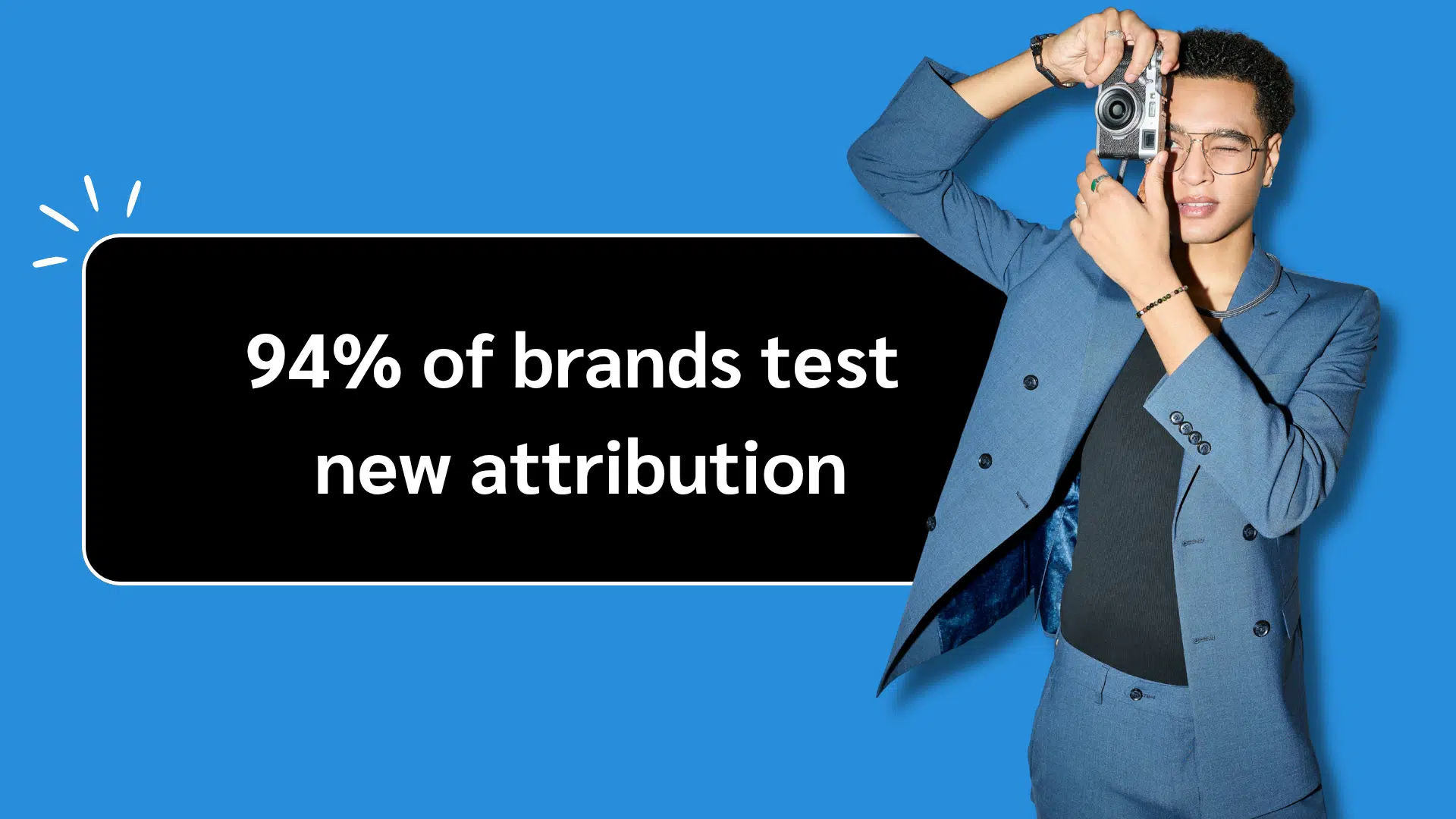
The impact.com report data also showed that 94% of brands now test alternative attribution models. Single-metric measurement isn’t the standard anymore, it’s the exception.
Statistic source: impact.com’s 2025 Global State of Affiliate Marketing report
Set goal-aligned KPIs, then share them
Define primary and secondary KPIs for each campaign and rank them rather than treating them equally. Then give partners visibility into how they’re tracking against both. For instance:
| Campaign type | Primary KPI | Secondary KPI |
|---|---|---|
| Brand awareness | Impressions and engagement | Conversions |
| New market entry | New-to-brand customer rate | Cost per acquisition |
| Product launch | Content volume and reach in the first 30 days | Early conversion rate |
“It’s okay to have two,” said Doe on The Partnership Economy Podcast, “just make sure that you’re stack ranking them.”
The ranking only helps if partners can see where they stand against it. Kimmel highlighted on the podcast that she found her best creators wanted exactly that. “Smart creators were always wanting more data,” she said, valuing sessions where her team could “sit down with them and tell them what was working.”
Shared visibility also removes the friction from harder conversations. A commission change or a performance dip lands differently when the partner has already seen the numbers.
Tip 6: Set partners up for success through automation and enablement
Most partnership managers are still spending their time on tracking, reporting, and contracting instead of on the relationships that actually grow the program.
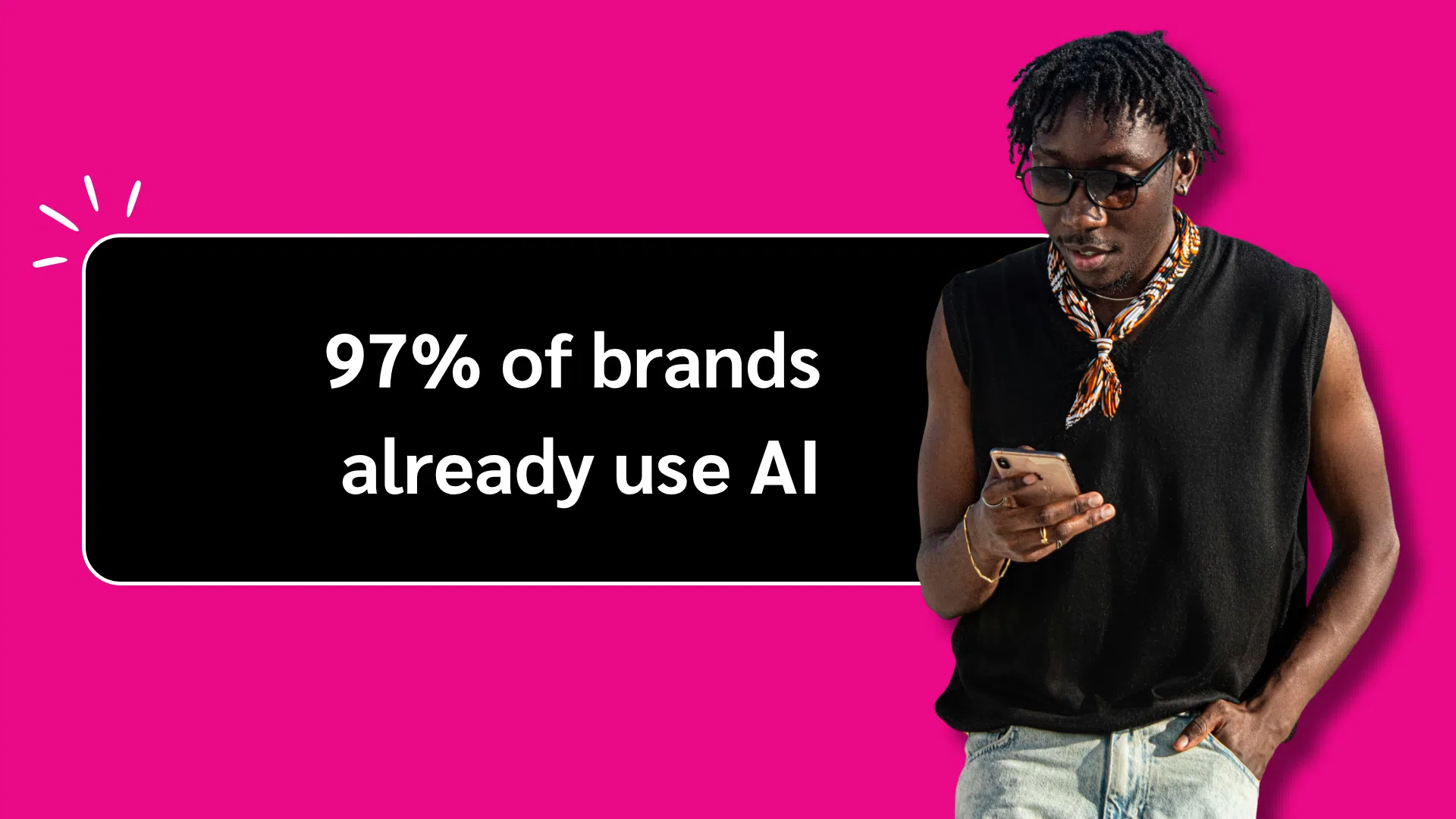
The impact.com findings show 97% of brands already use AI in their affiliate strategy, but most deploy it for only two to three use cases. The biggest opportunity brands identify is using AI for program management and partner personalization, cited by 31% of respondents. The gap between adoption and depth is where the competitive edge sits.
Statistic source: impact.com’s 2025 Global State of Affiliate Marketing report
Klais explained the shift on impact.com’s podcast. AI is where marketers can “compress and condense and eliminate a lot of the administrative work,” he said, “so that I can have more time to generate revenue in a relationship-based sense.”
Elite Supplements is proof of how those gains compound. Automating reporting cut the team’s monthly reporting time by 88%, freeing them to focus on partner recruitment and the Singapore expansion instead of spreadsheets.
Automation only pays off if the time it frees gets reinvested in your partners, not absorbed elsewhere.
Frequently asked questions
Effective affiliate program management starts with treating your program as a relationship-driven business function. Diversify your partner base across the full customer journey, invest in long-term partnerships, design compensation models that reward value beyond last-click conversions, and share performance data transparently. Set goal-aligned KPIs for each campaign, equip your partners with the materials they need, and use automation to free your team for strategic and relational work.
Managing an affiliate program across multiple countries requires unified tracking and reporting systems and partners who operate across markets. Elite Supplements used this approach when expanding from Australia into Singapore, building on partner relationships that already operated in multiple markets and replicating winning strategies from their primary market. Key considerations include localizing compensation to reflect regional economics, maintaining consistent brand messaging through creative briefs that accommodate cultural nuance, and consolidating cross-market data into a single platform for performance comparison.
Automation improves affiliate program management by handling administrative work that consumes your team’s time: tracking, reporting, contracting, and payment processing. This frees your team for the work automation can’t do: building partner relationships, developing creative, educating partners on new products, and advocating for the channel internally. Brands are expanding their use of AI beyond the two or three initial use cases most programs start with (according to impact.com’s 2025 Global State of Affiliate Marketing report). The biggest growth opportunity is applying it to program management and partner personalization.
Choosing a partnership management platform means evaluating how well any platform supports your operational and strategic needs. Look for automation of routine workflows and attribution that goes beyond last-click, both within a single system that handles diverse partner types. Check for flexible commissioning features like margin-based and dynamic payouts. If international expansion is on your roadmap, verify cross-market scalability with unified reporting.
From channel management to business development
Moving from transactional coupon management to relationship-driven business development requires more than tactical changes to your partner mix or your compensation model. It requires repositioning how the affiliate function operates within your organization. Your job is to run a business development function responsible for executive advocacy, cross-functional growth, and the relationship equity that protects your program when the market shifts.
Relationship equity, the deep trust you build with partners over years of fair compensation, creative respect, and transparent data sharing, is the one edge a competitor can’t copy overnight. It hedges against platform disruptions, SEO volatility, and AI search shifts that are already changing how brands get found.
Start by evaluating your own program against the framework in this article. Where is your partner base thin, and where is your team still doing work that automation should handle? The compounding revenue is waiting in those gaps.
Further reading