

Gusto sells payroll and HR software to small business owners. That’s a harder sell than typical B2C marketing because these buyers need real trust and technical credibility before they act. So instead of recruiting typical promoters, Gusto and impact.com took a different approach.
According to the Gusto and impact.com case study, 81% of the creators recruited were active Gusto customers. 14 of the 17 came directly from Gusto’s own customer list.
These creators—also a type of affiliate lead generation partner—brought something a typical promoter couldn’t fake. They had real credibility running their own business. The team briefed them on the tax season problems they had already solved firsthand, including the filing and compliance work that Gusto automates.
A prospect watching that content got an answer from someone who had lived the problem, not a pitch. That distinction separates affiliate lead-generation campaigns that convert from those that quietly burn budget on cheap, high-volume form fills.
The most successful programs do not chase volume. They treat affiliates as brand-aligned educators who deliver prospects who arrive pre-qualified and ready to convert.
What is affiliate lead generation and how does it work?
Affiliate lead generation is a performance-based system in which trusted partners, such as publishers, creators, or industry experts, introduce your brand to their audiences.
You pay a fee only when a genuinely interested prospect willingly hands over their verified contact information. There is no fee for a look or a click. You only pay for a prospect who already trusts the source that sent them.
That trust is the entire point, and it’s what separates this approach from most lead generation you’ve probably tried before.
Affiliate lead gen vs. ordinary lead gen
Not all lead generation earns its name. Here’s the difference:
| Ordinary lead gen | Affiliate lead gen | |
|---|---|---|
| How it reaches people | Cold calls, scraped contact lists, programmatic pop-ups | A trusted creator, publisher, or expert your prospect already follows |
| Starting point | Interruption | Invitation |
| Volume vs. trust | High volume, low trust | Lower volume, high trust |
| What the prospect feels | Targeted | Informed |
The journey of an educator-driven lead
A high-quality affiliate lead starts with someone else’s expertise instead of your brand. It follows a predictable path. Here’s what that looks like in practice:
- The educational spark. A site like Quality Water Labs publishes an in-depth comparison of water filtration systems, testing performance, cost, and maintenance across several brands.
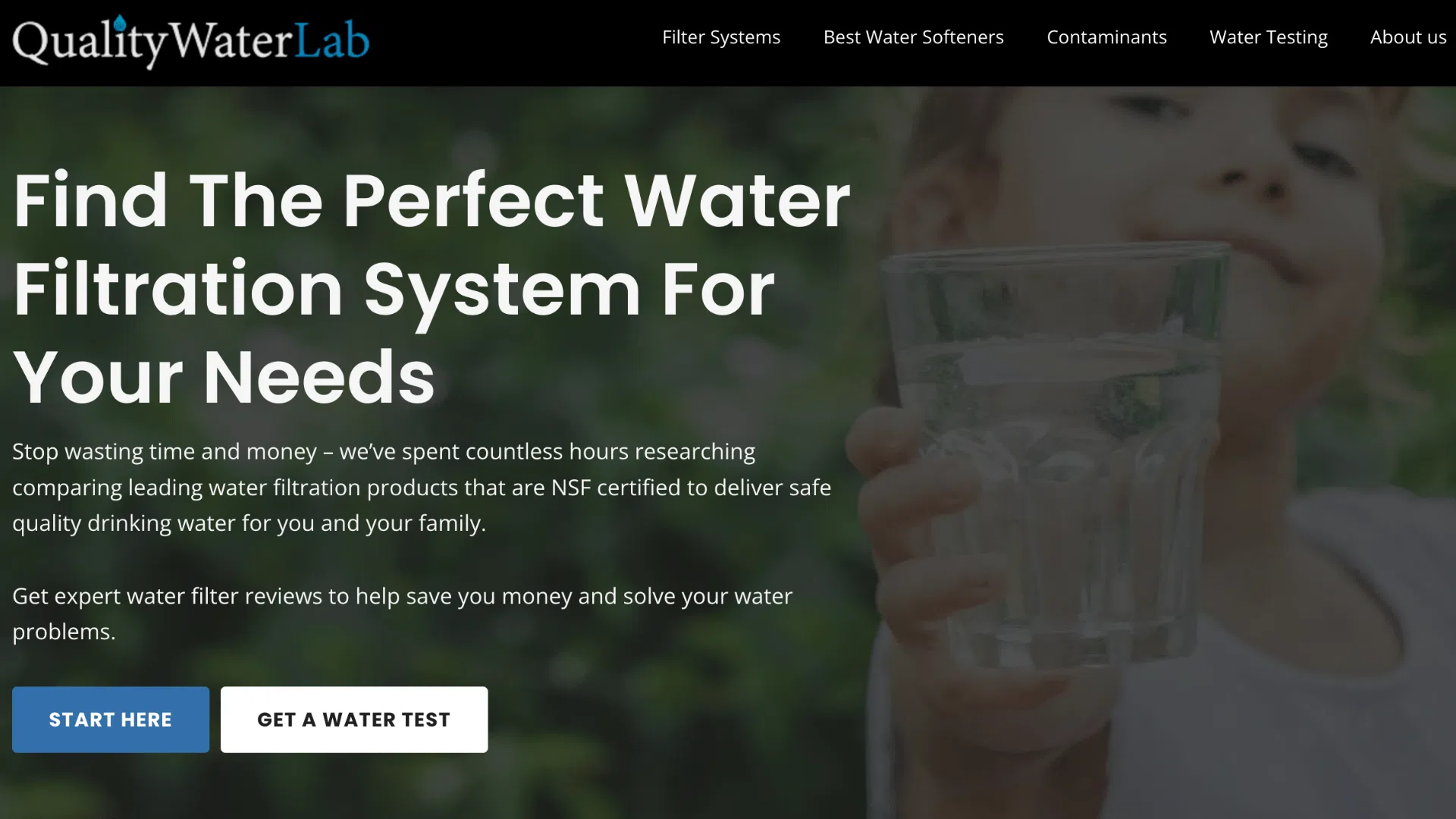
Source: Review and comparison site, Quality Water Labs
- The trust-based recommendation. Somewhere in that comparison, the reviewer points to your filtration system as the best fit for a specific household need, because it genuinely tested that way.
- The intent-driven action. A reader—who’s already spent 10 minutes comparing options and trusts the reviewer’s testing process—clicks through and fills out your lead form on their own.
- The warm welcome. Your sales team picks up a lead who already understands the tradeoffs between filtration systems and why yours fits their specific situation.
The trap of cheap contacts vs. the value of trusted educators
Not all leads cost what they claim. A list of 10,000 contacts at $2 per lead looks like a bargain until you calculate what happens after the purchase.
The cheap lead trap
Bulk lead sellers capture names the same way. These could be an intrusive pop-up, a “spin to win” sweepstakes, or a gated PDF nobody actually wanted. The same list gets sold to you, and then to three of your competitors next week. You’re not buying a lead. You’re buying a name that’s already been contacted, ignored, or annoyed by someone else in your category.
Downstream damage
The sticker price of a cheap lead list is the smallest cost involved. The real damage shows up later:
- Spam complaints. Unvetted contacts didn’t ask to hear from you, so a meaningful share marks your emails as spam.
- Domain reputation. Enough spam complaints and bounces, and inbox providers start routing your legitimate emails to junk, for every contact, not just the bad ones.
- Wasted SDR hours. Your sales team spends hours chasing contacts who don’t remember opting in, don’t recognize your brand, and don’t take the call.
None of that shows up in a cost-per-lead spreadsheet. It shows up in your customer acquisition cost (CAC) three months later, and most brands aren’t even tracking it.
According to impact.com’s 2025 Global State of Affiliate Marketing, only 20% of brands track CAC, a metric that’s used to prove new customer acquisition and marketing efficiency.
If you can’t see the cost, you can’t see the trap.
The educator advantage
A trusted educator works differently. They’re vouching for you instead of selling you a name. Their recommendation is a warm introduction, and the reader arrives at your landing page pre-educated about the problem and pre-screened to see whether your product is a good fit.

That’s why the same “lead” can be worthless from one source and revenue-ready from another.
Side-by-side quality comparison
| Feature | Buying cheap, bulk lists (the “trap”) | Partnering with trusted educators (the quality strategy) |
|---|---|---|
| Lead generation method | Low-quality middle-person using pop-ups or sweepstakes. | Real, visible partners writing helpful articles, newsletters, or reviews. |
| Lead exclusivity | Sold to you and several competitors at once. The same name, recycled. | Delivered through your program alone. No competing brand gets the same introduction. |
| Prospect intent | None. The prospect wanted a discount or a prize, not your product. | High. The prospect read, learned, and chose to act on their own. |
| Sales conversion | Low. Reps chase contacts who don’t remember opting in and don’t recognize your brand. | High. Reps talk to prospects who already understand the product and the problem it solves. |
| Spam & fraud risk | High. Unvetted contacts generate spam complaints and damage domain reputation. | Low. Recipients expect the follow-up because they asked for it themselves. |
A cheap list might cost less per name, but a trusted educator partnership costs less per customer, which is the only number that was ever supposed to matter.
How to set up a quality-first partner program
None of this works if you can’t identify and pay the right partners, which is exactly where volume-first programs quietly fail.
You don’t need a massive partner network to see results. You need the right four or five partners who already have your prospect’s attention, and a platform that makes it simple to find, recruit, and reward them.
Find partners who already teach your audience
Educator partnerships break down the moment you recruit for reach instead of trust.
The first mistake most programs make is chasing follower counts. A creator with 500,000 followers and no authority in your category will send you clicks. A creator with 15,000 followers who’s spent years building trust in your exact niche will send you customers. There needs to be a balance when finding the right partners for your program.
Real authority looks different depending on where you find it. Here are the four partner types worth building your program around:
| Partner type | How they educate the prospect | How does this prequalify them | How to find them |
|---|---|---|---|
| Review and comparison sites | Host peer reviews, detailed feature scorecards, and pricing calculators. | Captures buyers at the bottom of the funnel who are actively choosing between you and a competitor. | • Search Google for “[your industry] + reviews” or “best [product]” • Analyze competitor backlinks to see which review sites link to them • Explore marketplaces like Capterra, G2, and TrustRadius |
| Email partners | Send curated newsletters that break down a problem in depth before naming a product as the solution. | Captures readers who’ve already invested time reading and trust the sender’s judgment before your brand ever enters the picture. | • Search newsletter directories like Inbox Collective or Letterhead • Look for niche newsletters your prospects already subscribe to • Ask existing customers which newsletters they read |
| Content partners | Publish long-form articles, buying guides, and industry analysis that address a reader’s problem before recommending a fix. | Captures readers who arrive already educated in the category, so they’re evaluating fit rather than learning the basics. | • Search for industry publications and trade sites covering your category • Check who your competitors are already sponsoring or quoted by • Look at who ranks for your non-branded, informational keywords |
| Influencers/content creators | Demonstrate real product use through tutorials, day-in-the-life content, or honest before-and-after results. | Captures an audience that already trusts the creator’s judgment on products in this space, so skepticism is already resolved. | • Search relevant hashtags and niche communities on Instagram and TikTok • Look for creators your ideal customers already follow and engage with • Check who’s organically mentioning your product or competitors already |
Choose how to collect lead details
Even a genuine educator partnership can lose its quality advantage at the handoff, so the form itself has to match the moment the reader is in. Once you’ve found the right partners, you still need to decide where the lead form lives.
Brand-hosted model. The partner sends their audience to a landing page on your website, and the prospect fills out your lead form directly. You own the page, the form, and the data from the first click.
Partner-collected form. The prospect fills out a form on the partner’s own site or platform, and that partner passes the completed lead details to you, typically through the affiliate platform tracking the relationship.
Neither model is universally better. The right choice depends on how much control you need versus how much friction you’re willing to add for the partner and the prospect.
| Operational choice | Brand-hosted model | Partner-collected form |
|---|---|---|
| Data control | High. Data lands directly in your database/CRM. | Low. Data is collected on third-party systems first. |
| User experience | One extra click and a new page to load, which can lose some prospects along the way. | The prospect never leaves the content they’re already engaged with, so there’s no extra click to lose them. |
| Tech complexity | Higher. Requires tracking pixels, a hosted landing page, and CRM integration on your end. | Lower for you. The partner or platform handles form logic; you receive completed leads. |
| Best for | High-consideration purchases where you want full control over the follow-up experience from the very first interaction. | High-intent moments where reducing friction matters most, like a reader finishing a comparison article, ready to act immediately. |
The strongest programs often use both.
A review site sending bottom-funnel traffic, such as a comparison publisher like The Money Manual, might warrant its own hosted landing page.
An email partner like Wellput might convert better with an embedded, partner-collected form, since sending a subscriber away from the newsletter is exactly the friction that costs you the lead.

Source: Email partner, Wellput
Align pay with real business results
Compensation is where the quality-over-volume argument either gets rewarded or quietly undone. Here’s how you pay partners determines who wants to work with you, and what they’re incentivized to send you.
| Compensation model | Definition | Advantage for your partners | Advantage for your brand |
|---|---|---|---|
| Cost-per-lead | A fixed fee is paid for every qualified lead submitted, regardless of whether that lead ever becomes a customer. | Predictable income. Partners know exactly what a piece of content or an email send is worth before they publish it. | Predictable budgeting. You can forecast spend and compare cost-per-lead across partners easily. |
| Revenue share | A percentage of the actual sale or contract value, paid only when the lead converts into a paying customer. | Higher upside on genuinely great leads, since a partner who sends serious buyers earns more than one sending volume. | Built-in quality control. Partners are financially motivated to send prospects who actually convert, not just click. |
| Hybrid model | A smaller flat fee per qualified lead, plus a revenue share bonus if that lead converts to a sale. | Reduces income risk while still rewarding the partners who send your best prospects. | Balances predictable spend with a built-in incentive for lead quality over sheer volume. |
Match the model to the partner. A bottom-funnel review site like Quality Water Labs is a natural fit for revenue share, since it’s influencing the purchase itself.
A top-funnel content partner like The Car Expert often makes more sense on a hybrid model, rewarding reach with upside if that education converts.
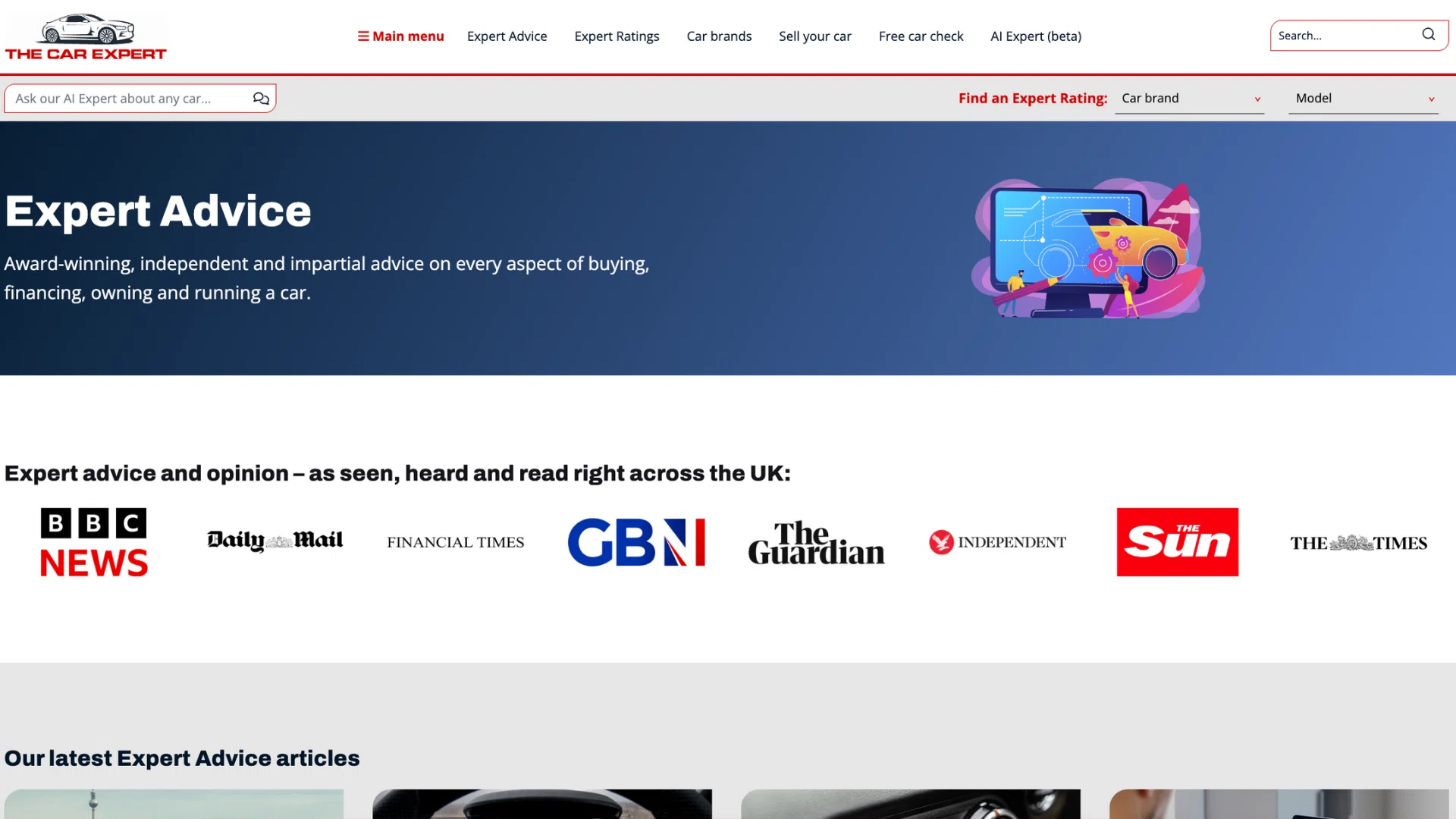
Source: Content partner, The Car Expert
Cost-per-lead alone works for testing a new partner, but only revenue share and hybrid structures reveal who’s sending real buyers, not just volume.
The future of leads: AI search and the power of consent
Two forces are reshaping how prospects find you. Both point to the same conclusion that brand-aligned educators aren’t a nice-to-have anymore.
Surviving AI search engines
When someone asks ChatGPT, Gemini, or Google’s AI Overviews for a recommendation, your own website is a minor voice in that answer.
According to McKinsey’s 2025 research on AI-powered search, a brand’s own website accounts for just 5-10% of what AI search draws from. Independent reviews, comparisons, and tutorials fill the rest.
AI search represents brands through third-party voices rather than brand-owned content, meaning the affiliate reviewer writing your comparison guide today is also shaping whether AI recommends you to someone who never runs a traditional search at all tomorrow.
Your best educators are already adapting to this shift. Referring back to the State of Affiliate Marketing report, among creators, the top uses for AI are content translation (26%), visual creation (26%), and generating content ideas (25%). They’re producing more of the exact content AI search cites, which makes the partnership more valuable.
The end of cold, unconsented lists
Tightening data regulations and stricter browser security make cold email lists riskier and less effective. A contact who never consented to hear from you isn’t only a weak lead. In a growing number of jurisdictions, it’s a compliance risk.
High-quality affiliate lead generation was never built on that model. Every lead from an educator partnership comes with real, enthusiastic consent. The prospect read the prospectus, trusted the recommendation, and chose to act. That keeps your database clean and compliant as rules around cold outreach tighten.
FAQs
You generate leads in affiliate marketing by partnering with trusted publishers, creators, and experts who educate their audience before recommending your product. Look for partners with real authority in your category: review sites, niche newsletters, content publishers, and creators your prospects already follow. When they explain a problem and point to your product as the fix, their audience arrives at your lead form already informed. That warm introduction converts far better than any cold list or purchased contact database ever could.
You track affiliate lead generation by measuring lead quality and conversion, not just total volume. Raw lead counts can hide a program full of uninterested contacts who never convert. Instead, track lead-to-customer conversion rate, cost per acquired customer, and revenue by partner. A partner sending fewer, higher-intent leads that actually convert is worth more than one sending hundreds of names that go nowhere. Quality metrics, not volume, are what separate a program that scales profitably from one that just creates busywork for your sales team.
Affiliate lead generation is a performance-based strategy in which trusted publishers, creators, or experts introduce your brand to their audiences. You pay a fee only when a genuinely interested prospect submits their contact information. Unlike buying unvetted contact lists, this approach relies on partners who educate their audience first, so prospects arrive already informed and interested, not cold.
Your next customer won’t come from a list. They’ll come from an expert
Buying leads used to be simple. You’d pay for a list and start dialing. That game is over. Cold contacts don’t convert like they used to, and unvetted lists carry real spam and compliance risk.
Programs that build on trust move leads through the funnel faster than those that chase volume. A warm introduction from a creator or publisher your prospect already follows will always outperform a cold message from a stranger.
That same move toward trust over volume is playing out in search. As AI tools answer questions people used to Google, visibility depends less on your website and more on whether trusted voices recommend you.
The next competitive edge won’t come from counting leads. It will come from knowing exactly which trusted expert sent each one, and proving it converts long after the click is gone.
Further readings: