
When designing referral rewards programs, many brands default to rewarding existing customers for bringing in new business. However, research from UC San Diego, led by Dr. Rachel Gershon, shows this common approach may not deliver the best results. In fact, rewarding new customers—the recipients—can drive higher conversion rates and improve referral program ROI.
Through a series of field experiments and laboratory studies, Dr. Rachel Gershon team found that offering recipient-focused referral rewards not only increases sign-ups but can also cut program costs nearly in half. This insight challenges conventional thinking and opens new opportunities for brands looking to build more effective, data-backed referral marketing strategies.ward to the friend being referred might actually be more effective—and could even cost your business less.
Episode feature

Optimizing referral reward structures with Rachel Gershon
Dive into research that shows how brands can reward the right person at the right time
This article is based on insights from the Advocacy Podcast by impact.com, Episode: “Optimizing Referral Reward Structures with Rachel Gershon.” Dr. Rachel Gershon, assistant professor at UC San Diego, shares groundbreaking research on referral program design and effectiveness.
Understanding the Two-Stage Referral Rewards Process
“There’s two steps to the process,” explains Dr. Rachel Gershon, assistant professor at UC San Diego.
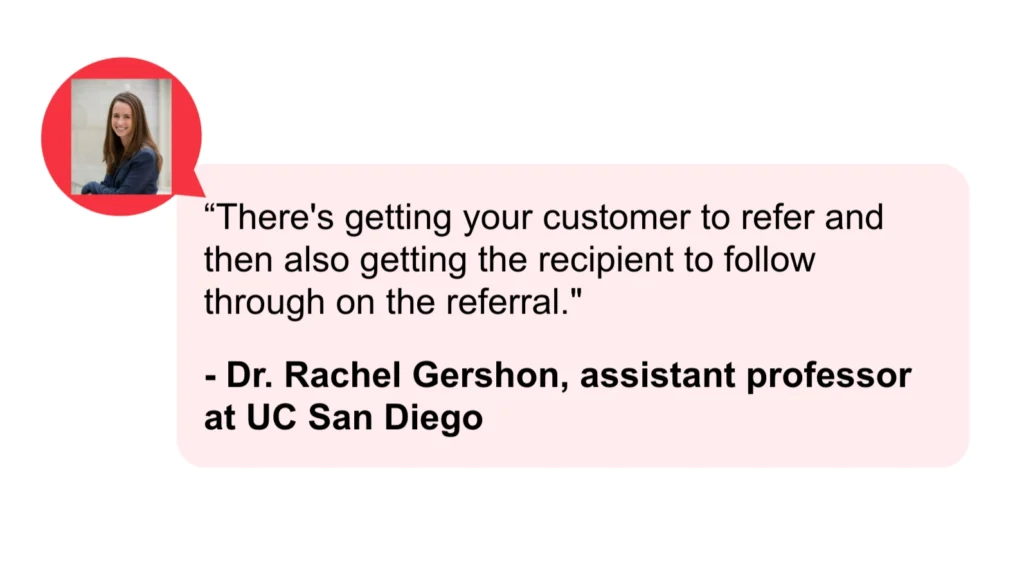
This distinction is crucial because most businesses focus heavily on motivating their current customers to make referrals, potentially missing half of the equation. To understand why this matters, let’s break down each stage:
Stage 1: Initial referral decision
The decision to refer someone involves two potential motivating factors:
- Direct reward (what the referrer receives)
- Reputational benefit (how making the referral affects their relationship with friends)
Surprisingly, research shows that customers are equally likely to make referrals whether they receive the reward themselves or their friend gets it. As Dr. Gershon explains:
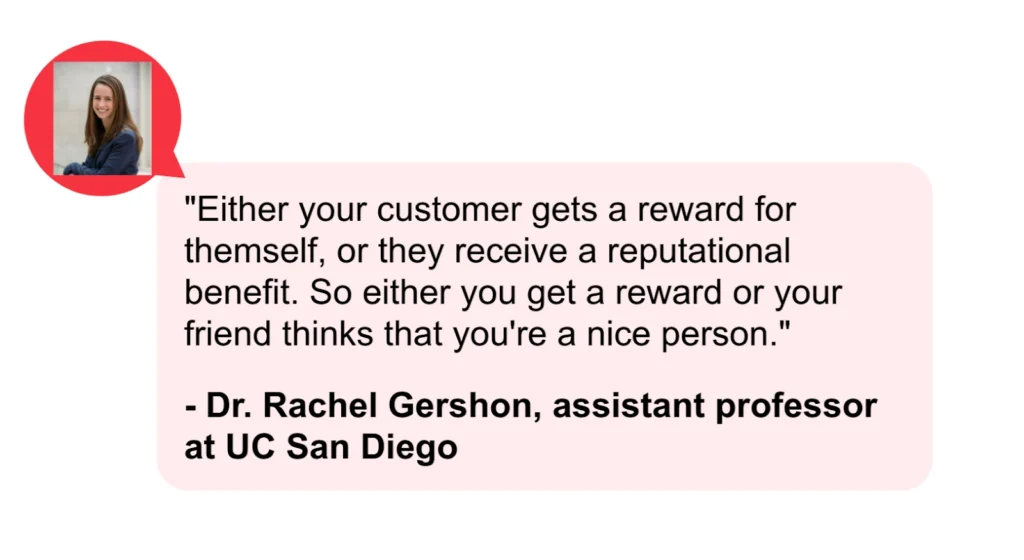
Stage 2: Recipient conversion
This is where things get interesting. The research reveals that recipients have “the harder job” in the referral process. They need to:
- Take action on the referral
- Sign up for a new service or make a purchase
- Overcome existing habits or preferences
Because of this higher barrier to action, incentives play a more crucial role in recipient behavior. “The recipients have that harder job,” notes Gershon. “Because the recipients have that harder job, the incentive is more important on their side.”
3 Key Referral Reward Structures and Their Impact on Conversions
Understanding how different reward structures affect both stages of the referral process is essential for optimizing your program. Let’s examine the three main approaches:
Prosocial (recipient-only) rewards
In this structure, only the new customer (recipient) receives the reward. The research shows this approach can be just as effective as traditional reward structures, while potentially costing less. In fact, one working paper found that even when compared to shared rewards that cost twice as much, recipient-only rewards performed similarly well.
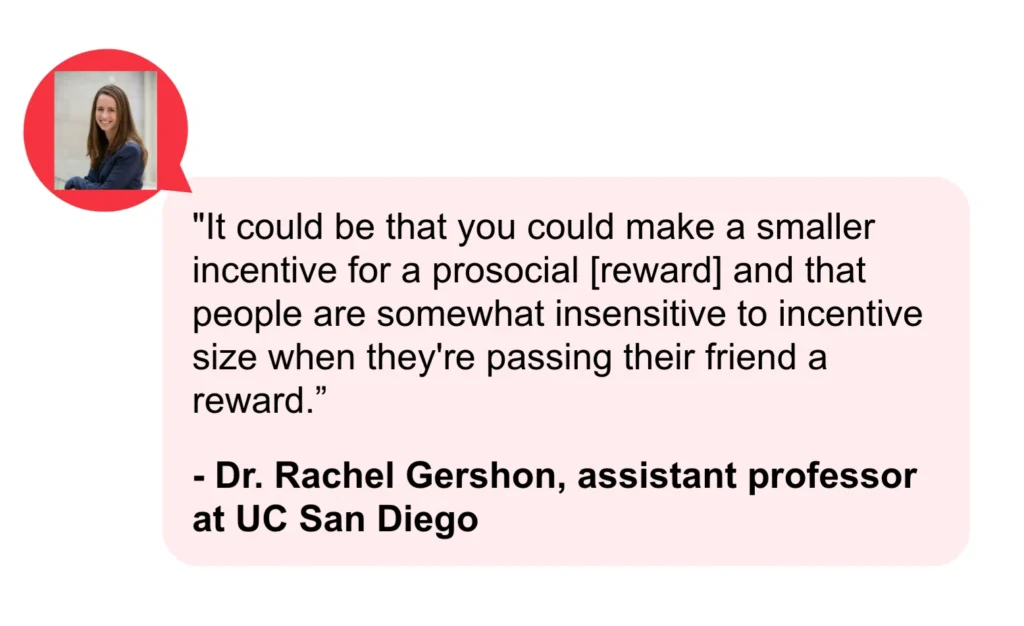
Selfish (referrer-only) rewards
The traditional approach of rewarding only the referrer can work, but it misses an opportunity to motivate the recipient. While this structure might drive initial referral attempts, it could lead to lower conversion rates since the recipient has no additional incentive to act.
Double-sided rewards
Offering rewards to both parties remains a popular choice, though the research suggests it might not always be necessary. However, double-sided rewards can be particularly effective in certain contexts, such as:
- Financial products where monetary incentives align with the service
- Complex purchases requiring more commitment from both parties
- Situations where building long-term advocacy is a priority

Customer referral marketing research: A consumer perspective research report
How to structure your referral program rewards: Key strategies and considerations
The research provides compelling evidence for recipient-focused rewards, but how do you implement this? Let’s explore the key considerations for implementing an effective referral program.
When to Offer Referral Rewards: Why Timing Matters
One of the most surprising findings from the research is that timing can significantly impact the quality of referrals. “We found something similar with a large field partner where we were excited to see most referrals happen within the first few weeks of joining the service,” Gershon explains. “But those are not the most valuable referrals.”
Key timing considerations include:
- Waiting until customers have experienced your product’s value
- Allowing time for customers to identify appropriate friends to refer
- Ensuring referrers can speak authentically about your offering
“Some companies like Blue Apron doesn’t offer the ability to refer unless you use the product for a while,” notes Gershon. This strategic delay can lead to higher-quality referrals and better long-term customers.
Testing and Optimizing Your Referral Rewards Program
Research shows that experimentation is crucial for finding the right reward structure for your specific context. Dr. Gershon recommends the following:
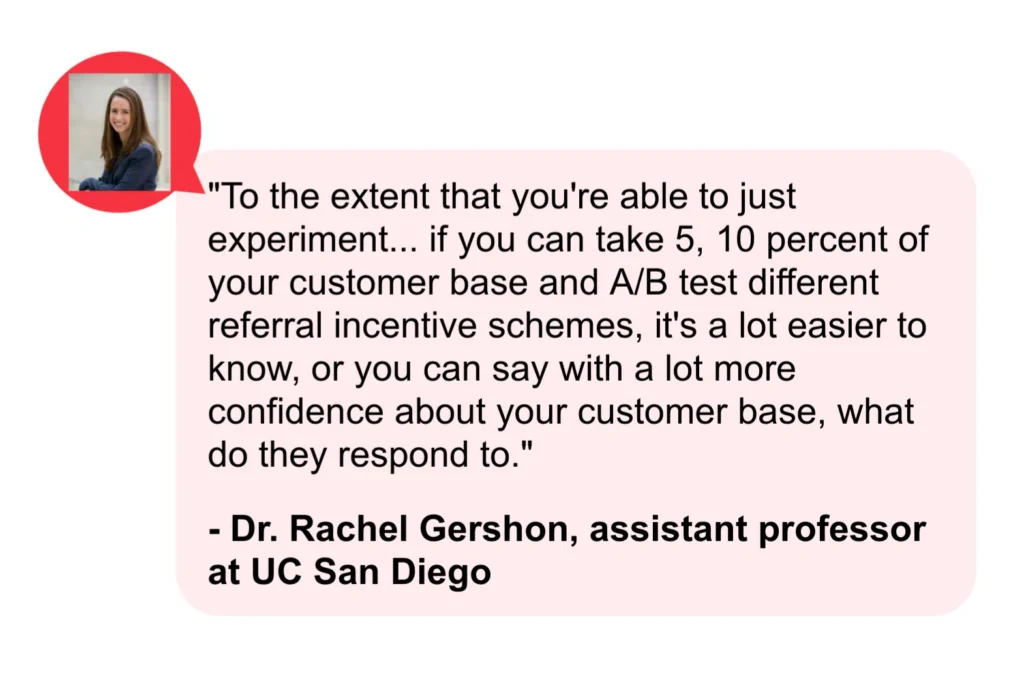
Key elements to test include:
- Reward structures (recipient-only vs. double-sided)
- Reward timing
- Incentive amounts
- Communication methods
Special considerations for different contexts
While recipient-focused rewards proved effective across multiple studies, certain situations may require unique approaches:
- Financial services: The research indicates that cash-based incentives can be particularly effective for financial products, where customers are already thinking about monetary value.
- High-value services: For significant purchases or commitments, Gershon notes there may be a threshold where reward size becomes more important: “I could imagine that there is a boundary at which point, like okay, why does my friend get 500 for joining this apartment building or becoming an employee at this company and I received nothing.”
- Charitable components: While donation-based incentives might seem appealing, the research found them less effective than direct rewards. However, they might work better when aligned with your brand’s existing charitable focus.
Action plan: Implementing your research-backed referral program
The research presents a compelling case for rethinking traditional referral structures, but implementation requires careful planning. Here’s how to put these insights into action.
Getting started: Setting up for success
Before launching your program, consider these key elements:
- Define your goals
- Determine primary objectives (acquisition, loyalty, brand awareness)
- Set measurable targets for referral conversion rates
- Establish clear success metrics
- Choose your reward structure
Based on the research, consider starting with a recipient-focused reward, especially if:
- You’re looking to optimize conversion rates
- Program costs are a significant concern
- Your product requires significant recipient action
“We provide leads and support, like everybody else. But we really want the agent to be able to run their business on our platform,” a field study participant noted, highlighting the importance of empowering new customers to take action.

State of referral marketing report 2024
Common pitfalls to avoid
The research highlighted several key mistakes that companies often make when implementing referral programs:
Early reward distribution
“Those early referrals tend to be people who want the reward,” Gershon explains, “and aren’t necessarily very familiar with the product, don’t know which friends to refer.”
To avoid this:
- Consider implementing a waiting period before allowing referrals
- Ensure customers have experienced your product’s value
- Focus on quality over quantity in early referrals
Overcomplicating the process
The research shows that conversion rates improve when you remove barriers to action. Keep your program simple by:
- Making reward structures clear and straightforward
- Reducing steps in the referral process
- Providing clear instructions for both parties
Ignoring long-term value
“We found that just the act of referring makes people more committed to the company,” Gershon notes. This suggests referral programs can drive loyalty beyond immediate acquisitions.
Consider tracking:
- Referrer retention rates
- Referred customer lifetime value
- Overall program ROI beyond initial conversion
Looking ahead: The future of referral marketing
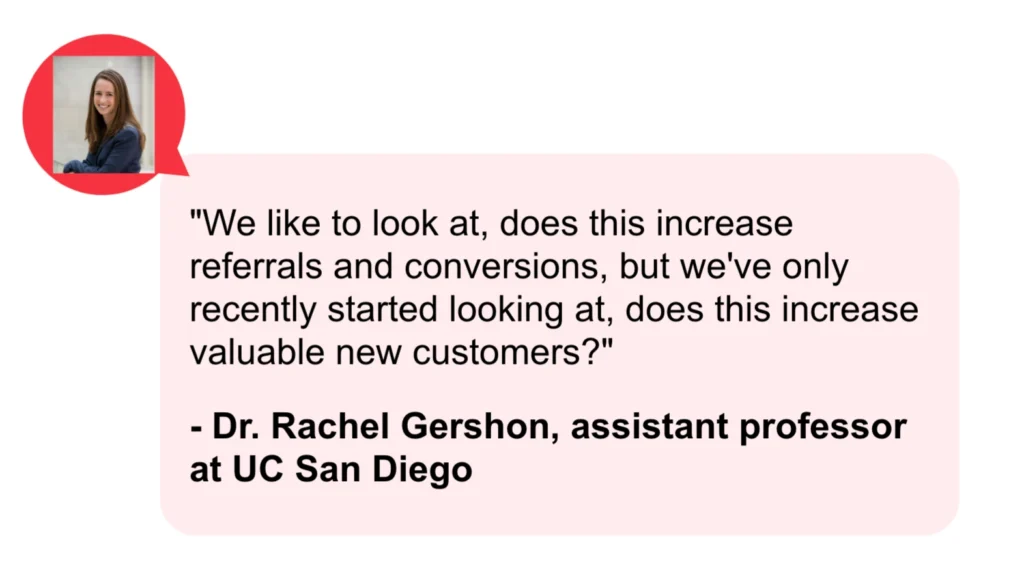
The research suggests we’re just beginning to understand the full impact of referral program design. As Gershon points out:
This evolving understanding points to exciting possibilities for the future of referral marketing, where programs might be:
- More precisely targeted to specific customer segments
- Better timed throughout the customer lifecycle
- More effectively balanced between immediate conversion and long-term value
Taking the next step with your referral program
The research is clear: recipient-focused rewards can drive better conversion rates while potentially lowering program costs. But like any marketing initiative, success lies in the details of implementation, testing, and optimization.
Ready to put these insights into action? While this article provides a research-backed foundation for your referral program strategy, implementing these findings requires the right technology and support.
The impact.com/advocate solution helps brands build and scale successful referral programs using these proven principles. Our platform makes it easy to test different reward structures, track program performance, and optimize for the best results.
Start building a more effective referral program today. Learn how impact.com/advocate can help you implement these research-backed strategies and drive sustainable growth through customer referrals.

Want a more comprehensive guide to creating a successful referral strategy?
Want to learn more about how customer referral and loyalty strategies can grow your business? Check out these resources:
- How to win back lost customers: 7 marketing tactics that rebuild customer loyalty [blog]
- 5 successful ecommerce referral programs and why they work [blog]
- How to switch to a new referral platform in 6 easy steps [blog]
- Top 6 customer referral marketing trends your brand can leverage in 2024 [blog]
- 7 referral marketing strategies to grow your retail business [+stand-out brand examples] [blog]
- Turn delighted customers into revenue-driving advocates [ebook]
- More than a pop-up: Building a customer referral program that scales [+ the tech that drives it [blog]
Frequently Asked Questions About Referral Rewards Programs
Referral rewards are incentives that companies offer to encourage customers to recommend their products or services to others. When you share a referral link and a new customer makes a purchase or signs up, both you and your friend can earn a benefit — such as cash, store credit, or discounts. A well-designed referral rewards program helps businesses gain loyal customers while rewarding genuine advocacy.
You can earn referral rewards by joining a brand’s referral program and sharing your unique referral link with friends, colleagues, or followers. Once a new customer signs up or completes a qualifying action, your referral rewards are credited automatically. Many companies also offer tiered referral incentives, giving higher rewards for multiple successful referrals.
Snippet: Share your referral link → friend joins → you earn rewards.
A strong referral rewards program benefits both parties:
Referrers gain incentives such as cashback, discounts, or credits.
New customers receive special offers or welcome bonuses.
This “win-win” structure boosts referral conversion rates and fosters customer loyalty. Companies often use referral software to automate tracking and payout securely.
Common referral rewards include:
- Monetary bonuses (cash or credit)
- Percentage-based discounts
- Free upgrades or months of service
- Loyalty points or gift cards
Some brands also experiment with referral incentives tied to milestones, such as referring five friends for an exclusive perk. The best referral rewards programs align with customer motivation and business goals.
To increase your referral rewards, focus on authenticity and timing:
- Share your referral link with people who will truly benefit.
- Promote during relevant conversations or campaigns.
- Use email or social media posts to explain the offer clearly.
Consistent engagement through newsletters or community groups helps you earn more from your referral rewards program over time.
In many countries, referral rewards may be considered taxable income depending on their value and type (cash vs. store credit). Always review the company’s referral program terms and local tax regulations. Businesses typically disclose whether referral incentives are reportable for tax purposes.
Snippet: Yes, some referral rewards are taxable—check local laws and program terms.
Companies use referral rewards to acquire high-quality, loyal customers at a lower customer acquisition cost than traditional advertising. Referral programs build trust through social proof—people are more likely to buy when recommended by someone they know. With the help of referral tracking software, brands can measure referral conversion rates and optimize for sustainable growth.