

As an affiliate manager, knowing how to find affiliate marketers who align with your brand is your most valuable skill. You’ve probably found at least one rockstar partner. They align with your brand, drive consistent revenue, and earn real audience trust
Finding the next aligned partner is where things slow down.
So you end up back in the marketplace, scrolling and reviewing profiles. Then you send outreach that may or may not land. The strategy works, but only up to a point. That’s the manual recruitment bottleneck. Understanding how to find affiliate marketers efficiently means moving beyond manual searches.
AI-powered partner discovery flips this model. Instead of recruiting reactively, you can use AI-powered partner matching and recommendations to scale what already works. It analyzes your top-performing partners and automatically surfaces new affiliate marketers with similar audiences, signals, and intent.
The result is a shift away from “spray and pray” recruitment toward precise, data-driven partner matching. Brands that master how to find affiliate marketers this way consistently outperform those relying on manual searches. AI surfaces high-intent partnership niches, automates vetting, and helps teams find brand-safe partners that traditional marketplace searches often miss.
In this article, we’ll explore what advanced partner discovery looks like in practice and how AI enables partnership teams to scale recruitment without scaling manual work.
How to define your ideal partner profile (IPP) through data
Before you can scale how to find affiliate marketers who perform, it’s important to understand why your best partners perform the way they do.
Many programs define an ideal partner profile using surface-level traits like:
- Location
- Partner type
- Follower count or monthly website traffic
- Primary promotional channels (e.g, blog, TikTok, YouTube)
- Or broad categories like “content type” or “loyalty.”
While these search filters are a useful start, they don’t get to the nuts and bolts of what sets your best partners apart.
The first step is to move deeper into the data behind their performance.
Start by analyzing your top-performing partners and identifying shared signals, including:
- Average order value (AOV): Which partners consistently drive higher-value conversions?
- Customer lifetime value (LTV): Do the customers referred by a partner make repeat purchases and deliver more value over time?
- Return on investment (ROI): Which partners deliver the highest return for your commission spend and marketing investment?
- Content niche alignment: What specific topics, formats, or use cases are driving engagement and sales?
- Audience overlap: How closely does a partner’s audience match your ideal customer profile?
- Conversion behavior: Where in the funnel do these partners influence purchase decisions?
Consistency over time: Which affiliate marketers perform reliably, not just during promotions?
These insights form your ideal partner profile (IPP), a performance-based model built on real outcomes.
Defining your IPP: basic demographics vs. advanced behavioral data
Here’s a quick breakdown of how basic demographics compare to advanced behavioral data.
| Basic demographics | Advanced behavioral data |
| Self-reported profile: What they say they do. | Performance consistency: What the data proves they do over time. |
| Location: Where the partner is based physically. | Audience overlap: Where their audience is actually located and where they are shopping. |
| Partner type: Broad labels like “Influencer” or “Publisher.” | Conversion behavior: Where they sit in the funnel (e.g., introducing new customers vs. closing sales). |
| Follower count: The volume of traffic they could send. | AOV: The actual value of the customers they refer. |
| Broad category: General verticals like “Tech” or “Fashion.” | Content niche: Specific, high-intent themes (e.g., “sustainable denim” vs. just “clothing”). |
| One-time conversions: Focusing only on the initial sale. | Customer lifetime value (LTV): Measuring the long-term value of referred customers. |
| Commission cost: How much you spend on a partner. | Return on investment (ROI): How much profit a partner delivers for every dollar spent. |
Key takeaway: With a clearly defined IPP, you can identify affiliate marketers that behave like your top performers, even when they sit outside traditional marketplace categories or within emerging niches.
The mechanics of AI-powered partner matching and recommendations
AI-powered partner matching starts with asking what your best partners have in common.
Machine learning algorithms analyze historical performance data to generate predictive partner scoring, ranking prospects by conversion probability. Using performance data from your existing program, AI also analyzes high-conversion affiliate marketers across multiple signals.
These signals include:
- Content focus
- Audience characteristics
- Conversion behavior
- Historical performance
These signals are combined into a model that represents what “high intent” looks like for your brand.

From there, AI scales what a human team can’t. It scans across partner networks and the broader web to identify new partners that closely match those profiles.
AI evaluates real-world signals, such as:
- How and where a partner publishes content
- The types of products or services they promote
- The audiences they consistently influence
- How closely their behavior mirror your top performers
The output is a ranked set of partner recommendations, prioritized by likelihood to convert and brand alignment.
You can then target your outreach to affiliate marketers that already look like proven winners, rather than starting every recruitment cycle from zero.
Key takeaway: AI operationalizes your strategy by turning past success into a scalable discovery process.
Automated vetting for brand safety and compliance
Reviewing every potential partner manually is slow, inconsistent, and hard to keep up with.
Automated vetting solves this by acting as the first line of defense. It flags risk early, before partners reach human review.
AI-powered vetting systems scan partners for common compliance and brand safety risks, including:
- Unauthorized discount codes or incentive abuse
- Adult, misleading, or inappropriate content
- Past policy violations or suspicious promotional behavior
- Misalignment with brand guidelines or regulated categories
AI evaluates each partner and assigns a risk or compliance score. It can automatically exclude high-risk partners and route them for deeper review, while low-risk, high-alignment partners move forward faster.
Implementation plan: how to find affiliate marketers in 4 steps
As your program grows, partner recruitment needs to function like a system, not a collection of one-off searches and manual checks. With 43 percent of program managers saying their team is too small for the workload, automation is even more essential.
An automated affiliate recruitment command center will help your team focus on strategic output rather than repetitive admin. The right system brings discovery, vetting, and outreach into a single, efficient workflow.
Step 1: Automate discovery with a data-driven Ideal Partner Profile (IPP)
The first step to knowing how to find affiliate marketers that perform is to define the parameters that matter most to your programme.
These are likely:
- Your IPP
- Priority niches
- Audience overlap
- Performance signals
AI uses these inputs to scan partner networks and the broader web, identifying new prospects that match proven success patterns, not just surface-level categories.
Modern partnership platforms handle this for you. For instance, tools like Extended Search look beyond the usual marketplaces to scan the open web. They find potential partners based on the actual content they create and what they talk about online. This way, you’re always discovering new, relevant partners to connect with.
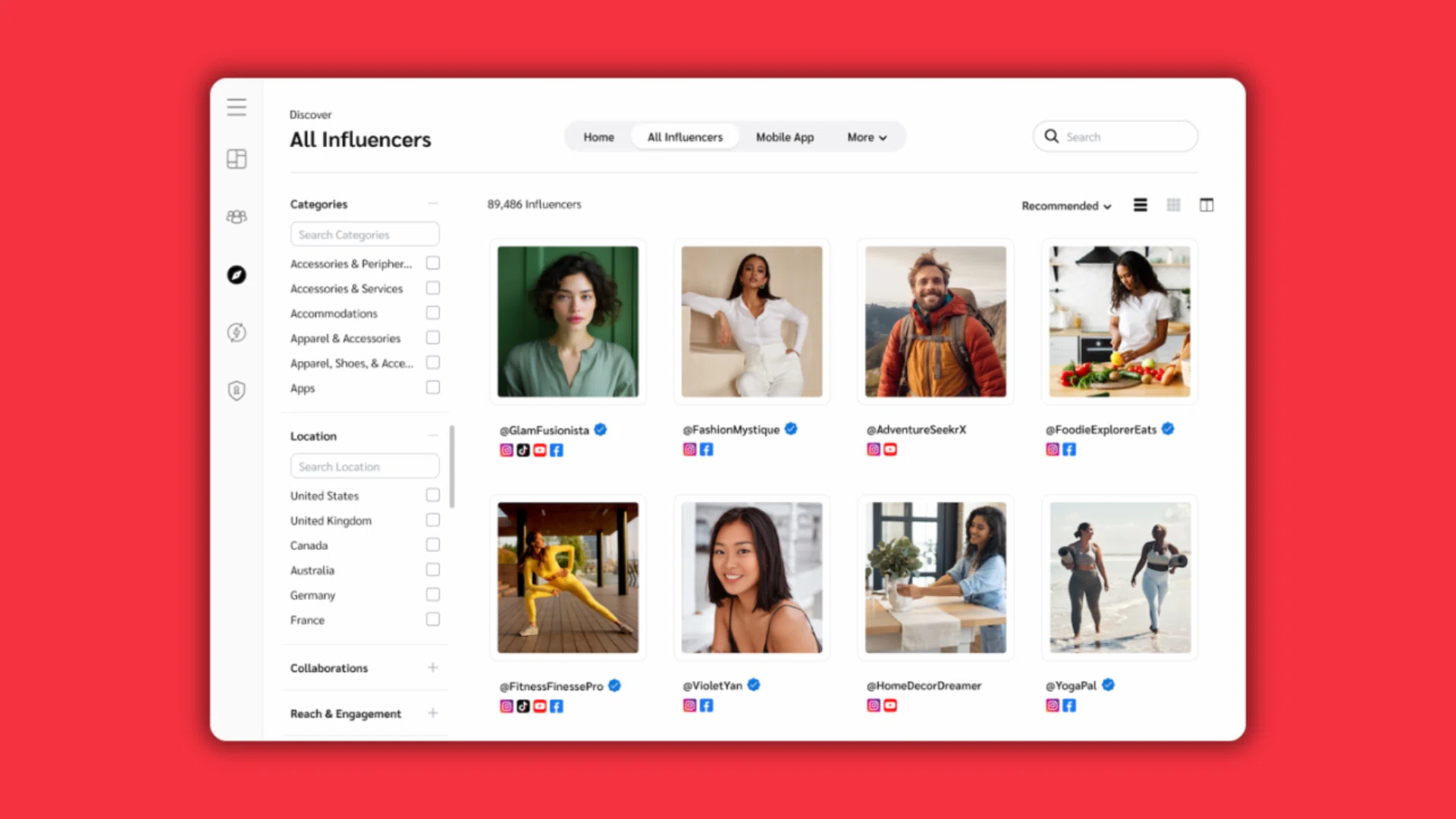
Platforms like impact.com host powerful search tools to connect you with partnership opportunities that match your unique requirements.
Step 2: Implement AI-powered vetting for brand safety and compliance
As AI discovers prospects, they flow directly into an automated vetting queue.
AI then evaluates each partner against:
- Brand safety
- Compliance
- Policy criteria
It then assigns a score based on risk and relevance.
This means only qualified, brand-safe affiliate marketers progress, without slowing down your discovery.
As you discover new affiliate marketers, tools like Impact AI act as automated screening layers. It checks for common risk signals like:
- Unauthorized discounting
- Policy violations
- Misaligned content
It scores each partner before they reach a human reviewer.
Take the minimalist home organization brand, Yamazaki Home. As their popularity grew, they were faced with a backlog of hundreds of partner applications.
To sort through them effectively, their agency, JEBCommerce, developed a strategy that combined data-driven insights with relationship-building. They used impact.com tools to analyze and categorize applicants, then focused on personally activating the ones that were the best fit.
This challenge—being overwhelmed with options and unsure how to choose—is something many successful brands face. Jake Fuller, CEO of JEBCommerce, explains how he guided Yamazaki Home through this exact situation.

“When we took over program management, there were 597 pending affiliate applications—untouched because the brand lacked the tools to evaluate who aligned with their goals. […] By leveraging impact.com’s platform, we helped bring clarity to the chaos. Today, they’re not just approving partners—they’re strategically activating them. It’s been exciting to see that shift from hesitation to confidence.”
– Jake Fuller, CEO of JEBCommerce
In just six months, the homewares brand achieved 15× ROI, saw 576 percent revenue growth, and increased its active publisher base by over 250 percent, proving that speed and control don’t have to be trade-offs.
Brand safety checklist: 5 automated checks every program should run
Before a partner reaches human review, automated vetting should confirm the basics. At a minimum, every program should screen for:
- Unauthorized discounting
Detect partners promoting unapproved coupon codes, incentives, or deal messaging that can erode margin and brand control. - Policy and compliance violations
Flag past or ongoing violations, including misleading claims, improper disclosures, or non-compliant promotional tactics. - Content and brand alignment
Identify content that conflicts with brand values, regulated categories, or suitability standards. This may include adult, misleading, or low-quality placements.
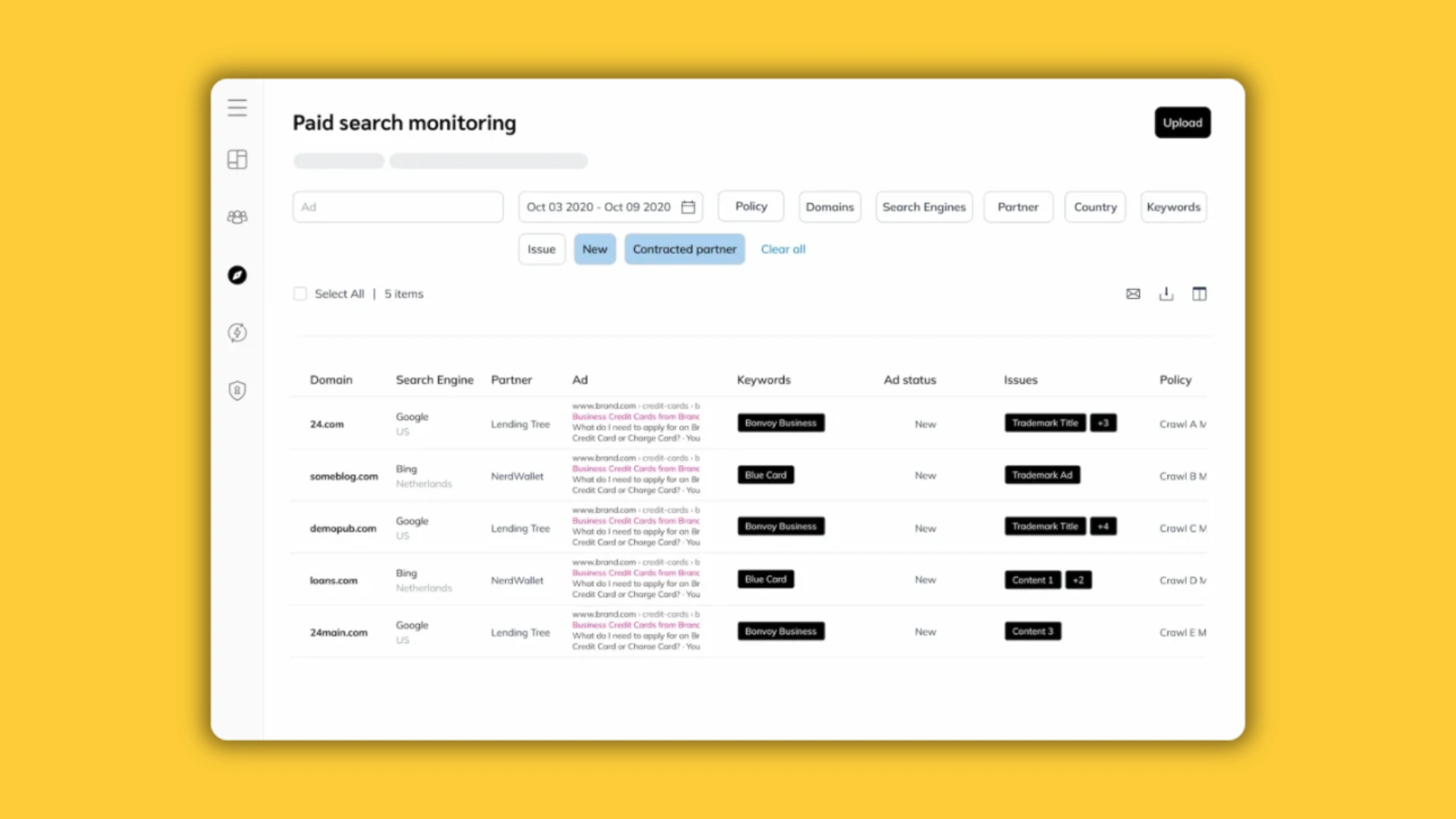
Paid Search Monitoring equips you with all the tools necessary to protect your valuable assets, including keyword monitoring, enforcement, and resolution.
- Suspicious traffic or conversion patterns
Surface abnormal behavior such as traffic spikes, unusually low-quality conversions, or patterns that may indicate fraud or abuse. - Historical performance and consistency
Assess whether a partner shows reliable, repeat performance over time, and not only short-term spikes during promotions.
Step 3: Streamline outreach and onboarding with rule-based workflows
Next, outreach is activated based on AI-generated scores. High-intent, low-risk affiliate marketers can trigger immediate, personalized outreach.
Once a partner clears discovery and vetting, outreach becomes much simpler. High-intent partners can be invited directly into an automated partner application process, which removes manual back-and-forth.
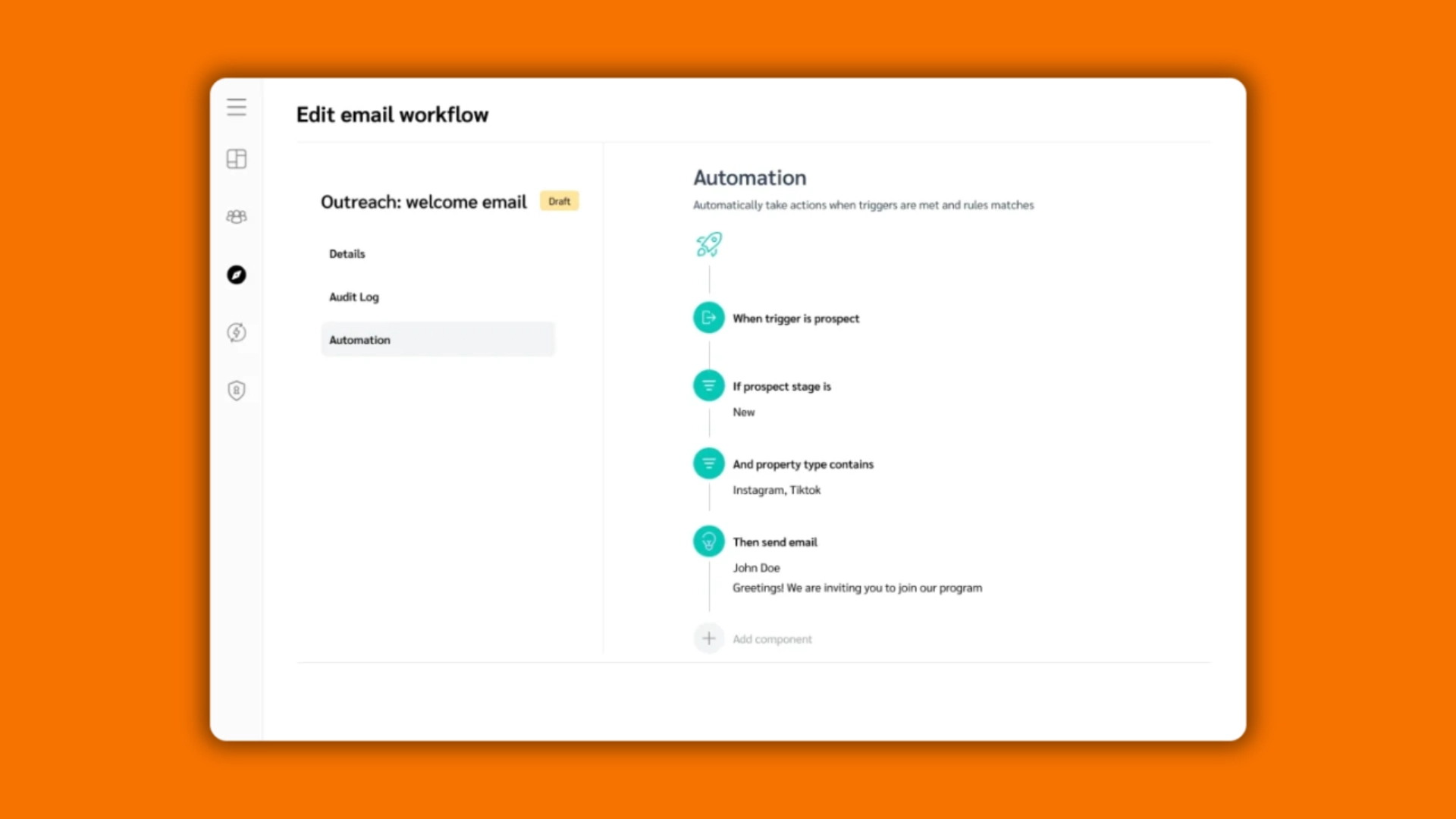
Automate your partner management workflows
This process works by setting up simple “if/then” rules. For example, you can create a workflow that automatically handles applications based on criteria you define.
Here’s a simplified look at how it works:
- Set your conditions: First, you choose the “if” criteria. This could include the partner’s location, their specific business model (e.g., “content creator” or “loyalty site”), or even the date they applied.
- Define the action: Next, you decide the “then” action. If an application meets your conditions, the system can automatically approve it, decline it, or even assign it a specific contract (like a starting commission rate).
- Let it run: Once activated, this workflow runs automatically. For instance, you could set a rule to auto-approve all content creators from the United States with a pre-set “New Partner” contract, allowing them to start promoting your brand immediately.
Using an automated partner application process lets you:
Build workflows that automatically accept or reject applications when they meet or miss predefined conditions, helping teams reduce application backlog and focus on higher-value partners.
See incoming partner and creator applications in a single interface, including their media properties and audience insights, and then take action like grouping, contacting, accepting, or declining submissions right there.
Step 4: Create a feedback loop to continuously improve recruitment AI
Finally, recruitment outcomes feed back into the system.
Modern partnership intelligence tools continuously refine your recruitment strategy, enabling you to identify revenue-generating affiliate marketers earlier in the discovery process.
Data from onboarded partners helps refine the IPP and discovery models. AI usually analyzes performance data like:
- Conversions
- AOV
- Consistency
- Long-term performance
Over time, your recruitment engine gets smarter, more precise, and better aligned with your program goals.

For instance, Impact AI brings together multiple signals in one place. It looks at first-party data like partner performance, behavior patterns, and fraud indicators, alongside third-party data such as audience size and location. This gives you a more complete picture than performance metrics alone.
As the system learns, Impact AI can recommend new partners and automatically accept or reject applications. That removes repetitive screening work and lets teams focus on higher-value decisions.
Together, these steps turn recruitment into an always-on engine, one that scales partner growth without scaling manual effort.
FAQ
Finding the right affiliate partners is a process that moves from strategy to action. Here’s a simple, step-by-step approach:
- Define your ideal partner: First, look at your best-performing current partners to understand what success looks like. Use data like audience overlap and customer value to build a profile of your ideal partner.
- Automate your search: Use AI-powered discovery tools to scan the web and partner networks for new candidates who match your ideal profile, saving you from manual searching.
- Vet for brand fit: Once you have a list, look deeper than follower counts. Check their content, audience engagement, and performance history to make sure they align with your brand’s goals and values.
- Reach out and onboard: Contact your top choices with a personalized message and use an automated application process to get them started quickly and easily.
Analyze and refine: Continuously track the performance of your new partners. Use those insights to make your discovery process even smarter over time.
Affiliate marketing is a performance-based partnership model where brands work with partners, including creators, publishers, or websites, who promote their products or services in exchange for a commission on tracked results, like sales or leads.
The right affiliate is one whose audience and content align closely with your ideal customer.
Look beyond surface details like follower count and focus on performance signals such as:
- Audience overlap
- Content relevance
- Conversion behavior.
Partners that consistently drive quality traffic and meaningful outcomes, not just clicks, are more likely to deliver long-term value for your business.
Start with a personalized outreach that clearly explains why the partnership makes sense for both sides. Reference the partner’s content, audience, or niche, and show how your brand aligns with what they already do.
Prioritize high-intent partners and keep the next step simple, whether that’s an application, a quick intro call, or joining your program.
From manual recruitment to scalable affiliate marketing partner growth
Automated affiliate recruitment makes it easier to scale, without losing the human side of partnerships.
Instead of reacting to applications or searching marketplaces one profile at a time, teams can work proactively. They can identify high-intent partners earlier and vet them faster. Ultimately, they’ll spend more time building relationships that actually drive results.
This shift brings more precision to recruitment. Discovery runs continuously, vetting happens earlier, and outreach becomes more intentional, leading to better efficiency and stronger ROI.
The benefits are clear:
- Scalability: Grow your partner base without increasing manual effort
- Brand safety: Filter risk early and maintain control as you scale
- Higher intent: Focus on partners most likely to convert and perform long term
It all starts with your ideal partner profile. Define what success looks like today. Use data to replicate it. Build your IPP now to prepare your program for AI-driven growth.
Related reading: