

Your brand is showing up across social media platforms. Posts generate engagement. Creators drive saves, comments, and shares. You might even see sales spikes after a campaign goes live. But when it’s time to prove which efforts drove those sales—and justify your next budget request—you’re left guessing. Understanding the types of social commerce driving those results is the first step to fixing that.
The types of social commerce tactics you use matter more than you might expect. Not because social is underperforming, but because it’s often unclear which efforts actually drive revenue.
Understanding the main types of social commerce—and how those models work together across the customer journey—gives you a clearer path to boosting sales quickly without relying on guesswork.
This guide breaks social commerce down by role—not by trend. You’ll see how different tactics can meet your goals and how to choose the right mix based on your audience, funnel stage, and growth objectives.
Other marketing models can enhance social commerce performance: product seeding, customer advocacy, community programs, and search reinforcement.
How different marketing models function within social commerce
At this point, almost everything can feel like social commerce: An influencer mentions your product. A customer posts a review. A livestream drives a spike in traffic. All of it happens on social media—and all of it can influence buying decisions.
But the types of social commerce that actually drive revenue aren’t just ‘posting on social.’ They’re a set of marketing models that create a measurable path from social discovery to commercial action.
When does a marketing model become social commerce?
A marketing model functions as social commerce when it does three things well:
1. It influences purchase decisions inside social platforms
Social commerce starts where customers already spend time. Product discovery often happens in feeds, comments, and livestreams long before visiting a product page.
This doesn’t mean the purchase always happens on social media. According to McKinsey, 29 percent of consumers purchased a brand they first discovered on social media—even when the final transaction happened elsewhere. If social content plays a meaningful role in shaping awareness, preference, or confidence, it’s part of the commerce journey.
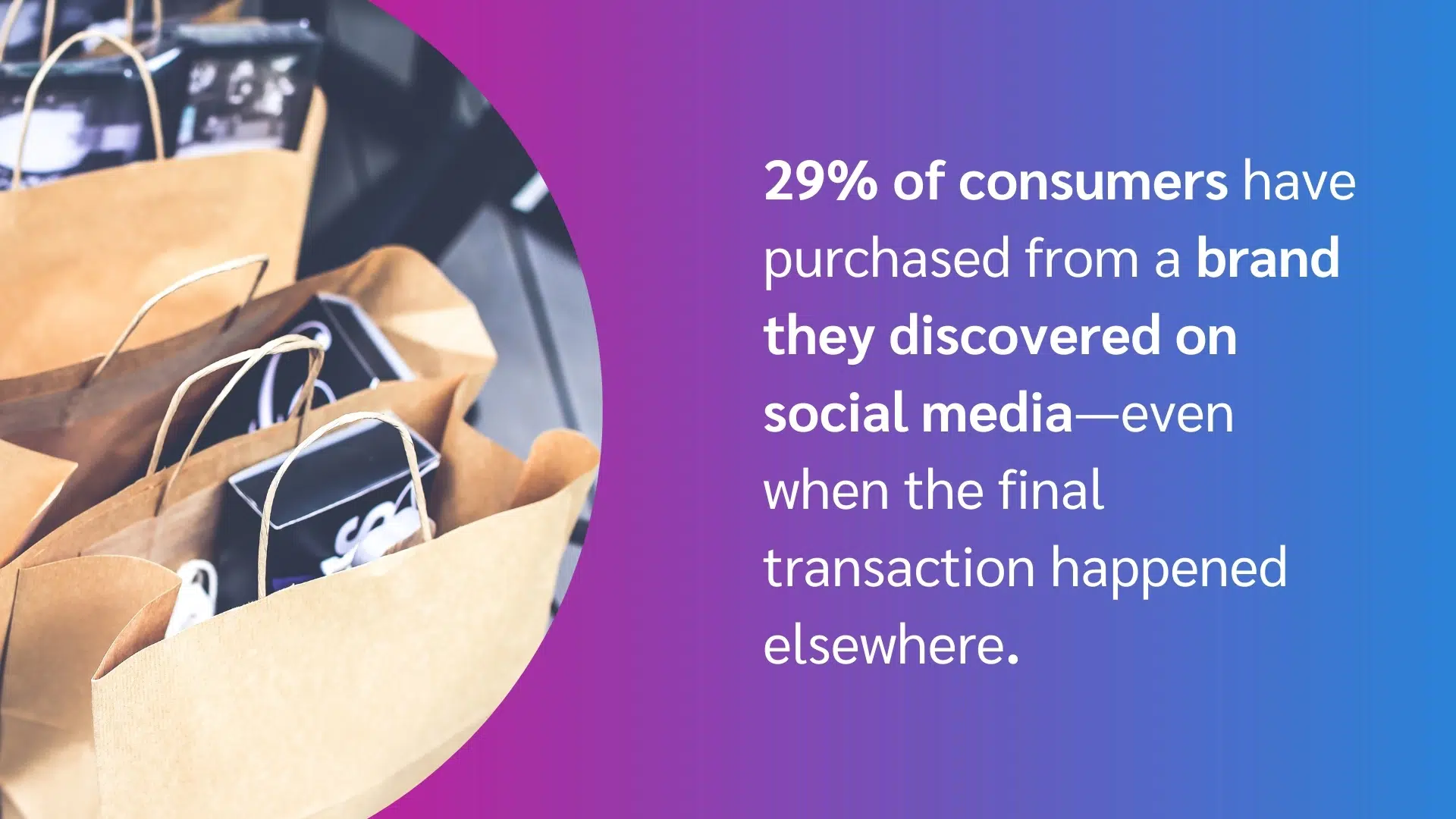
Source: McKinsey
2. It creates an attributable conversion path
Engagement metrics like views, shares, and comments still matter because they often signal early-stage interest or consideration—even if conversion happens later. These interactions become social commerce when they can be measured.
In practice, that measurement comes from mechanisms like:
- Affiliate links
- Promo codes tied to creators or campaigns
- Platform-native product tags and shoppable posts
- In-app checkout
The goal is to understand how different interactions contribute to revenue so you can design programs that improve over time.
3. It uses social-native behavior to reduce friction
Social commerce works best when the format matches the platform. People don’t open TikTok to read a product spec sheet. They want to be entertained and informed by people they trust.
Research consistently shows that social-native formats win the hearts and minds of shoppers:
- 41 percent of consumers say content creators have influenced them to make a purchase
- 45 percent of social shoppers say short videos are the most influential format on purchasing decisions
- 68 percent of shoppers on TikTok agree that the platform has a seamless shopping experience from discovery to purchase
When social commerce models mirror these behaviors, they build confidence—making purchase decisions feel natural instead of forced.

Your next growth leap starts with social commerce
See the five strategic social commerce benefits every brand needs.
Why most brands rely on multiple social commerce methods to drive sales
Once you define the main types of social commerce and how they function, a pattern becomes clear: no single model does everything well.
People discover products in social feeds, validate them through comments and reviews, compare options through search, and then purchase in-app or on your online store. That’s why most brands combine models across funnel stages:
Treating social commerce as a portfolio allows you to design programs that reflect today’s non-linear digital marketing funnel instead of forcing every tactic to deliver immediate sales.
Core social commerce types vs. supporting models
Within that portfolio, it helps to distinguish between core and supporting models:
- Core social commerce models directly drive revenue, such as affiliate marketing content, sponsored content with product tags, livestream shopping, and native social commerce experiences.
- Supporting models don’t always deliver first-touch conversions, but they enhance the performance of core models. Product seeding, customer advocacy, community programs, and search reinforcement build trust, familiarity, and confidence—often improving conversion rates across your revenue-driving efforts.
Together, these types of social commerce create a strategy that’s measurable, scalable, and aligned with how customers actually buy.
The top 4 types of social commerce to help you boost sales
Many brands invest heavily in social content, yet struggle to connect that activity to revenue. Social clearly influences buying decisions—the harder question is which approaches consistently move customers from discovery to purchase.
The core types of social commerce focus on what actually drives sales. Each model creates a clear path from social engagement to revenue, helping you prioritize where to invest, assess performance, and double down on what works.
| Type of social commerce | Best for | Resources required | Attribution clarity | Scalability |
| In-app social commerce features | Capturing high-intent demand with minimal friction | Product catalog setup and shoppable creative | High—platform-level sales and content reporting | Medium—scales with platform reach and catalog depth |
| Sponsored content | Driving discovery and trust through creator storytelling | Creator sourcing, paid budgets, and tracking setup | Medium—strong when links, tags, or codes are used | High—repeatable once best-fit creators and formats are identified |
| Affiliate marketing content | Always-on, performance-based revenue growth | Affiliate tracking, partner management, and commission structures | High—sales tied directly to partners and content | High—scales efficiently with partner performance |
| Livestream shopping | Creating urgency and answering objections in real time | Hosts, production planning, promotion, and live support | Medium—immediate sales are clear, but overall visibility into sales impact varies | Low—high effort per event, harder to run continuously |
1. In-app social commerce features
In-app social commerce features allow shoppers to view product details, select options, and complete checkout directly within the app. These native features often show up as shoppable posts, product tags, and in-app checkout experiences that blend into the feed—making buying feel like a natural extension of browsing.
Compared to traditional advertising, in-app social commerce reduces friction by removing extra clicks and page loads that often slow purchases.
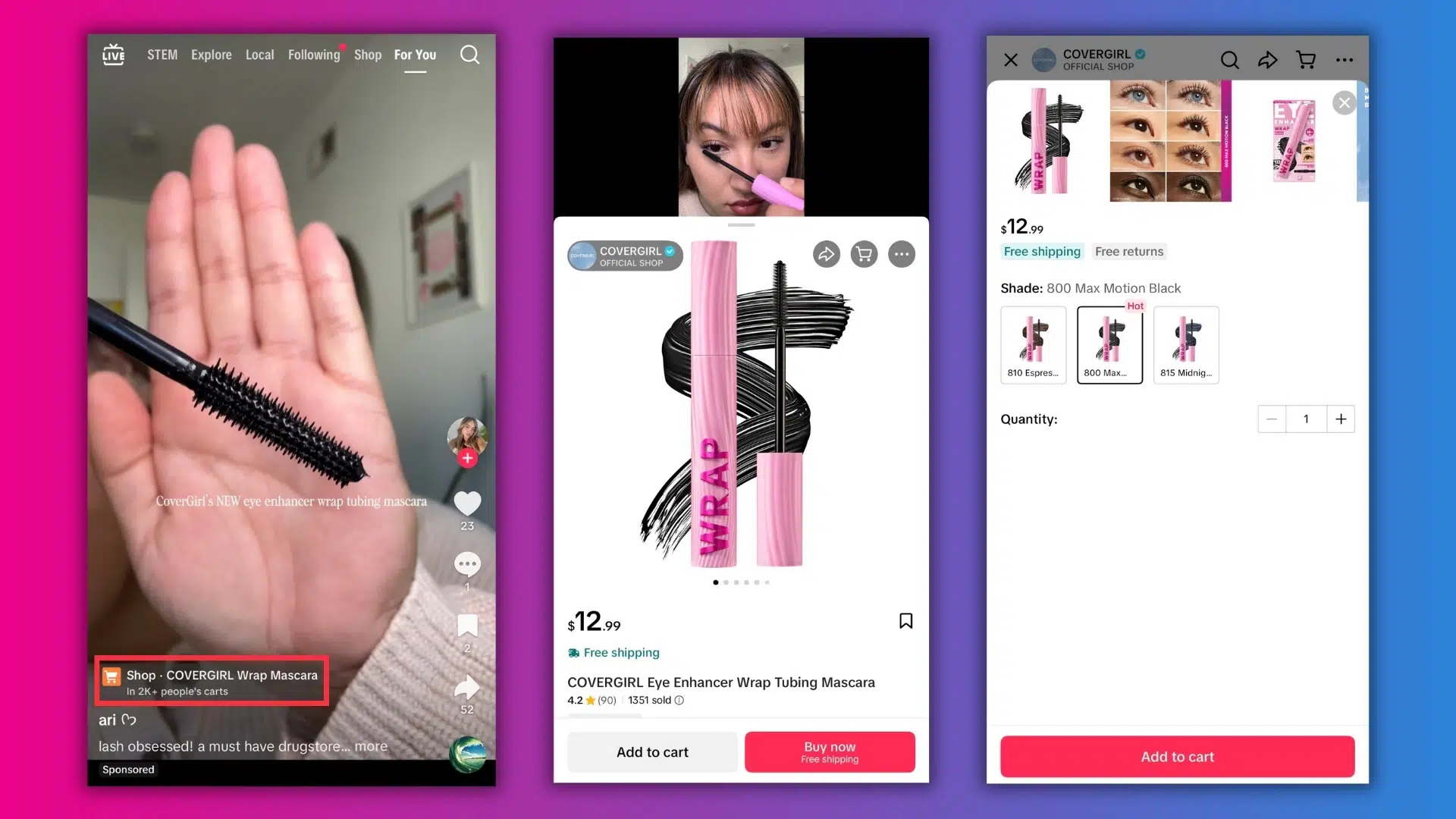
Ariadna Rodriguez’s review embeds a TikTok Shop link that lets viewers purchase without leaving the app.
How it drives sales
In-app social commerce features drive sales by capturing intent at the moment it arises using:
- Shoppable posts or videos that surface products directly in the feed
- Product tags or pins that link straight to product details or checkout
- In-app checkout that eliminates redirects and reduces drop-off
This type of social commerce prioritizes speed over depth, working best for capturing consumers near the end of their buying journey.
When to use it
Native social commerce is most effective for driving sales when:
- Your goal is to convert existing demand, turning attention generated by creators, ads, or campaigns into purchases
- You continually see that redirecting shoppers off-platform leads to drop-off
- Most social traffic to your brand is mobile, and added steps tend to reduce conversions
- Customers don’t need much explanation to buy, and key product details can be communicated visually
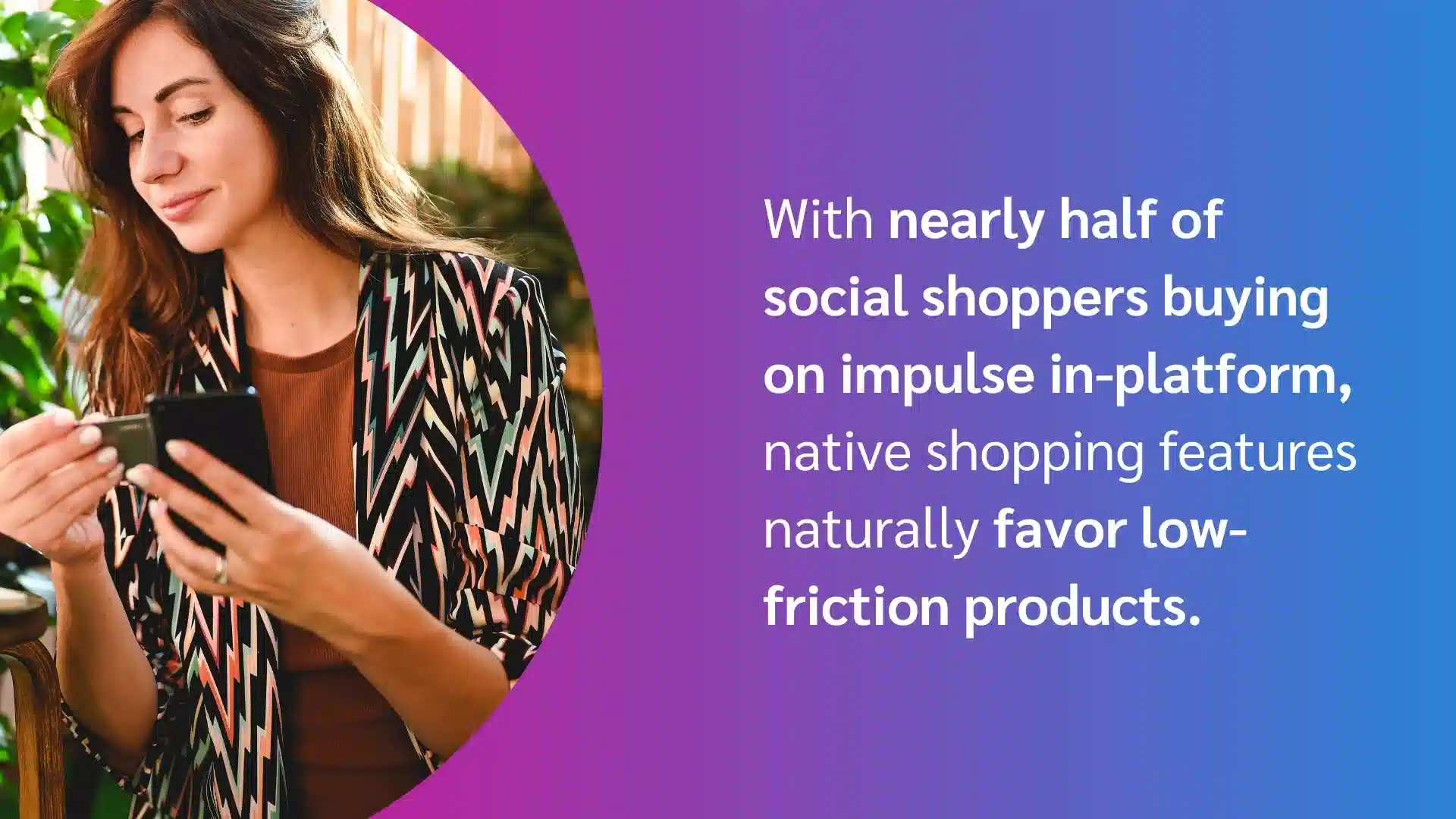
Source: Bankrate
Limitations
In-app social commerce can fall short when:
- Products need explanation or comparison to overcome hesitation
- Platform reporting shows limits insight into which creative, messages, or creators influenced the sale
- Purchase journeys extend beyond social, with buyers confirming details through search or reviews
What you need to make it measurable
To treat in-app social commerce features as a performance channel, you need consistency in how products, content, and results are tracked. That starts with:
- A reliable product catalog and tagging setup, so shoppable content always points to the right products and availability
- Clear creative standards for shoppable posts and videos, making it easier to compare performance across formats
- Reporting that ties sales back to content, showing which formats, products, and creators are actually driving revenue
Because platform reporting capabilities vary, you need to see what each channel can and can’t show so sales driven in-app aren’t overlooked or misattributed.
2. Sponsored content
Sponsored content is when a brand pays a creator to feature its product in the creator’s own content. The creator presents the product in a way that fits their style—showing how it’s used, explaining why they recommend it, or demonstrating it in a real-world setting.
This content appears in formats people already expect on social platforms, such as short-form videos, stories, or in-feed posts. Because it comes from a trusted creator and blends into their regular content, sponsored posts often feel more credible than traditional ads.
When executed well, this approach sits at the intersection of social commerce and influencer marketing—combining trust with a clear path to purchase.

Brittany Marie sponsored GPU promotion includes an affiliate link for direct attribution.
How it drives sales
When it comes to driving sales, not all sponsored content is created equal. This format is often used to build awareness and trust. It only drives conversion when the content includes a measurable action path, such as:
- Product tags that lead to shoppable products
- Trackable links that send traffic to a product page
- Creator-specific promo codes that connect purchases to content
When to use it
Sponsored content can support both product discovery and conversion, depending on the creative and CTA. This content type tends to work well for driving purchases when:
- You want to quickly identify what converts, refine creative, and scale the strongest messages
- You’re in a category where seeing demonstrations reduces hesitation, such as in categories like beauty, home, fitness, food, and electronics
- Your paid social ads are fatiguing or underperforming, and you need fresh creative that doesn’t look or feel like traditional ads

“We see that the conversions are boosted by 30 percent using partnership ads that are formed from a creator in a brand coming together.”
– Jackie Pimentel, Senior Global Director of Core Ads Product Marketing at Meta
Limitations
Sponsored content is less effective when:
- Creator fit is misaligned, reducing relevance or audience trust
- Conversion paths aren’t clearly defined, limiting the ability to attribute sales to specific content
- Scaling requires ongoing creator recruitment and rotation, as repeated sponsorships among the same creators can lead to audience saturation
What you need to make it measurable
To manage sponsored content as a growth channel, plan to:
- Establish consistent tracking with trackable links, promo codes, or platform tags
- Set clear success metrics, such as sales, clicks, or assisted conversions
- Create a repeatable approach to creative briefing and approvals
Once you identify sponsored content that drives results, creator whitelisting can extend its impact by running top-performing creator posts as paid ads. This approach expands reach while preserving the creator’s voice, turning proven content into a scalable acquisition lever.
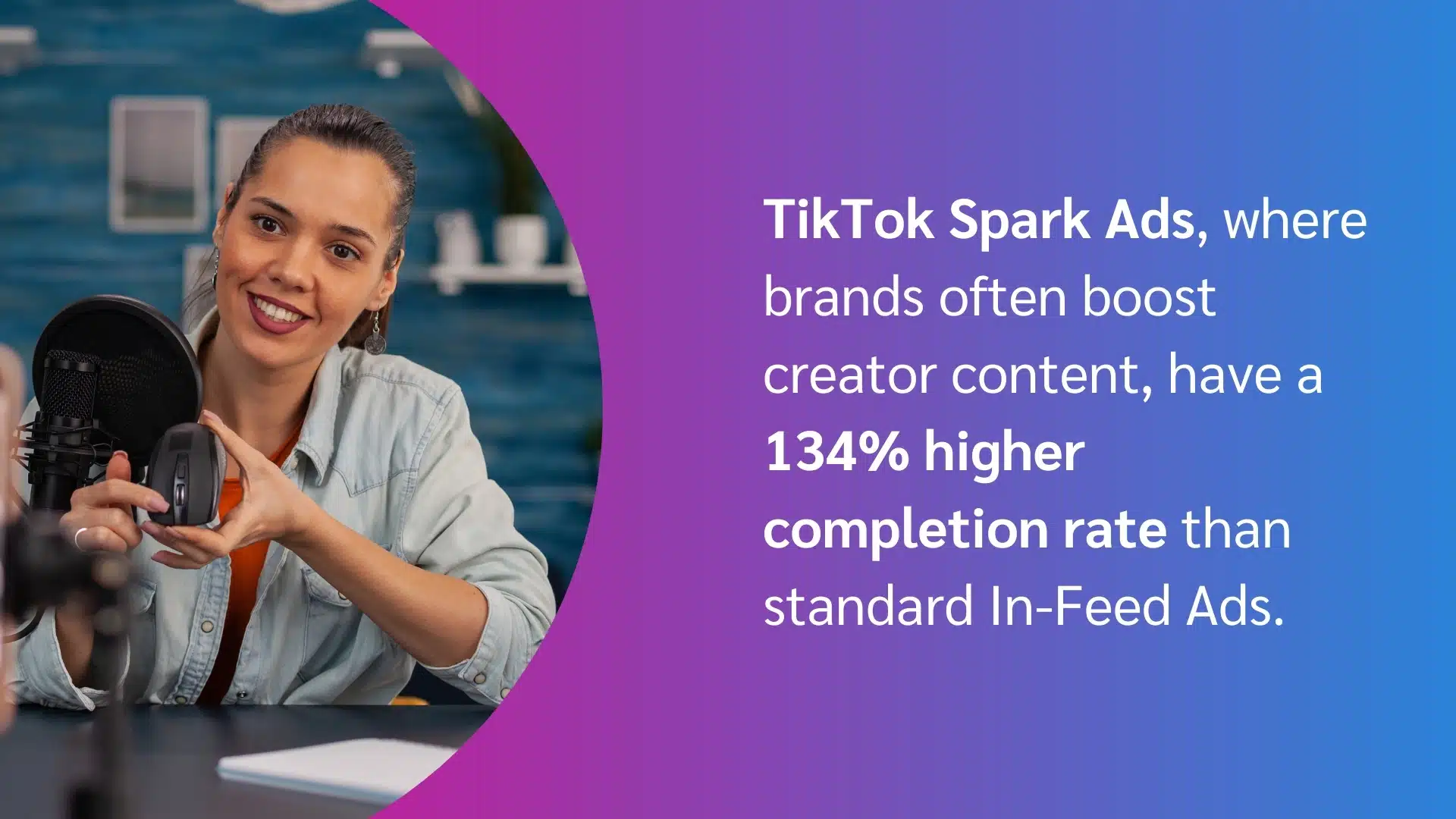
Source: TikTok
3. Affiliate marketing content
Affiliate marketing turns creators and publishers into performance-driven sellers on social platforms. Instead of paying upfront for exposure, you pay partners only when their content drives a sale.
Partners share trackable links, promo codes, or shoppable content across their social channels, directing customers to your online store.
Unlike traditional advertising, affiliate marketing shows up as trusted recommendations, reviews, or deals from creators and publishers. That performance focus is why brands continue to scale investment: 71 percent say affiliate marketing is more cost-effective than other channels, and 66 percent report stronger ROAS.
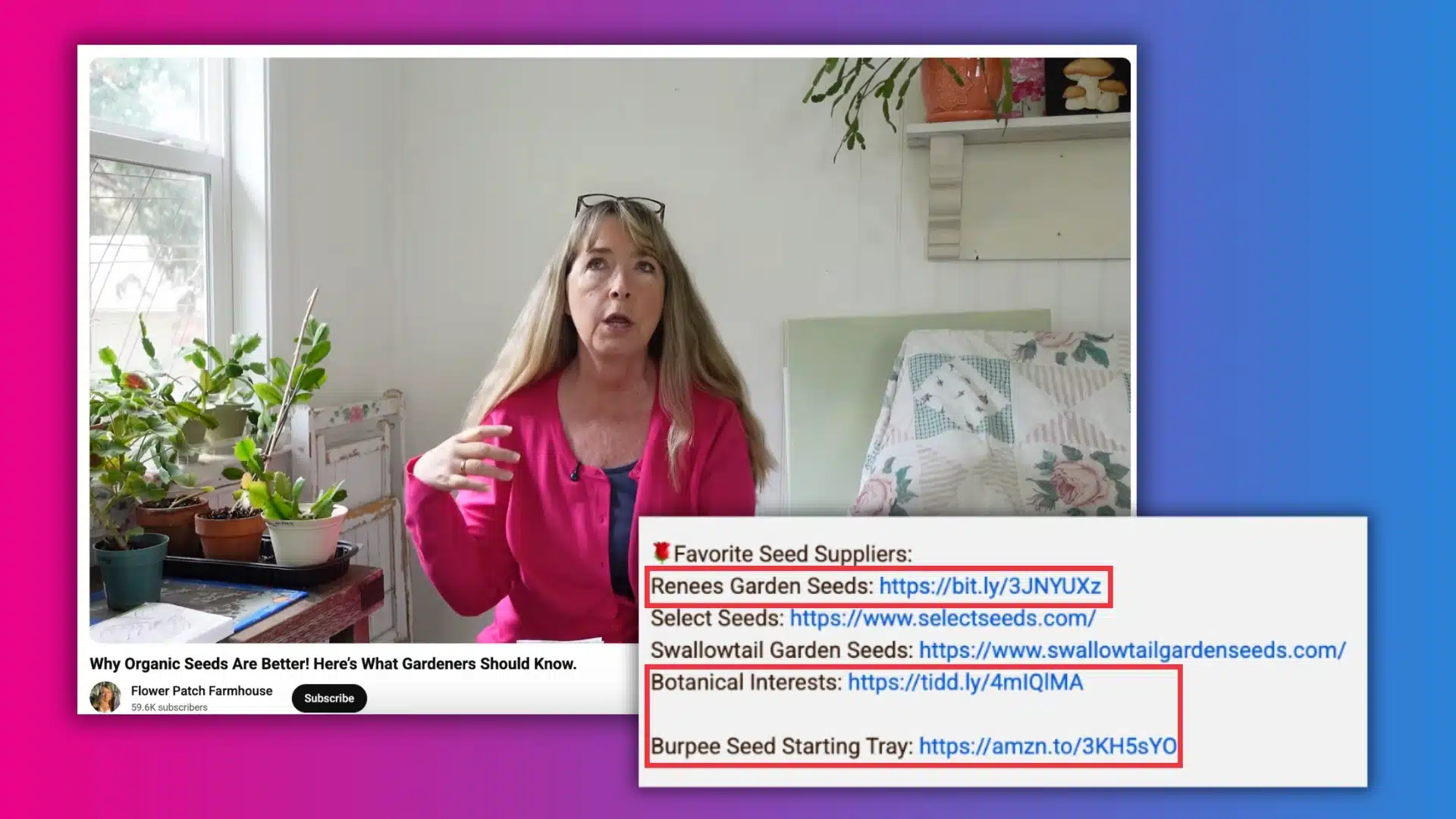
Flower Patch Farmhouse’s video description includes affiliate links that makes it easy for viewers to shop.
How it drives sales
Affiliate marketing is built to drive measurable sales, but performance depends on choosing best-fit partners and giving them the tools to succeed. It works best when partners can use:
- Trackable links that attribute purchases to specific creators or publishers
- Promo codes that reinforce offers and connect sales back to partner content
- Shoppable content that directs customers to product or checkout pages
When these affiliate tracking methods are in place, you can easily identify what converts, reward high-performing partners, and scale sales without increasing upfront spend.
When to use it
Affiliate marketing content is most effective for driving sales when:
- You need scalable growth without fixed upfront costs, allowing performance to dictate investment
- You want to extend the reach of high-performing content, allowing partners to distribute proven messages across their own audiences
- You want clearer accountability across partners, with visibility into who is driving revenue
- Your buying cycle includes evaluation, where reviews, comparisons, or offers help customers make decisions
- You want to support always-on promotion, keeping products visible across social platforms without running one-off campaigns
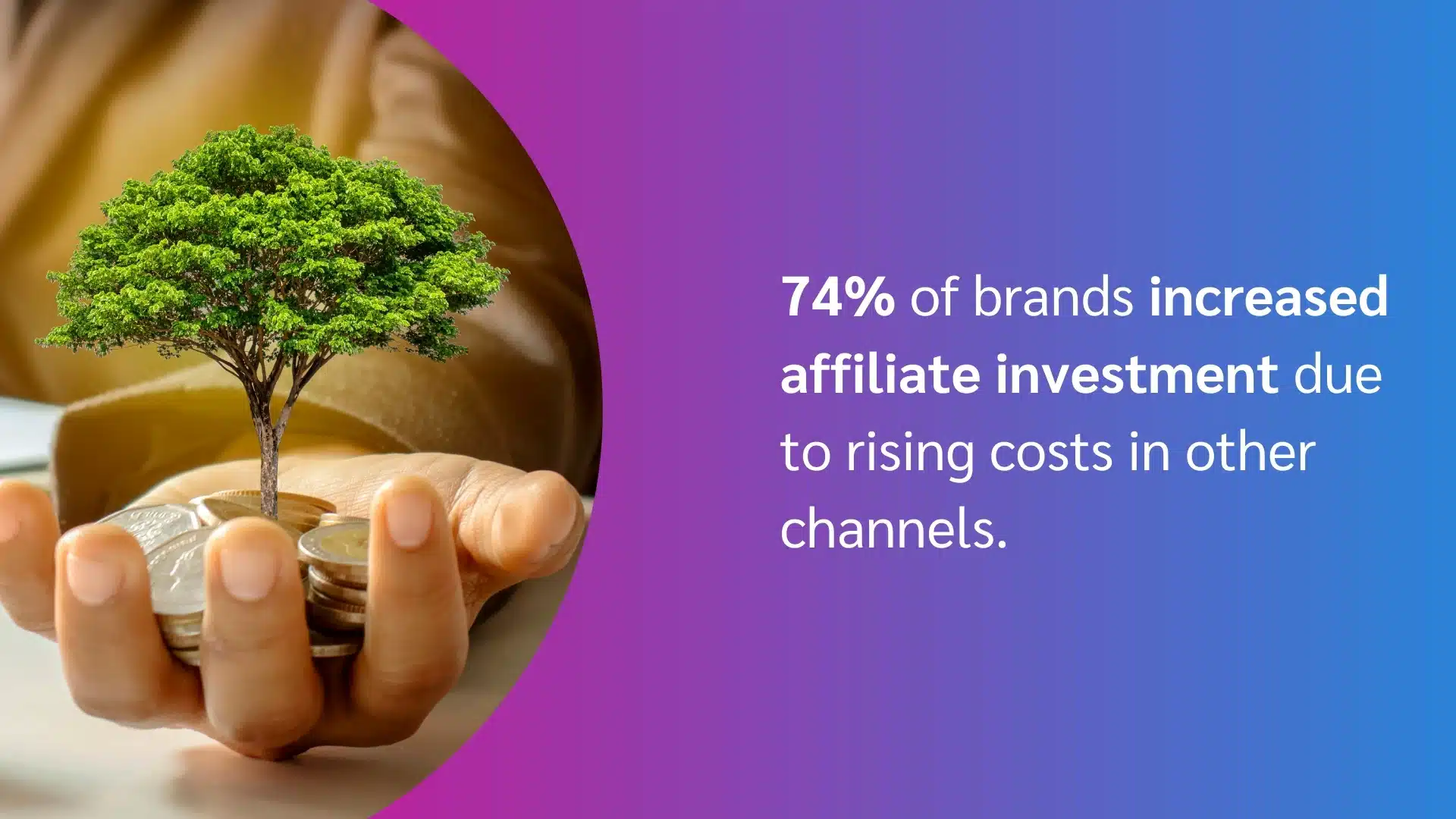
Source: impact.com’s The State of Affiliate Marketing Report
Limitations
Affiliate marketing content tends to underperform when:
- Attribution and incrementality aren’t clearly defined, making it difficult to assess true performance
- Partner oversight and enablement are limited, leading to inconsistent messaging or lower conversion rates
- Commission structures prioritize volume over customer quality, reducing long-term value
What you need to make it measurable
Affiliate marketing requires:
- A tracking and attribution method you trust
- Clear commission structures aligned to goals, such as new customer, AOV, or margin
- Partner policies that protect brand integrity and compliance—including safeguards that prevent affiliate fraud
Because affiliate marketing touches multiple partner types and channels, it works best when managed as a holistic program instead of a one-off campaign.

Stop guessing which creators drive revenue
Discover the attribution models that are built for today’s commerce.
4. Livestream shopping
Livestream shopping combines real-time video with interactive selling, allowing creators or hosts to showcase or demo products live while audiences watch, ask questions, and purchase in the moment.
Unlike traditional advertising, livestream shopping feels more like a conversation and often includes limited-time offers or exclusive access. This can ultimately reduce hesitation and encourage faster purchase decisions.

Valerie Daly hosts a live shopping stream selling Bomb Party products.
How it drives sales
Livestream shopping removes two common blockers to purchase at the same time: unanswered questions and delayed decision-making.
It converts interest into sales when livestreams include:
- Live product walkthroughs that answer common objections and show real-world use
- Audience Q&A and comments that provide immediate clarification and peer validation
- Time-bound incentives, such as limited-time pricing or exclusive access, that encourage action
- Direct purchase paths that allow viewers to buy during or immediately after the event
When to use it
Livestream shopping is most effective when:
- You have an engaged audience or growing community, allowing you to strengthen relationships while turning participation into purchases
- You have credible hosts or creators who already understand the product and audience
- You need to move inventory quickly, such as seasonal items, limited runs, or excess stock
- You’re introducing a new product or variation, and want immediate feedback on questions, objections, or interest before scaling spend
It can work for both new customer acquisition and repeat purchases, depending on the offer and audience.
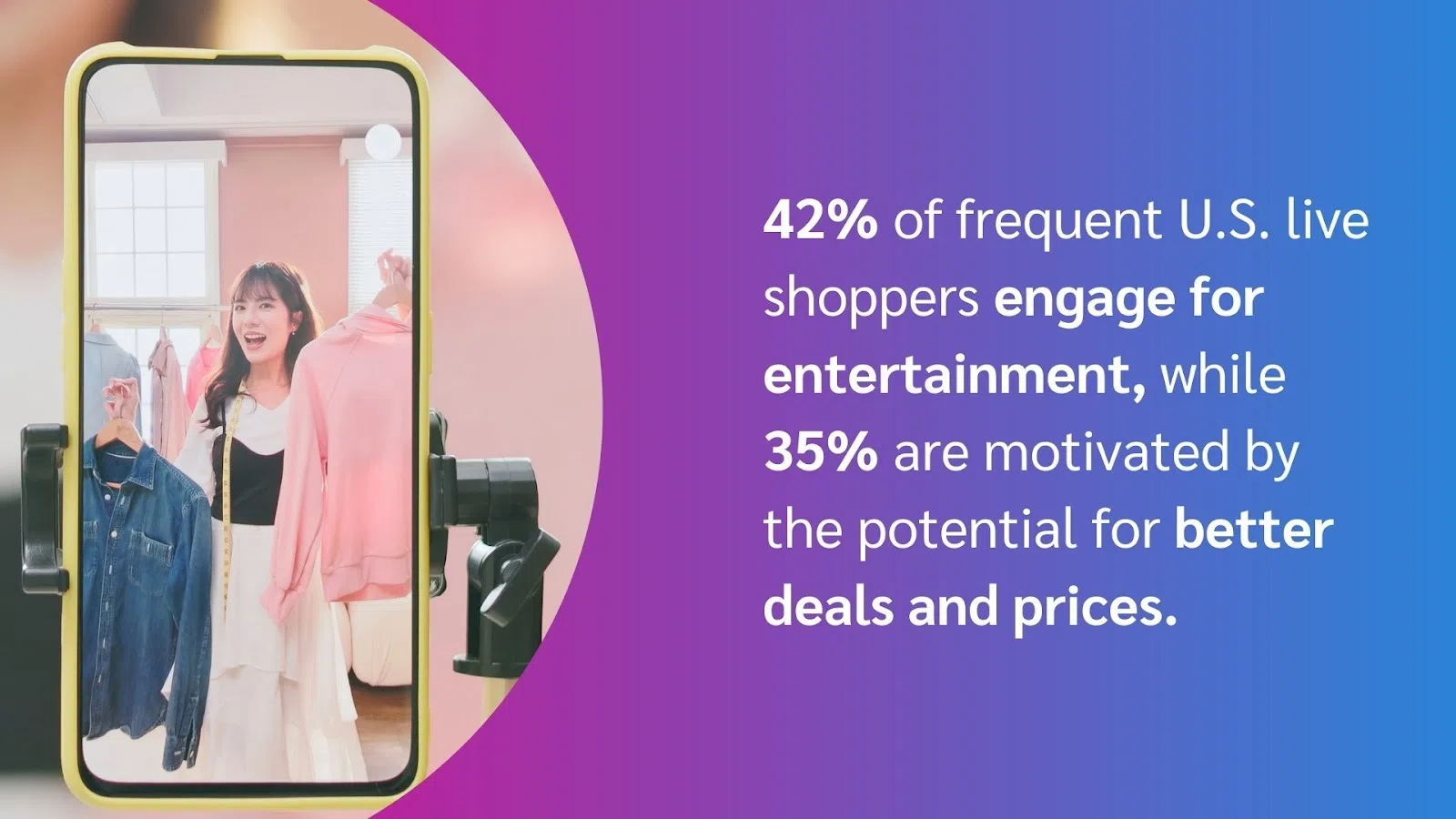
Source: McKinsey
Limitations
Livestream shopping may struggle when:
- Audience size or engagement is limited, reducing real-time interaction and urgency
- Operational complexity is high, requiring significant coordination to execute effectively
- Turnaround time limits testing and iteration, slowing optimization across hosts or formats
What you need to make it measurable
To use livestream shopping as a performance channel, you need clarity on how sales will be captured both during and after the event. That starts with defining:
- Where purchases happen, such as in-app checkout or traffic driven to your online store through tracked links
- How sales are attributed, using platform analytics, promo codes, or partner-specific links
- Who influences the outcome, including the host, affiliate partners, and any supporting creators driving traffic
Livestreams often influence purchases beyond the event, making measurement trickier. You must account for assisted impact—not just immediate sales.
The best marketing models to enhance social commerce performance
Supporting models matter most when social commerce programs stall because customer confidence, context, or continuity is. They can help diagnose why conversion slows and apply reinforcement at the right point in the customer journey.
Instead of thinking about how these models “drive sales,” consider the friction they remove. Their job is to bolster your core models by improving credibility, exposure, and customer relationships.
Influencer product seeding programs
Sending products to creators without a guaranteed paid deliverable allows creators to use the product organically. This is a common tactic in micro-influencer marketing, since smaller creators often drive higher engagement and strengthen trust when conversion-focused campaigns launch.
- Best used when: Traditional creator campaigns drive engagement but require expensive spend to convert
- Why it matters: Product familiarity allows creators to communicate value more effectively at the point of purchase
- Strategic impact: Improves conversion efficiency in social commerce programs without increasing media or discount costs

How Olipop achieved 982% ROI with product seeding
See how Olipop’s unique approach to influencer gifting built a profitable creator community.
Customer advocacy programs
Customer advocacy programs encourage buyers to share reviews, social content, and referral codes turn real experiences into trust signals, complementing creator-led efforts by validating product claims. These can reduce hesitation at the moment buyers decide whether to convert.
- Best used when: Social commerce drives strong engagement and traffic, but conversion rates lag due to credibility or risk concerns
- Why it matters: Removes hesitation without relying on discounts or additional ad spend
- Strategic impact: Improves the efficiency and ROI of social commerce programs by turning interest into action
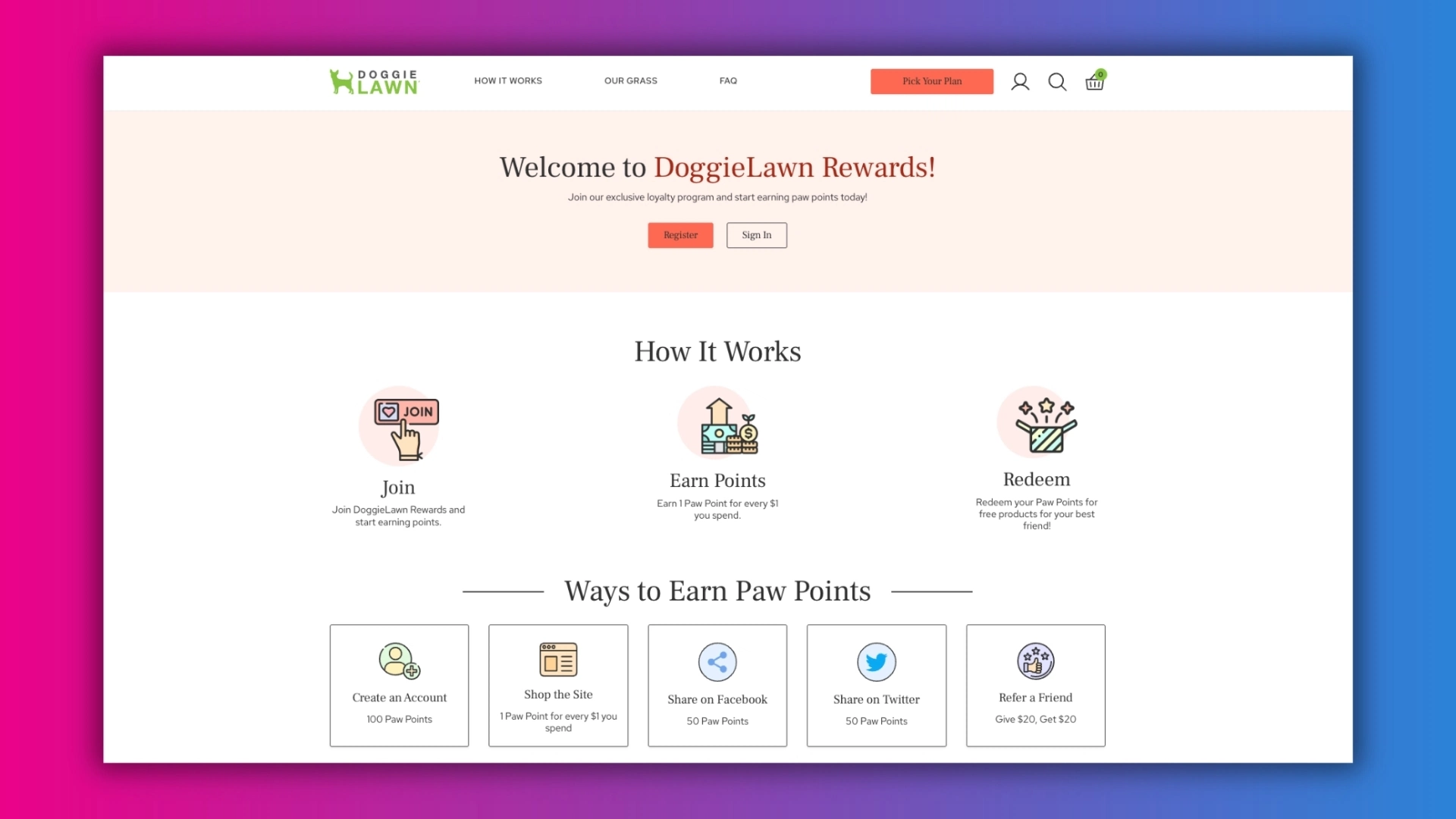
DoggieLawn’s reward system that provides customers discounts in exchange for different promotion activities.
Community-driven programs
Community-driven programs create ongoing spaces for customers to engage, learn, and share experiences over time. Rather than driving one-off promotions, they sustain interest across longer buying cycles.
- Best used when: Social drives initial interest, but sustaining intent requires repeated campaigns or paid re-engagement
- Why it matters: Maintains momentum without restarting the buying journey each time
- Strategic impact: Improves the durability of social commerce by turning one-time interest into ongoing demand
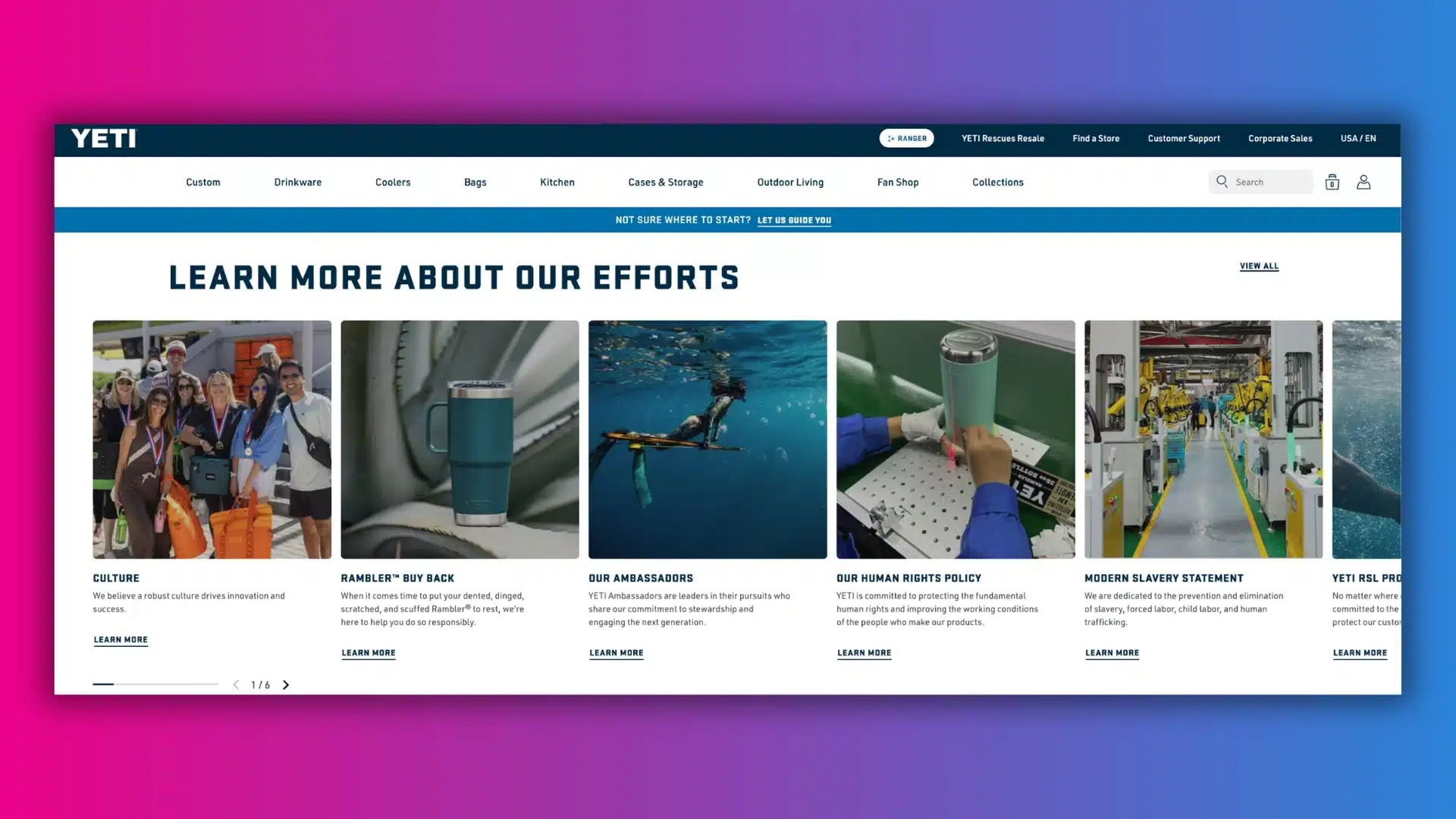
YETI’s numerous community initiatives—from ambassador programs to stewardship efforts— keeps customers engaged between purchases.
Search cross-channel reinforcement
Social discovery often prompts buyers to search for additional validation before purchasing. This means that your product pages, FAQs, reviews, and branded search results should clearly answer questions and objections that may have arisen in social content.
The objective is to make search a confirmation step that reinforces the interest sparked on social media.
- Best used when: Social content drives purchase intent, but buyers confirm details through search before completing a transaction
- Why it matters: Buyers convert faster and more efficiently
- Strategic impact: Preserves and amplifies conversion intent generated by social commerce programs
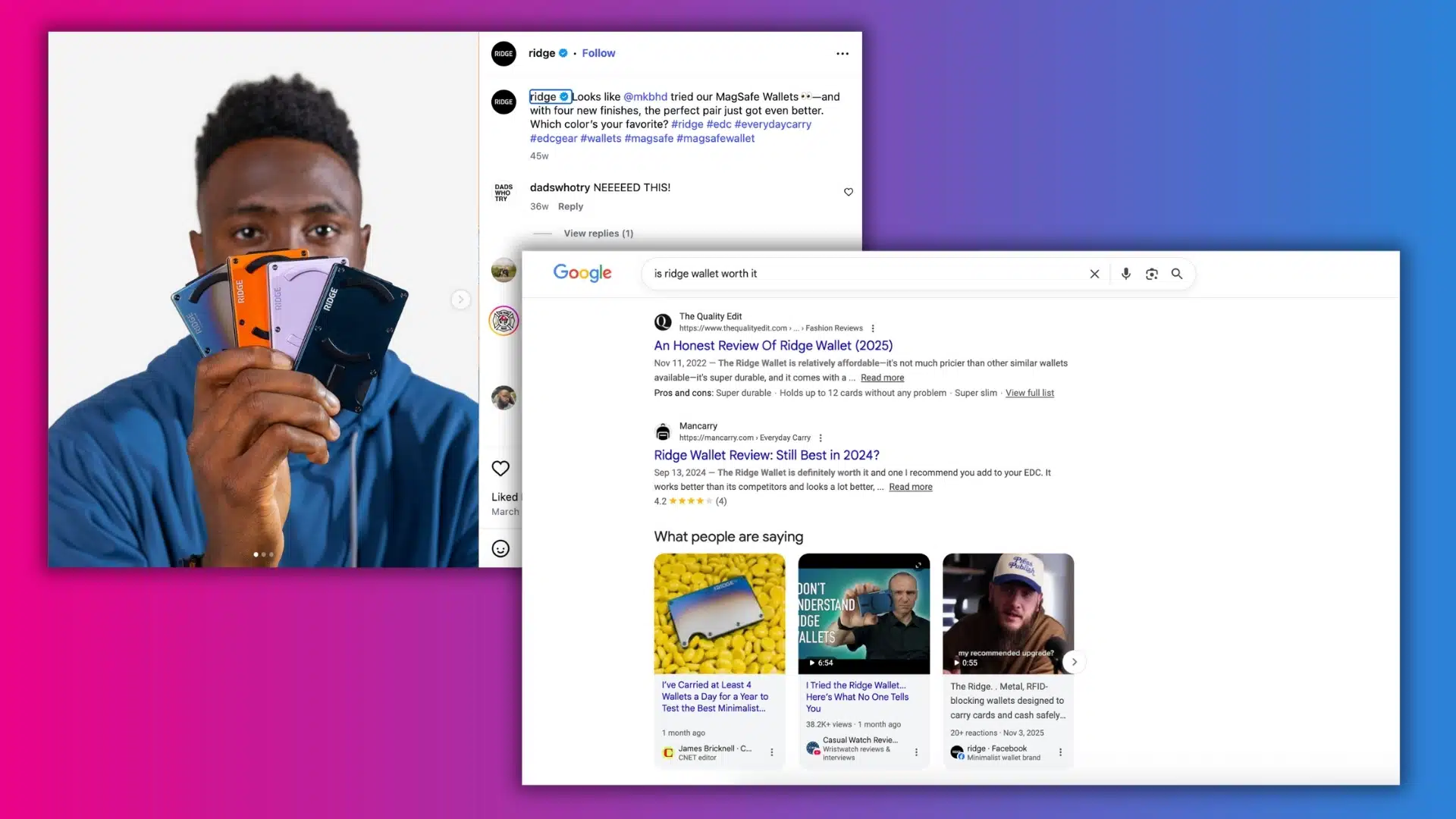
Ridge’s comprehensive search strategy allows viewers intrigued by tech influencer Marques Brownlee’s wallet review to find answers to follow-up questions through search.
How to choose the right type of social commerce for your brand
There’s no universally “best” type of social commerce. The right approach depends on what you need the program to accomplish, how quickly, and what your audience and resources can support.
Examine funnel stage and intent
Consider what role social commerce needs to play in your funnel right now.
Most programs require a mix of both core and supporting models—the difference is sequencing. Brands that need proof of impact quickly typically start with core models, then layer in supporting models to strengthen performance over time.
Brands in high-consideration categories or teams navigating internal hesitation may invert that order. This is a common pattern in B2B social commerce, where teams often invest in credibility-building models before pushing for conversion.
Analyze audience behavior
Next, map how your customers move from discovery to purchase.
Audience behavior determines whether core models can convert quickly or whether supporting models need to do more work first. You want to align your program with how decisions already happen.
You may not have a complete map of your customers’ journey at the start, but analyzing what you already know gives you a place to begin testing.
Consider internal resources and scale
The final check is whether your social commerce plan realistically fits your team’s ability to execute.
Some models deliver faster outcomes because they scale with performance. Others require more coordination, ongoing engagement, or cross-team involvement before results compound.
The right choice depends on how much complexity your team can absorb without slowing momentum. A model that fits your resources today is far more likely to grow than an ambitious strategy your team can’t maintain.
Create a social commerce portfolio that smashes your goals
Successful social commerce strategies use a set of marketing models that turn social discovery into measurable sales. The most successful brands focus on understanding which tactics are doing the work and where those models fit across the customer journey.
To boost sales quickly, start with the core models that align with existing demand and buying behavior. Then improve efficiency and sustain growth by layering in the supporting models that build trust and shorten decision cycles over time.
Social commerce works best when your strategy reflects how customers actually buy—turning social from a cost center into a measurable, scalable revenue driver.
FAQs
A clear example of social commerce is an influencer sharing a short-form video on a social platform that introduces a product and allows viewers to purchase using a product tag, tracked link, or in-app checkout—whether the sale happens immediately or later on the brand’s site.
Something qualifies as social commerce when it meets three criteria:
- It influences purchase decisions inside social platforms, where discovery, validation, and confidence are built through feeds, comments, and creator content
- It creates an attributable conversion path, such as affiliate links, promo codes, shoppable posts, or in-app checkout that connect social interactions to revenue
It uses social-native behavior to reduce friction, aligning with how people naturally engage on each platform rather than forcing traditional advertising formats
The popularity varies depending on audience behavior, product category, and the tools each platform offers.
For example, Facebook remains the most widely adopted social commerce platform across age groups—with 49 percent of users saying they’re likely to make a purchase directly from the app. However, 71 percent of Gen Z users reported that they’d be most likely to buy from Instagram.
To determine which platform is right for your brand, look at:
- Where your audience already engages most frequently
- Whether the platform supports the experience your product needs
- Which formats resonate with your category and buying cycle
Once you test performance and attribution across your choice platforms, you can refine where you invest more deeply for social commerce growth.
If your primary goal is in-app checkout, the best fit is native social commerce. This model allows customers to discover products directly in the feed, tap product tags or shoppable posts, and buy without leaving the app.
This type of social commerce is especially effective for:
- Visually driven products
- Mobile-first audiences
- Situations where customers don’t need deep education before purchasing
To make native social commerce a reliable revenue channel, brands need consistent product catalogs, clear creative standards for shoppable content, and reporting that ties purchases back to specific content and creators.
If your goal is to send high-intent traffic to your online store and not necessarily in-app checkout, prioritize:
- Affiliate marketing content, where partners push traffic that’s more likely to convert in exchange for commissions. This works well because the incentives align with performance.
- Sponsored content with tracked links or promo codes. This type of social commerce can drive high-intent visits when creators include a clear CTA and a measurable link path.
To improve the quality of traffic, focus on:
- Creator fit
- Matching the social messaging to the product page
- The clarity of your offer (shipping, returns, bundles, promo codes)
Impulse purchases happen when you combine low friction with high momentum. The social commerce models that best support that are:
- Livestream shopping, which drives urgency through real-time engagement and limited-time offers. The social proof of comments and reactions reduces hesitation.
- Native social commerce with shoppable videos, which allow viewers to tap product tags and buy quickly. This reduces the drop-off that happens when customers have to leave the app.
No matter what format you choose, your content should quickly highlight a product demonstration or reveal the product’s benefits. Creative that’s less polished and platform-native tends to feel the most authentic.
Pairing these qualities with a simple offer—such as a bundle, limited-time discount, or free shipping—often creates the confidence and momentum required to encourage impulse buys.
To make a smart decision, you need a structured plan for testing the best social commerce types for your business. Follow these steps:
- Determine your starting point by reviewing which content formats already drive engagement and saves. Look for patterns in comment questions, tagged creators, and how customers engage with your content on social media.
- Choose a core social commerce model to test and one supporting model to strengthen it. For example, you can begin commissioning more sponsored content from select creators while conducting product seeding with a smaller set of creators to increase product exposure and organic content volume.
- Define success using measurable outcome. Before you run the test, decide what “working” means.
- Run small, controlled experiments before committing. Test for 30–60 days, then scale what performs.
If user-generated content and community drives buying decisions in your category, the strongest approach starts with supporting social commerce models that build trust, then connects to a clear conversion path.
Begin with models that reinforce credibility and reduce hesitation:
- Customer advocacy programs, which encourage reviews, testimonials, and social content that validate product claims and build confidence
- Community-driven programs, which sustain engagement and create a natural environment for recommendations and repeat purchases
Once that trust layer is in place, connect it to a core social commerce model that captures demand:
- Affiliate marketing content to scale measurable, performance-based conversion paths
- Native social commerce to reduce friction when customers are ready to buy
- Sponsored content to amplify proof-backed creator messages