

Many brands treat influencer collaborations like magazine ads: pick a face, pay a fee, post once, move on. The content performs, the engagement looks good, and the revenue… doesn’t materialize.
Yamazaki Home used to operate this way. One-off creator campaigns. Flat fees. Impressive reach numbers that didn’t translate to sales. When they actually ran the attribution, they realized they were spending six figures on what was essentially very expensive awareness content.
Then they completely rebuilt their approach. They shifted to performance-based compensation. They implemented always-on partnerships instead of seasonal activations. They tracked which creators actually drove revenue, then invested more heavily in those relationships. They built a system, not a campaign calendar.
The result: they tripled their influencer-driven revenue in 18 months while actually reducing the number of partnerships they managed.
That transformation—from transactional posts to performance-driven systems—is the defining shift in influencer marketing for 2026. The brands mastering the art of coordinating with influencers are turning brand partnerships and creator collaboration into a predictable and scalable growth channel. The brands that aren’t are watching their cost-per-acquisition (CPA) climb while wondering why “influencer marketing doesn’t work.”
If you want to move past vanity metrics and drive real return on investment (ROI), you need a proven strategy for how to collaborate with influencers effectively.
Use these seven tips to build stronger collaborations with influencers:
- Define your influencer marketing goals and partner types
- Find the right creators for your brand
- Formalize the partnership through contracts and compensation terms
- Co-create compelling content
- Avoid common influencer marketing mistakes
- Measure campaign success
- Optimize and scale partnerships
Step 1: Define your influencer marketing goals and collaboration types
Effective influencer collaborations start with defined goals and measurable outcomes. Without them, even the most creative campaigns struggle to deliver meaningful results.
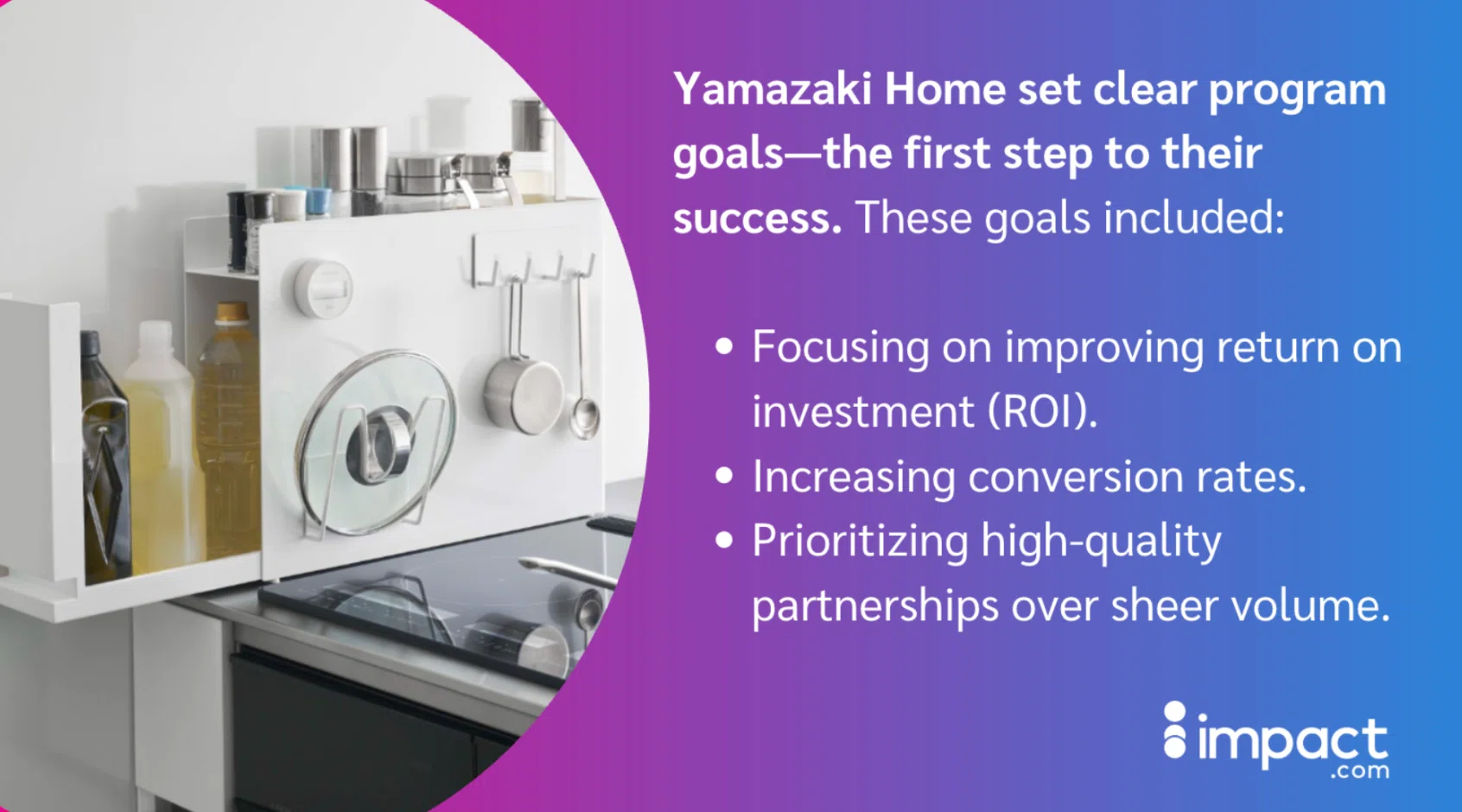
Yamazaki Home set specific, measurable objectives tied to partner quality and revenue contribution—rather than generic growth targets.
The home goods brand scaled its influencer program effectively by:
- Focusing on improving return on investment (ROI).
- Increasing conversion rates.
- Prioritizing high-quality partnerships over sheer volume.
Before identifying potential partners or discussing compensation, clearly outline what the collaboration aims to achieve.
Align influencer goals with business objectives
Successful partnerships are built on well-defined goals.
Consider the SMART framework—ensuring objectives are Specific, Measurable, Achievable, Relevant, and Time-bound—to provide clear direction when coordinating with influencers. This approach also helps you measure performance within a specific timeframe.
For example, if your objective is brand awareness, you should track share of voice and earned media value (EMV) vs only sales. Conversely, revenue-focused partnerships must prioritize CPA and ROI.
This structured approach adds tangible value to your business and stays within budget.
Influencer collaborations help your brand:
- Increase brand awareness through reach, impressions, and share of voice.
- Drive engagement through comments, saves, and community interaction.
- Generate revenue through clicks, conversions, and affiliate sales.
Each objective requires a different approach and set of tools, making the case for a unified partnership platform even stronger. A campaign designed to improve brand visibility will look very different from one focused on conversion rate optimization.
What metrics should you track for brand awareness vs revenue campaigns?
Once your goals are clearly defined, the next step in coordinating with influencers is to decide how to measure their progress. Choose metrics that reflect what success looks like for the campaign—not just what’s easy to report.
Link targets to specific impressions and you’ll have a great starting point:
- Brand awareness initiatives: Track reach, impressions, and EMV to understand how effectively your message is being seen and shared.
- Engagement-driven collaborations: Focus on engagement rates and audience sentiment to gain insight into how audiences interact with and respond to the content.
- Revenue-focused partnerships: Measure CPA and ROI to connect creator activity to business outcomes.
Together, these benchmarks create a shared performance framework for your marketing team and creator partners. From here, you can guide optimization throughout the campaign and make post-campaign analysis clearer and far more actionable.
Short-term campaigns vs. long-term brand partnerships: Which is right for your goals?
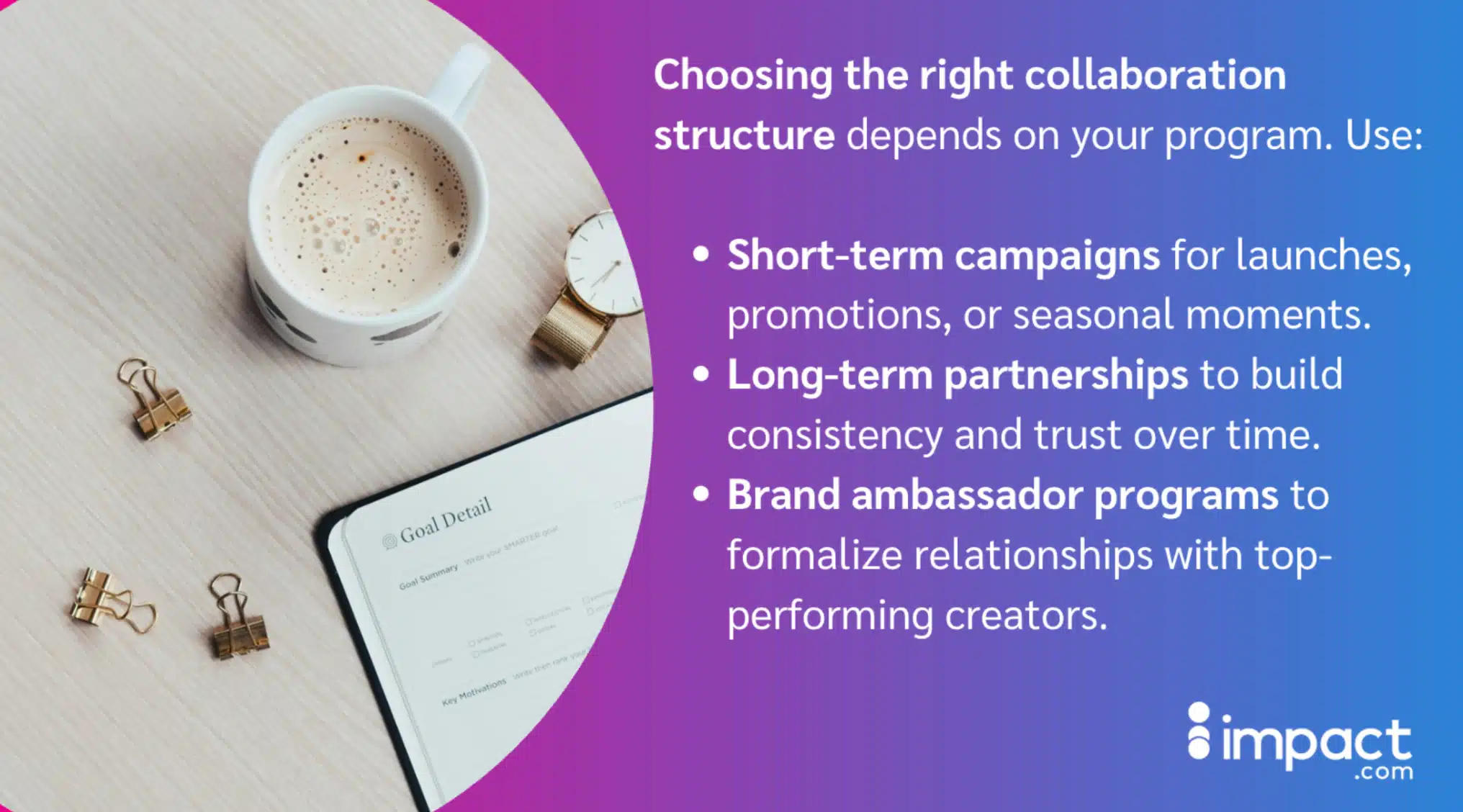
Goals steer you toward the right collaboration models to motivate partners. Influencer collaborations should fit your scenario and desired outcomes—here’s a breakdown:
- Short-term campaigns are effective for launches, promotions, or seasonal events.
- Long-term partnerships build consistency and trust over time.
- Brand ambassador programs formalize relationships with your top-performing creators.
Long-term partnerships often lead to better results. This is because repeated exposure builds familiarity, which helps recommendations feel more authentic and credible.
Step 2: How to find the right influencers for your brand
The most effective brand collaborations involve working with creators whose audience demographics and content style naturally match your brand.
Yamazaki Home’s creator program provides a clear example of this in practice. By moving away from volume-based recruitment to define a specific audience profile, the brand improved partner quality and campaign performance. Once creators aligned with the brand’s aesthetic and values, engagement and conversion followed.
Recognize creators as measurable sales drivers in order to find the right partners and give them a seat at the performance table. The smartest brands build programs that reward creativity and conversion, says Kayla Lee, VP of Growth at Autumn Communications. Lee adds, “It’s no longer about how many people saw the post, but how many acted because of it.”

“The smartest brands build programs that reward both creativity and conversion, giving creators a seat at the performance table. It’s no longer about how many people saw the post, but how many acted because of it.”
– Kayla Lee, VP of Growth at Autumn Communications
How can you evaluate creator performance beyond vanity metrics?
When evaluating potential creator partnerships, keep in mind that follower count does not always directly relate to influence. Creators with smaller but highly engaged audiences can outperform larger accounts in terms of conversion and community engagement.
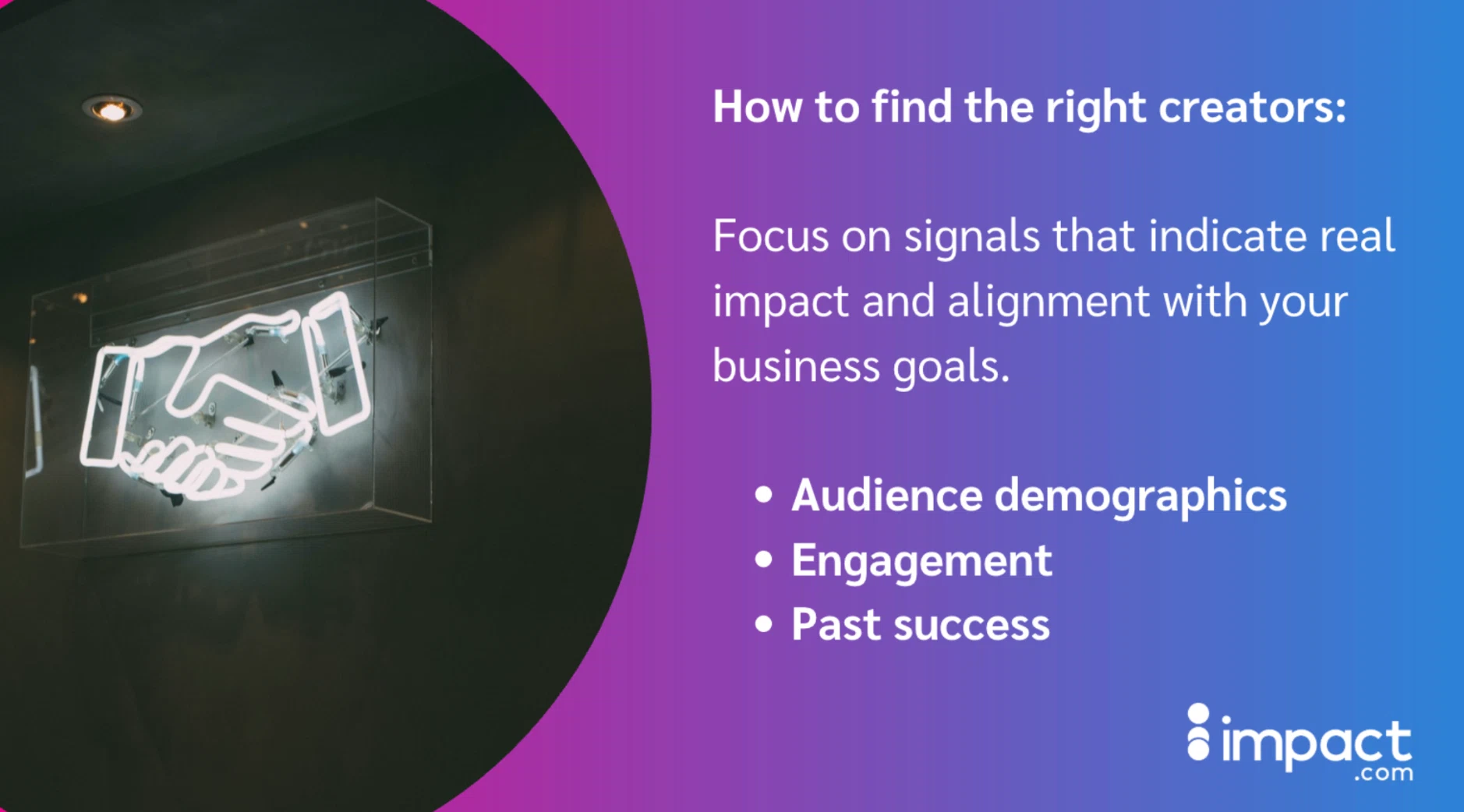
Instead, focus on signals that indicate real impact and alignment with your business goals:
- Audience demographics: Do they match your brand’s target customers?
- Engagement: How high is the engagement level relative to the audience size?
- Past success: Has the creator demonstrated success in previous brand collaborations?
The quality of content and how reliably the creator shows up across formats and platforms also matter.
How can brands vet influencer authenticity and audience trust?
Audiences quickly detect misaligned or scripted promotions. 76 percent of marketers agree that authentic content outperforms highly produced content.
When we look at the mechanics of building credible content, it’s clear that authenticity isn’t just about the content style—it’s about the duration of the relationship. Brianna Doe, founder of Verbatim, advocates for this shift toward intentional brand partnerships. She notes that “it’s a lot harder to build trust off of two sponsored posts” than it is to allow a creator to “build trust indirectly for you with their audience over time”. By prioritizing these “deliberate” partnerships, brands can move away from transactional noise and toward a more integrated storytelling approach.
So how can you vet authenticity and trust? Volodymyr Lebedenko, Head of Marketing at HostZealot, suggests looking beyond engagement rates and focusing on engagement intent when identifying authentic micro-influencers. “Analyze the comment section closely,” he adds, “Are followers engaging in meaningful conversations? Are they asking topic-related questions? Or are they simply dropping emojis?”
Reviewing past brand collaborations and comment quality often reveals more about a creator’s influence than reach alone.

“Strive for longer-term, more intentional partnerships. it’s far more difficult to build trust off of a single collaboration than it is to allow a creator to build that credibility indirectly for you over time.”
– Brianna Doe, Founder of Verbatim
What are the different influencer tiers and when should you use them?
Influencer tiers still play an important role, but each serves a different strategic purpose:
- Nano- and micro-influencers: These influencers often deliver higher engagement and deeper credibility within specific niches, making them especially effective for trust-driven campaigns.
- Macro-influencers: They can offer broader awareness and faster reach, helping brands scale visibility across larger audiences.
- Celebrity creators. Celebrities help amplify a brand’s exposure even further, though they typically require closer evaluation to ensure their performance aligns with their investment.
How can your brand optimize reach and results? By building an influencer portfolio comprised of multiple creator types to balance reach, engagement, and efficiency—using each where it delivers the greatest impact.

“To identify authentic micro-influencers, we analyze the comment section closely. Are their followers engaging in a meaningful conversation? Are they asking topic-related questions? Are they genuinely interested in the topic—or are they simply dropping emojis? It’s critical to ensure that micro-influencers spark conversations beyond surface-level reactions.”
– Volodymyr Lebedenko, Head of Marketing at HostZealot
Step 3: Formalizing the partnership: Contracts and compensation
Clear contracts and well-defined agreements set the foundation for successful brand partnerships and creator collaborations. They reduce misunderstandings, establish a professional working relationship, and protect both brands and creators throughout the partnership.
Contracts also clearly outline payment structures tied to performance and partnership quality. When done right, they help motivate creators to invest more deeply in the collaboration, driving stronger outcomes for both sides.
What are the standard influencer compensation models in 2026?
In practice, your brand will typically choose from three primary approaches:
- Flat fees are typically tied to specific deliverables, offering creators certainty around compensation.
- Performance-based compensation such as affiliate links or commission structures directly reflect payouts to results.
- Product gifting is a budget-friendly way to test the waters with new creators, often used for experimental collaborations, and most effective when coupled with clear expectations and long-term potential.
Our research indicates that flat fees and commissions are preferred by creators, with more experienced creators often opting for a hybrid approach.
Take Yamazaki Home’s brand collaborations. The brand moved away from a pure CPA model and adopted a more flexible hybrid compensation structure. Top-performing creators were rewarded with premium commission rates, while lower-value partners were deprioritized or compensated differently.
Compensation was also actively adjusted based on performance and alignment, allowing Yamazaki to invest more heavily in creators who delivered meaningful results.
What legal terms should be included in an influencer contract checklist?
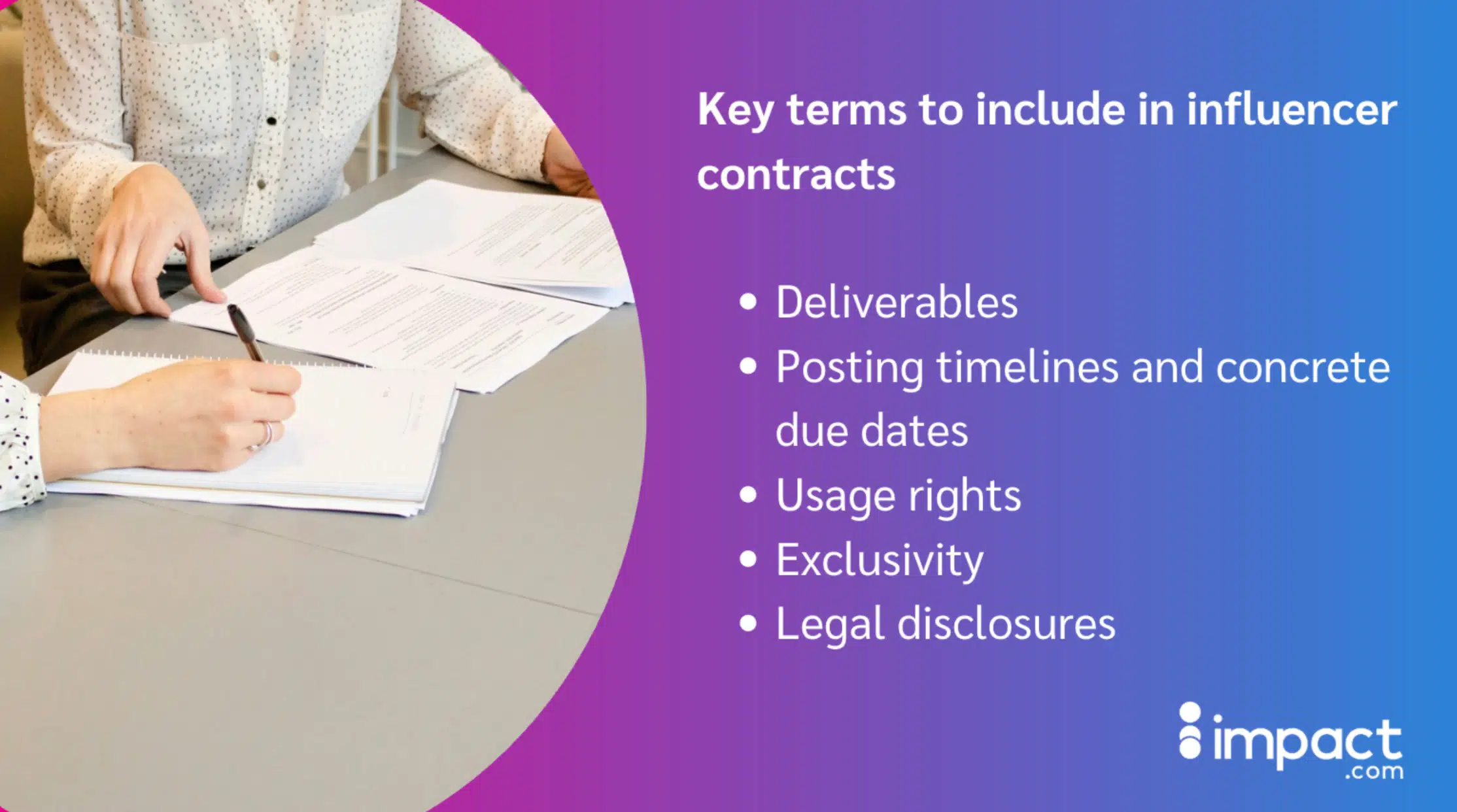
Your contracts must go beyond simple payment terms to protect brand visibility and legal safety. Use the following checklist for every agreement:
- Deliverables: Specify the exact number of posts and platforms (e.g., two Instagram Reels and one set of Stories).
- Posting timelines and concrete due dates: Align with creators to ensure your campaigns run on time.
- Usage rights: Define if and how your brand can use the content in paid ads or on your website.
- Exclusivity: Clearly state if the creator is restricted from working with direct competitors for a specific timeframe.
- Legal disclosures: Mandate compliance with local advertising standards (like FTC guidelines) to avoid legal pitfalls.
Just as important, those agreements should leave room for creative freedom. Influencers perform best when they can communicate in their own voice rather than follow overly rigid scripts. When structure and flexibility are balanced, you create the conditions for more authentic content, stronger engagement, and lasting partnerships.

Influencer marketing trends 2026: 13 experts weigh in on the future of performance-driven growth
Explore the key trends shaping creator marketing in 2026, and learn how to optimize your budget, partnerships, and performance for higher ROI.
Step 4: Co-creating compelling content
Creators understand their audiences. Your brand understands its positioning and goals.
High-value content emerges when your brand collaborates with influencers to merge these perspectives.
How do you write a creative brief that balances brand goals and creator freedom?
A clear creative brief provides enough structure to ensure alignment on shared goals without dictating execution. Good briefs outline:
- Campaign objectives
- Key messages
- Calls to action
- Required disclosures
- Preferred content formats, like YouTube Shorts or Instagram Reels
Keeps campaigns consistent by giving creators the freedom to tailor messaging to what resonates most with their audience.
Creative freedom and authenticity: Protecting the creator’s voice for better outcomes
Audiences respond best to content that feels authentic and naturally aligns with the creator’s existing content.
Overly prescriptive briefs often undermine engagement and erode trust. When brand ambassadors are empowered to communicate a brand’s message in their own voice, content feels more credible—and these brand partnerships are more likely to deliver long-term value.
Prebiotic soda brand OLIPOP puts this into practice by giving its partners complete freedom to craft content that fits their personal brand. This trust allowed creator Sheri Wilson to authentically introduce OLIPOP to her 1M followers by showcasing creative, festive ways to serve the product during the holidays—content that resonated far more deeply than a rigid script ever could.
Modern brand strategy is moving away from the volatility of “one-and-done” activations in favor of long-term continuity. According to Lollo Nene, Campaign Associate at impact.com, these sustainable partnerships enable creators to establish a consistent voice that naturally weaves brand stories into their content. Nene emphasizes that this persistent presence “builds trust—and ultimately drives stronger conversions”.

“We’re seeing brands shift away from ‘one-and-done’ collaborations and toward long-term, sustainable partnerships. Creators become a consistent voice over time, weaving brand stories naturally into their content. That continuity builds trust—and ultimately drives stronger conversions.”
– Lollo Nene, Campaign Associate at impact.com
Step 5: Common mistakes to avoid during influencer collaborations
Even experienced brands can encounter challenges that hinder their effectiveness when coordinating with influencers.
What are the biggest mistakes brands make when coordinating with influencers?
Identifying these issues early is critical to protecting ROI and long-term partnership value:
- Prioritizing reach over engagement or conversion: High follower counts may increase brand visibility, but they don’t always translate into meaningful action.
- Rushing onboarding or creative development: Leaving creators without the context they need to produce strong, on-brand content.
- Ignoring transparency and disclosure requirements: Treating creators as media placements rather than partners often leads to weaker content and lower trust.
When expectations are unclear or collaboration feels transactional, performance suffers.
How do you run an effective post-campaign follow-up with creator partners?
Post-campaign follow-up is just as important as campaign execution. Review results with creators to share performance insights and discuss what worked—and what didn’t.
This feedback loop transforms individual campaigns into learning opportunities and lays the groundwork for more long-term, high-performing partnerships.
B&Q, the UK’s leading homeware brand, consistently reinvests in high-performing partners to showcase their products in home renovations. By doubling down on what works, they establish mutually beneficial partnerships that have been proven to connect with their audiences. The brand tripled its CTR benchmark as a result.
Step 6: How to measure the success of an influencer collaboration campaign
Influencer campaign measurement transforms collaboration from a creative initiative into a scalable growth channel.
When your brand collaborates with influencers and measures which content creators, messages, and content formats are driving results, it becomes easier to manage and scale.
How is influencer marketing ROI calculated for performance campaigns?
Effective measurement starts by aligning metrics to the goals defined earlier in the collaboration. It requires visibility across every stage of the campaign, from content performance and audience response to downstream business impact.
Calulate ROI using this formula:
ROI = (Revenue generated – marketing cost) / Marketing cost × 100
Lebedenko puts this formula into practice: “If we invest $1,500 and generate 20 paying customers with a $600 lifetime value, the ROI is $12,000—about an 8x return.”
Zoe Rice, Marketing Manager at 3 Men Movers, reinforces the value of combining direct attribution with broader context: “We track direct actions using unique booking links, but we also look at secondary ROI—like how often posts are shared in local community groups. That ripple effect tells us whether an influencer is really driving impact.”
Together, these approaches balance hard performance metrics with signals of sustained influence, providing a comprehensive view of ROI.

PXA course: Reporting and Measuring Influencer Programs
Ever wondered about the secret sauce for measuring success in the influencer world? This course reveals insights into program benchmarks, business KPIs, and more.
Why attribution matters for proving incremental creator impact
Yamazaki Home’s measurement approach highlights why attribution and journey-level analysis are essential for protecting creator value and ROI.
By using impact.com’s customer journey mapping, the brand identified attribution leakage and reallocated budget toward partners driving truly incremental impact.
This deeper visibility enabled the brand to demonstrate the real value that creators delivered earlier in the funnel, reinforcing that meaningful measurement extends beyond surface metrics and is critical for scaling performance-driven influencer programs.
Metrics for brand awareness campaigns
Awareness-focused campaigns often assess reach and impressions to gauge how effectively the brand message is distributed.
The metrics that matter most depend on the goals defined at the start of the collaboration.
Metrics for performance-driven campaigns
When you integrate performance tracking into creator partnerships, you’re significantly more likely to report measurable ROI vs running awareness-only campaigns.
Performance-driven collaborations prioritize key indicators such as:
- Click-through rate (CTR)
- Conversion rates
- CPA
Consider implementing AI tools like predictive analytics to identify which creator partnerships are most likely to deliver consistent returns at scale.
How can I communicate influencer marketing ROI to my leadership team?
When a content creator’s performance is clearly tied to business outcomes, leadership teams gain confidence in the channel—and clearer direction on where to invest next.
This matters as influencer partnerships represent a meaningful portion of modern marketing budgets. According to The State of Affiliate Marketing Report, 59 percent of brands plan to dedicate nearly a quarter of their affiliate budget to support influencer partnerships, with 18 percent allocating more than half of their program budget to creators.
Transparent reporting helps defend and conceptualize that investment. By connecting creator performance to revenue, you can position influencer marketing as a reliable, measurable growth driver with a defensible return.
Which tools and technologies are needed to scale influencer programs?
impact.com’s platform allows you to see where your campaign is flourishing, so you can invest in high-performing partners and sunset underperforming partners and strategies.
Determine the type of content that performs best on specific social media platforms, identify the messaging that resonates with your audience, and keep your partners informed to adjust their content as needed.
With the right tools, you can use data to demonstrate the value of your budget.
To truly scale, you need visibility across the entire funnel. impact.com’s platform provides advanced tools to move beyond surface-level metrics:
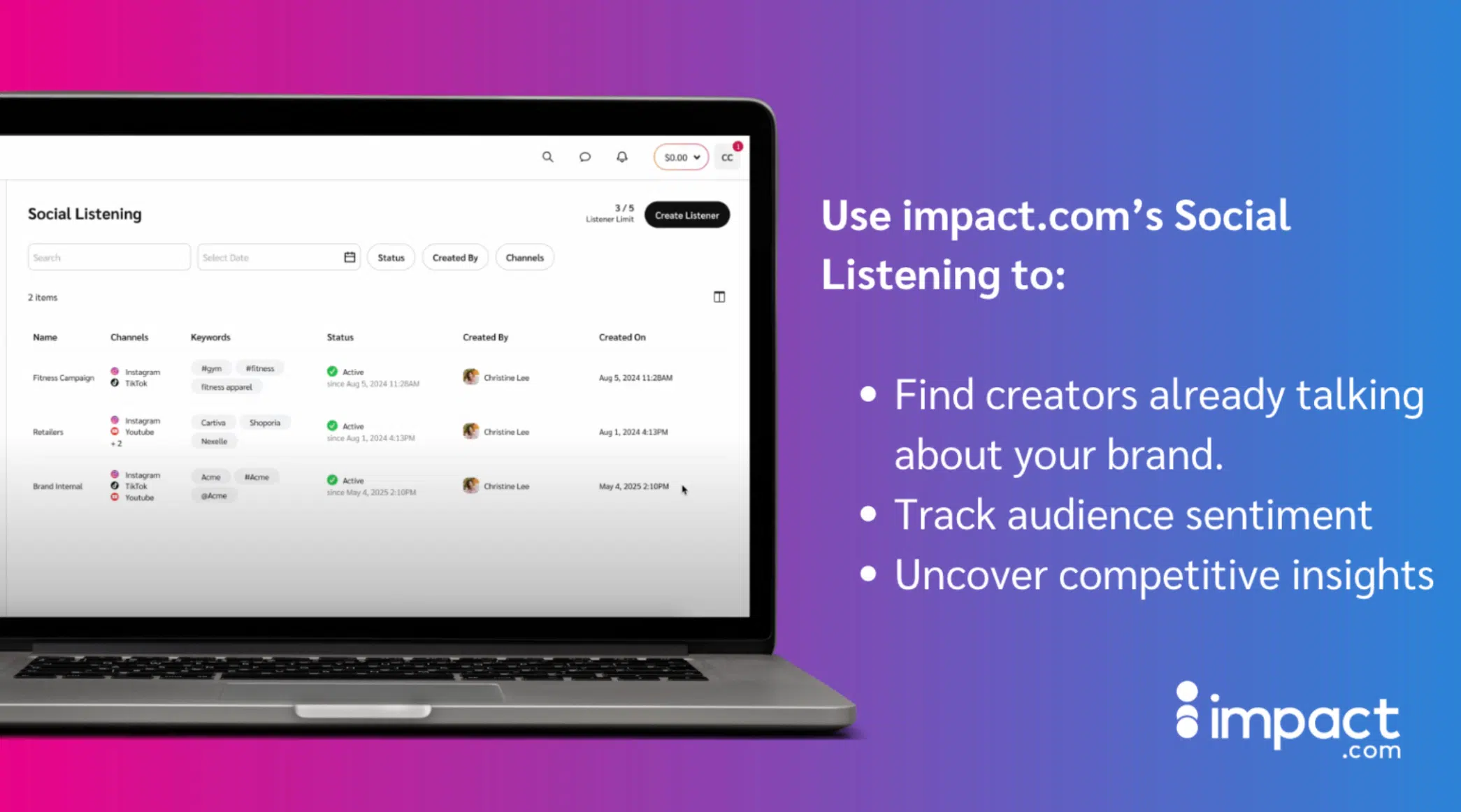
- Social Listening: Use these features to track audience sentiment and see how your brand is discussed relative to competitors.
- Predictive analytics: Implement AI to identify which creator partnerships are most likely to deliver consistent returns based on historical data.
- Customer journey mapping: This identifies opportunities or problems like attribution leakage—allowing you to reallocate budget toward partners driving truly incremental impact.
Step 7: Optimizing and scaling your brand partnerships with repeatable and scalable processes
When influencer collaboration is treated as an ongoing program rather than a series of one-off activations, performance compounds over time.
OLIPOP partnered with impact.com and GravityFed to manage a surge in creator interest thanks to its growing brand affinity. By transitioning from manual management to an automated system for recruitment and contracting, they recruited nearly 1.9k partners and achieved a staggering 982 percent average return on ad spend (ROAS). This shift transformed their creator program into a predictable sales engine, with influencers contributing 12 percent of total sales in 2024.
Brands like OLIPOP, which combine influencer and affiliate strategies, often generate higher revenue contributions than those running each channel in isolation.
Additionally, brands running always-on creator or affiliate programs report higher consistency in revenue contribution than those relying on one-off campaigns.
Blending strategies allows brands to scale what works while maintaining accountability across the funnel.
As traditional discovery channels shift, Doe suggests that brands must integrate “social SEO” into their scaling strategy to remain competitive. She notes that for brands “taking 15 percent of our paid search budget and allocating it to influencers,” success comes from optimizing for specific keywords within creator partnerships to maintain visibility in modern search results.
Convert top creators into long-term partners
Creators who consistently perform well tend to transition into long-term partners or brand ambassadors. Trust also compounds over time in ways you can’t capture with a single report, according to Leigh McKenzie, Director of Online Visibility at Semrush.
McKenzie explains why trust-based partnerships outperform scale-driven ones: “We worked with an influencer who didn’t have many followers but was known for being honest about successes and failures. The community trusted her. We got more qualified signups than from larger influencers.”
The takeaway for McKenzie? “We now measure ROI by community impact and momentum, not just numbers.”
Even if they don’t have the largest following, these kinds of creator relationships increase efficiency and build deeper audience trust.
Documenting and refining best practices: How do you build a repeatable model for long-term influencer growth?
Documented best practices ensure consistency while allowing successful strategies to be replicated and optimized over time.
Capturing what works, whether that’s refined briefs, repeatable workflows, or proven performance benchmarks, makes it easier to expand programs across teams, regions, and markets.
Turning collaborations into long-term brand growth
To maximize your brand’s impact in 2026, transition from one-off activations to a continuous, always-on system for coordinating with influencers. Success begins by aligning SMART objectives with specific collaboration structures—such as brand ambassador programs—to ensure every partnership adds tangible value.
Efficiency is driven by selecting creators based on audience demographics and engagement intent rather than vanity metrics. Protect these investments through comprehensive contracts and hybrid compensation models that reward performance while allowing for creative freedom.
Finally, transform individual campaigns into a scalable growth channel by implementing rigorous measurement and attribution. By documenting best practices and reinvesting in top-performing partners, you build a repeatable model that compounds audience trust and revenue over time.
A unified platform like impact.com gives you all the tools needed with just one login.
Check out more content here:
- Influencer marketing trends 2026: 13 experts weigh in on the future of performance-driven growth [blog]
- The influencer portfolio approach: When to deploy micro-influencers vs macro-influencers vs celebrity partnerships [blog]
- Black Friday 2025 spending trends: Shoppers researched for weeks, but spent 31% in one day [research]
- BILL flipped affiliate roadblocks into deals up to $1m [case study]
- The Partnership Economy: The VIP of SMB with BILL [podcast]
- CPL to LTV: Performance marketing strategies for sustainable revenue growth [blog]
FAQs
Hybrid compensation models consistently deliver the strongest results for long-term influencer partnerships. This model encourages creators to invest more deeply in the partnership and treat the collaboration as an ongoing relationship rather than a one-off promotion.
By combining a flat fee with performance-based incentives, brands compensate creators fairly for their time and effort while also aligning payouts with measurable outcomes.
Brands protect content rights by establishing clear, comprehensive contracts before a collaboration begins. Clear contracts reduce legal risk, prevent disputes, and allow brands to confidently scale high-performing content without ambiguity.
These agreements should define usage rights, ownership, exclusivity terms, and duration, ensuring both parties understand how content can be reused across channels.
To measure brand awareness effectively, brands should focus on metrics that indicate visibility and reach rather than direct conversions. Reach and impressions help quantify how many people were exposed to the content, while share of voice and earned media value provide insight into how the brand is being discussed relative to competitors.
Together, these metrics offer a clear view of how influencer collaborations are expanding brand presence and visibility.
International influencer collaborations introduce additional legal complexity around disclosure requirements and contract enforceability. Regulations governing sponsored content vary by region, and brands must ensure creators comply with local advertising standards.
Contracts should also account for jurisdictional differences to avoid enforcement issues. Reviewing agreements carefully and consulting legal guidance when expanding globally helps mitigate these risks.
Brands can transition one-off campaigns into long-term brand ambassador programs by reviewing performance data and extending partnerships with top-performing creators. Consistent feedback, shared goals, and flexible collaboration terms help deepen relationships over time.
By investing in creators who consistently deliver results, brands build ambassador programs that drive sustained trust, efficiency, and long-term growth.