

Taylor & Hart’s affiliate program had no dedicated owner. Multiple contributors touched different pieces of it. Onboarding, contracting, refunds, and reporting spread across systems that didn’t talk to each other. Automating that management layer changed what the role required, and let one person run the entire program smoothly, driving a 3,755% ROI (according to the impact.com x Taylor&Hart case study).
Most affiliate management guides assume you have people to hand that work to. In reality, plenty of programs run on exactly one person, with a partner roster that keeps growing and a task list that doesn’t shrink to match.
If that’s you, the fix isn’t a bigger team. It’s cutting the manual work that never needed a person in the first place at every stage of the partner lifecycle—not just the one that happens to be loudest this week.
The partner lifecycle has six stages, and you’re running all of them alone
On paper, this looks like six sequential jobs. In practice, when you’re the only person running the program, it’s one job with six kinds of manual work hiding inside it.
Instead of tackling these areas as a rigid checklist, focus your automation efforts on the primary friction points where manual tasks accumulate across the six core stages:
- Discover and Recruit: find partners without doing it by hand
- Contract and Pay: set commission terms that run themselves
- Track: get one view of the customer journey without reconciling five systems
- Engage: keep partners informed without a dedicated point person
- Protect and Monitor: catch fraud without a compliance team
- Optimize: make decisions without a dedicated analyst
Discover and Recruit: find partners without doing it by hand
Recruitment eats more solo-manager hours than almost any other stage. It starts as a search problem. You’re required to find partners who actually fit your brand inside a much larger pool of partners who don’t. Doing that search by hand means scrolling social platforms and content sites one at a time, then vetting each candidate before you’ve even sent an email.
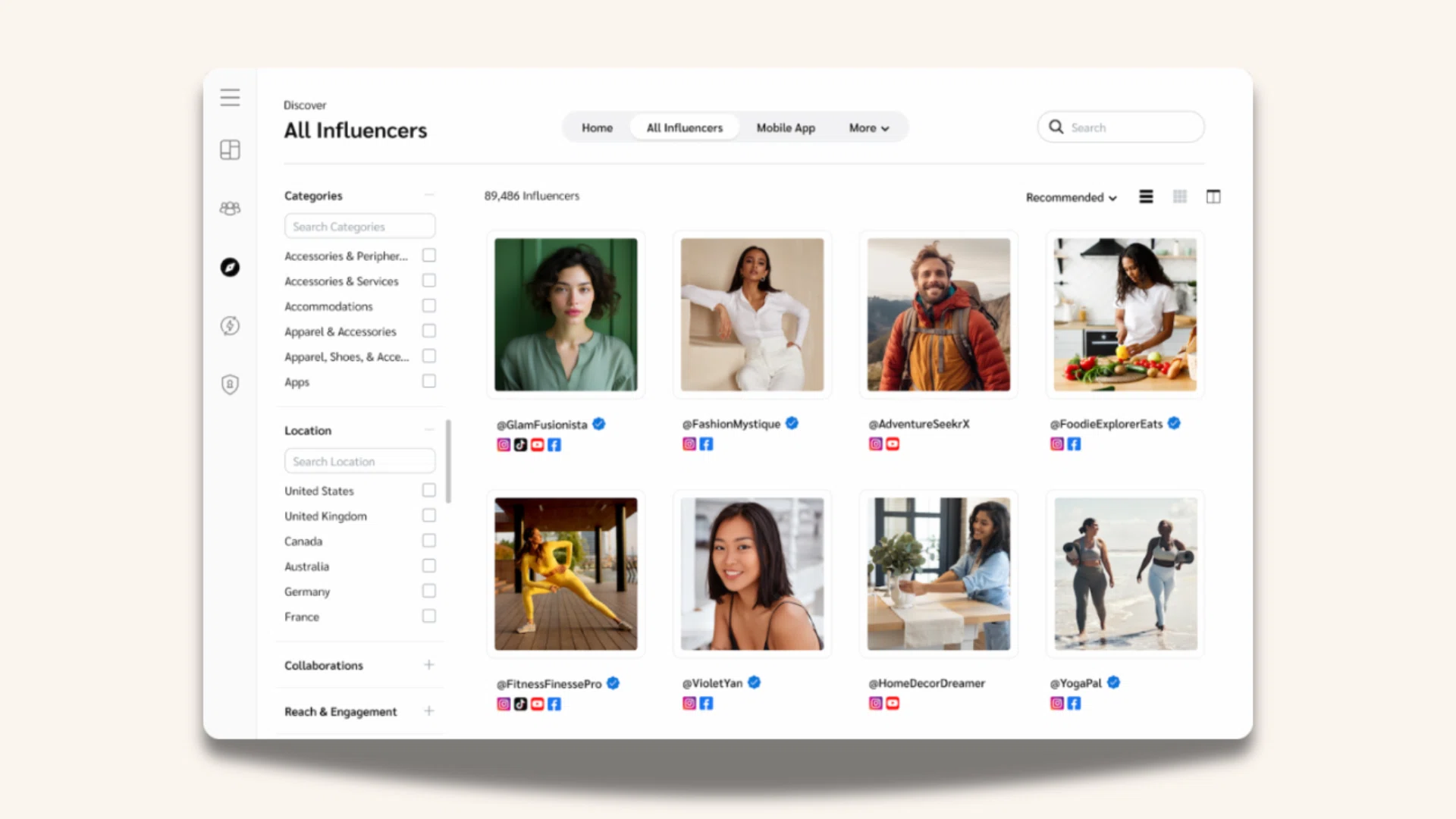
Search tools—advanced search, audience and category filters, and AI recommendations—connect you with partnership opportunities
Automating the sourcing and filtering layer doesn’t remove the judgment call. You still decide whether a partner is worth the relationship. It removes the hours spent finding candidates worth judging in the first place. A discovery tool that filters by audience, content type, and performance signals should hand you a shortlist, not a decision.
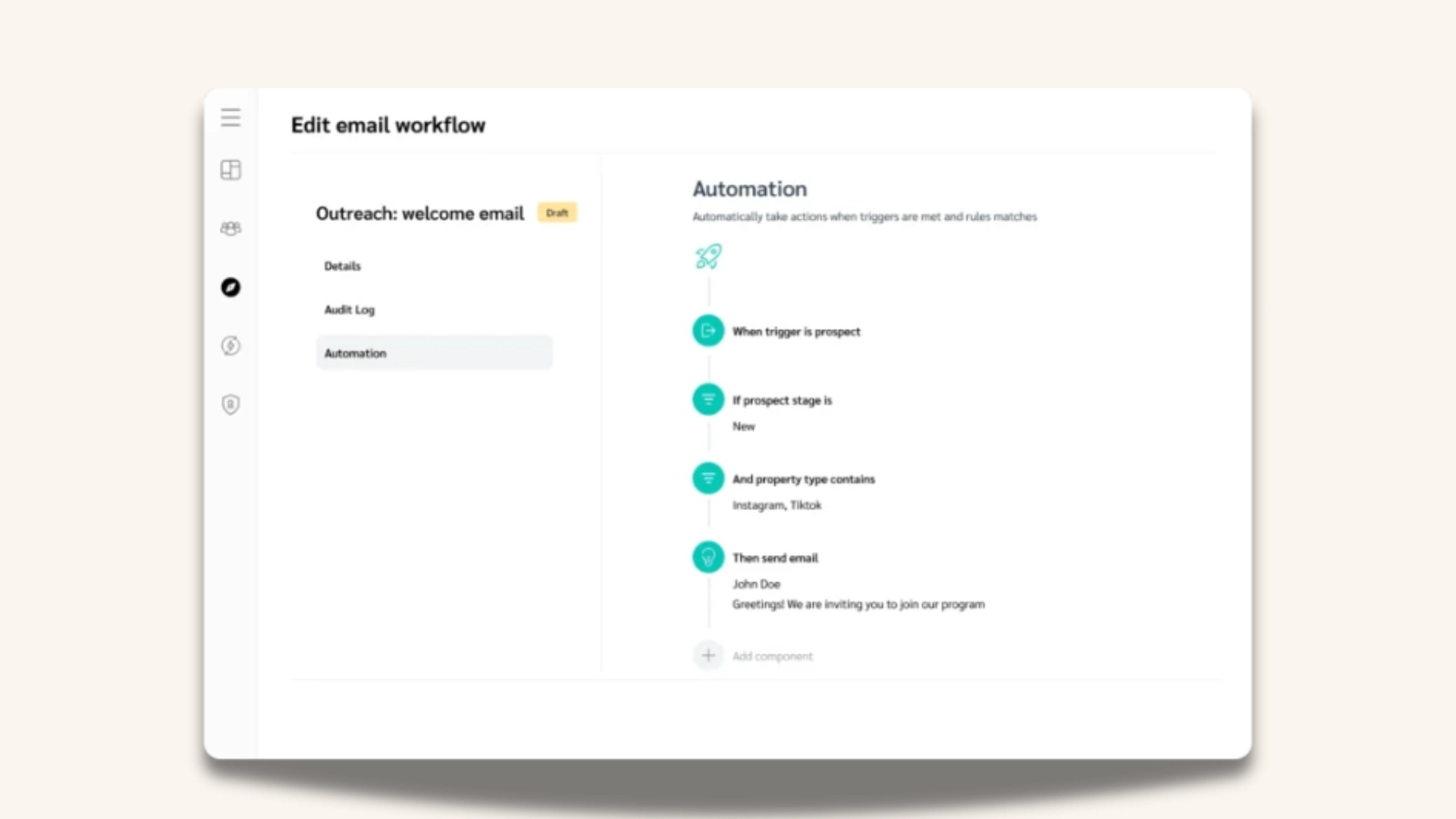
Workflows automatically accept or reject applications based on the criteria you set
Keep in mind that discovery tools naturally prioritize the most visible partners, which may not always align with your brand’s unique needs or potential for long-term growth. Because software lacks your specific strategic insight, you must still carve out time for intentional, one-on-one outreach to the partners you hand-pick for their individual quality and fit.
| Manual approach | Automated approach |
|---|---|
| Building a partner list from scratch across every platform they might show up on | A discovery tool surfaces partners already active in your category, filtered by audience and performance signals |
| Vetting each prospect’s site for brand fit before reaching out | Filtering narrows the pool so only qualified prospects reach your review |
| Writing and sending individual outreach emails | Templated outreach sequences that still leave room for a personal follow-up once someone responds |
Contract and Pay: set commission terms that run themselves
Contracting and payment are where solo managers quietly lose a part-time job’s worth of hours. You negotiate terms with each partner individually, calculate payouts by hand each cycle, and chase down payouts that don’t match your tracking. None of that work needs a person to repeat it every time.
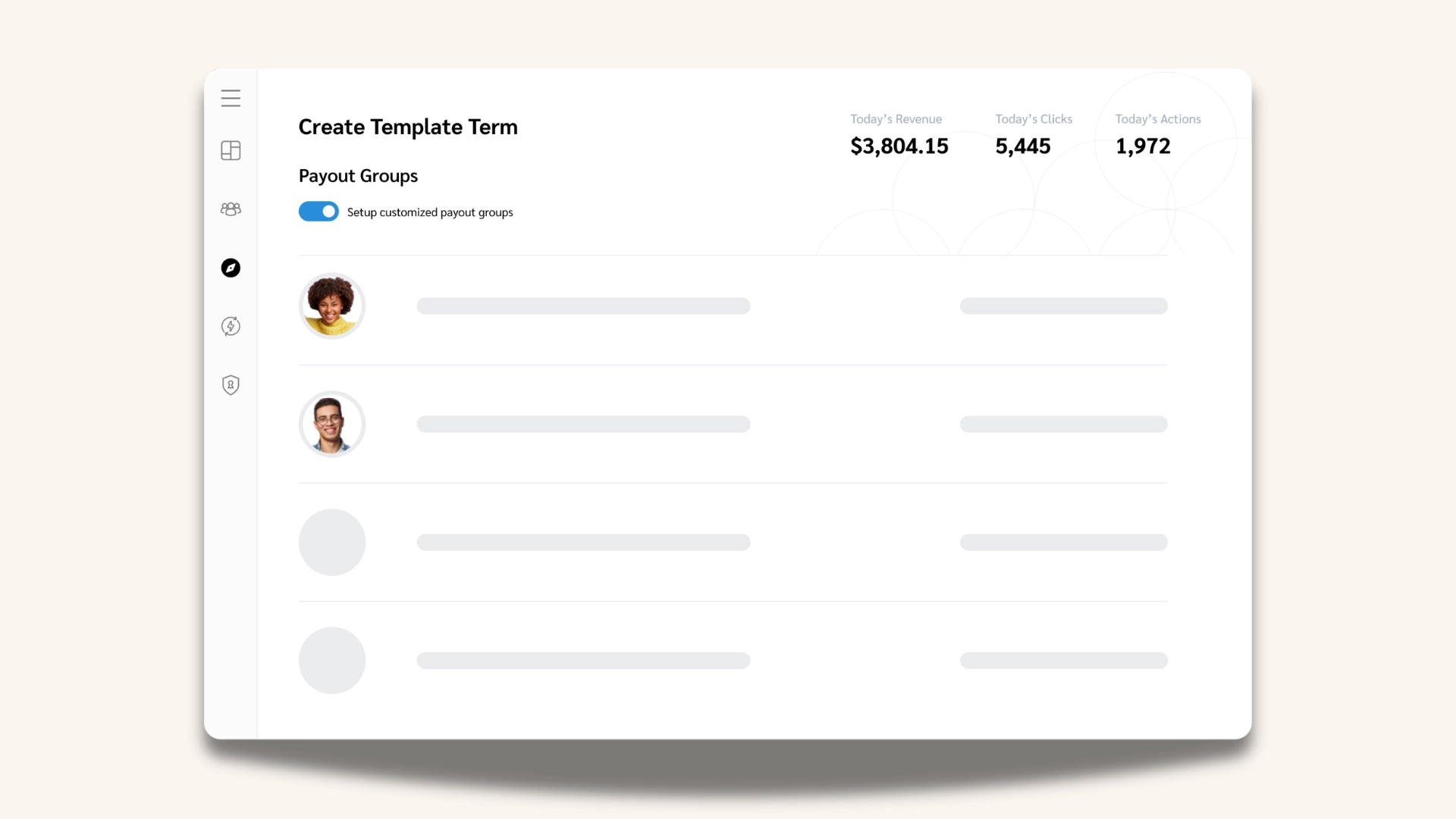
Template Terms set the event type for payout, the default payout, payout adjustment, action locking, and more
Commission rules that apply automatically by partner tier remove the repetition. So does a promo-code restriction that limits or removes commission on discount-driven sales, which protects margin without a single renegotiated contract.
Tiered rules only pay off once you have enough partners and data to justify them. With a handful of partners, case-by-case terms are still the right call. Build the rules once the roster is large enough to warrant it. Even automated commissioning needs a periodic check, because a structure that made sense at 20 partners can misfire at 100 if nobody revisits it.
| Manual approach | Automated approach |
|---|---|
| Negotiating commission terms with each partner individually | Tiered rules applied automatically by partner type or performance |
| Paying out the moment someone clicks or signs up, before you know whether that lead was ever worth anything | Payment only triggers once the action actually converts into something valuable, so you’re not paying for interest that never became a customer |
| Converting currencies and reconciling international payouts by hand for partners outside your home market | Partners get paid automatically in their own currency, whatever currency you’re depositing in |
Track: get one view of the customer journey without reconciling five systems
You don’t have time to piece together which partner actually drove a sale manually. But that’s exactly what happens when your tracking only catches the last click on the last device a customer used. A partner who sparked interest on a customer’s phone weeks ago gets no credit, while the last link a customer clicked on desktop takes it all, and you’re the one left guessing whether that’s actually fair.
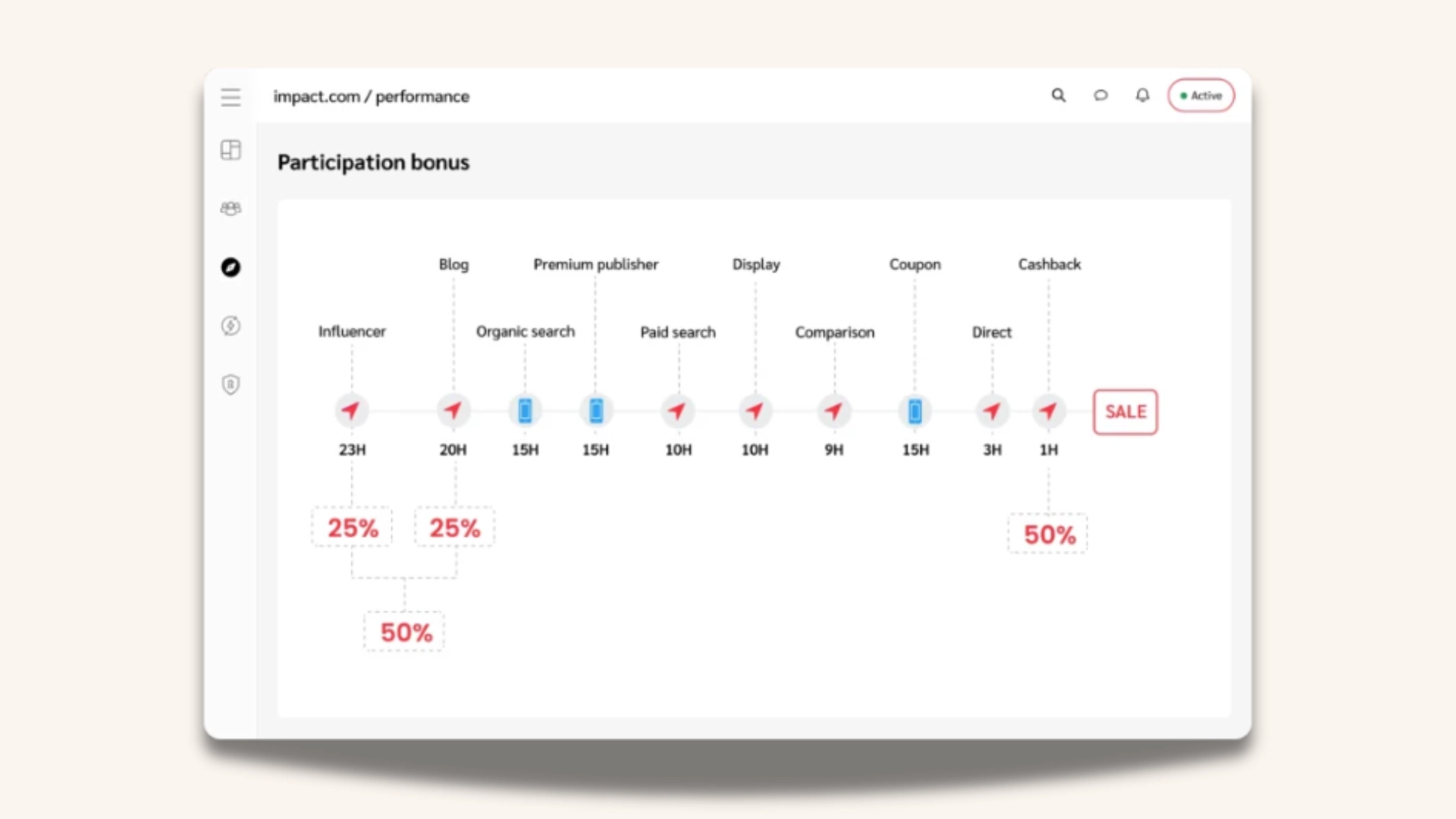
Cross-device figures out which devices belong to the same user and links them
A single, connected view of the customer journey takes that guesswork off your plate. Every touchpoint is attributed correctly on any device, so you’re not manually reconciling a CRM with a spreadsheet just to figure out who gets paid for what.
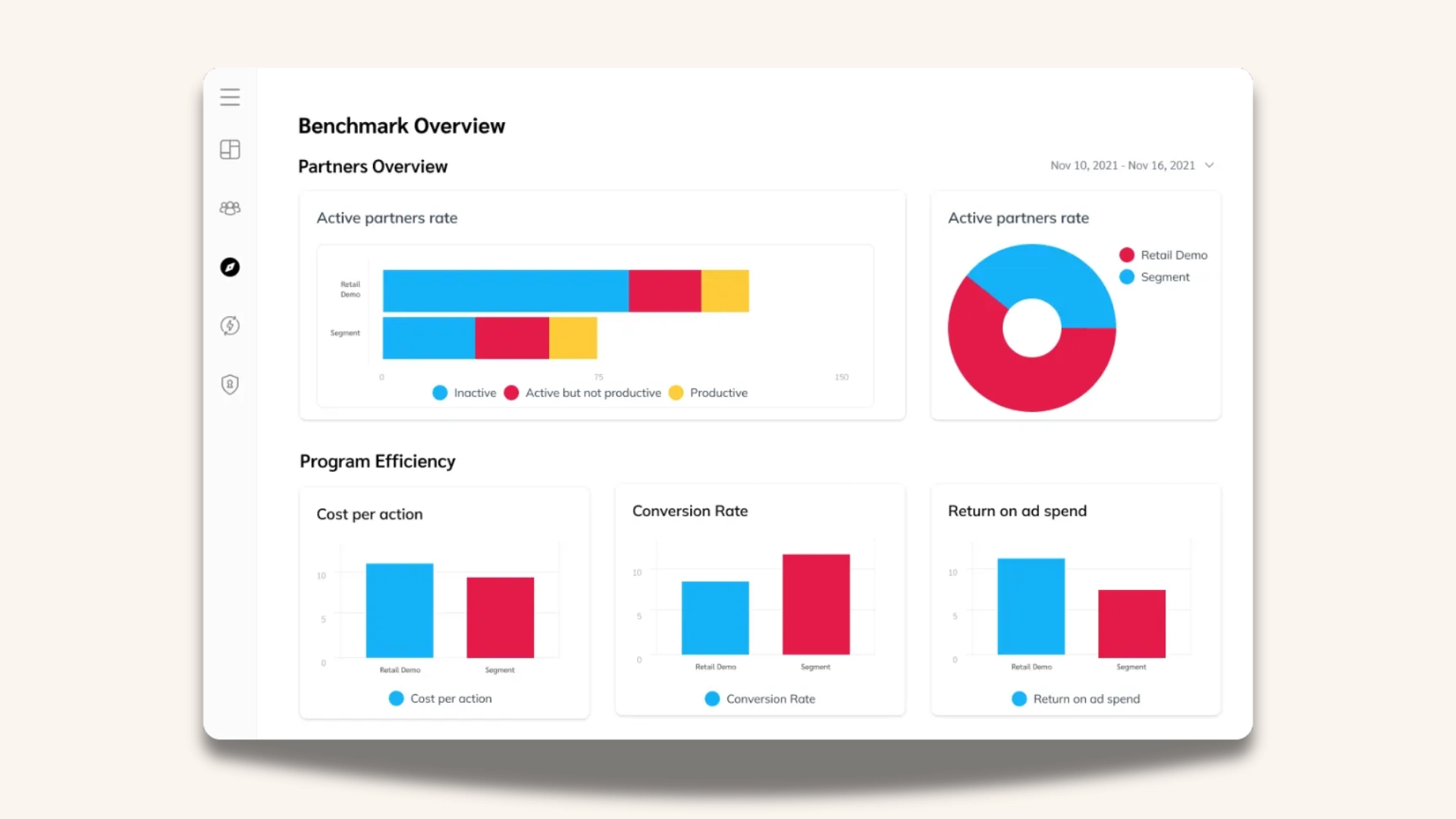
Build custom reports for your specific use case to piece together strings of data
There’s a cost to getting this wrong that you might not see directly. Without full-funnel, cross-device visibility, you’ll tend to undervalue the partners driving early interest, since only last-touch activity shows up in your numbers. Fix the visibility gap, and you fix who gets credit, without spending your time trying to work it out yourself.
| Manual approach | Automated approach |
|---|---|
| Reconciling leads, conversions, and sales across a CRM and spreadsheets by hand | One unified view connecting every stage of the customer journey automatically |
| Guessing which partner deserves credit on a multi-touch sale | Credit applied consistently across every touchpoint, without manual judgment calls |
| Discovering a data gap only when a report doesn’t add up | Continuous syncing that surfaces gaps in near real time |
| Pulling reports as a manual, month-end exercise | Reporting that reflects live data at any point in the cycle |
| Keeping up with regulations, such as GDPR and CCPA, on your own, and hoping your setup still holds up | Consumer privacy protection and PII encryption built into the tracking itself |
Engage: keep partners informed without a dedicated point person
Engage is the stage where it’s easiest to overstate what automation can do. Segmenting partners by funnel stage and sending templated updates by group replaces repetitive admin. It eliminates individual status updates and repeated answers to common questions, but doesn’t replace the relationship itself.
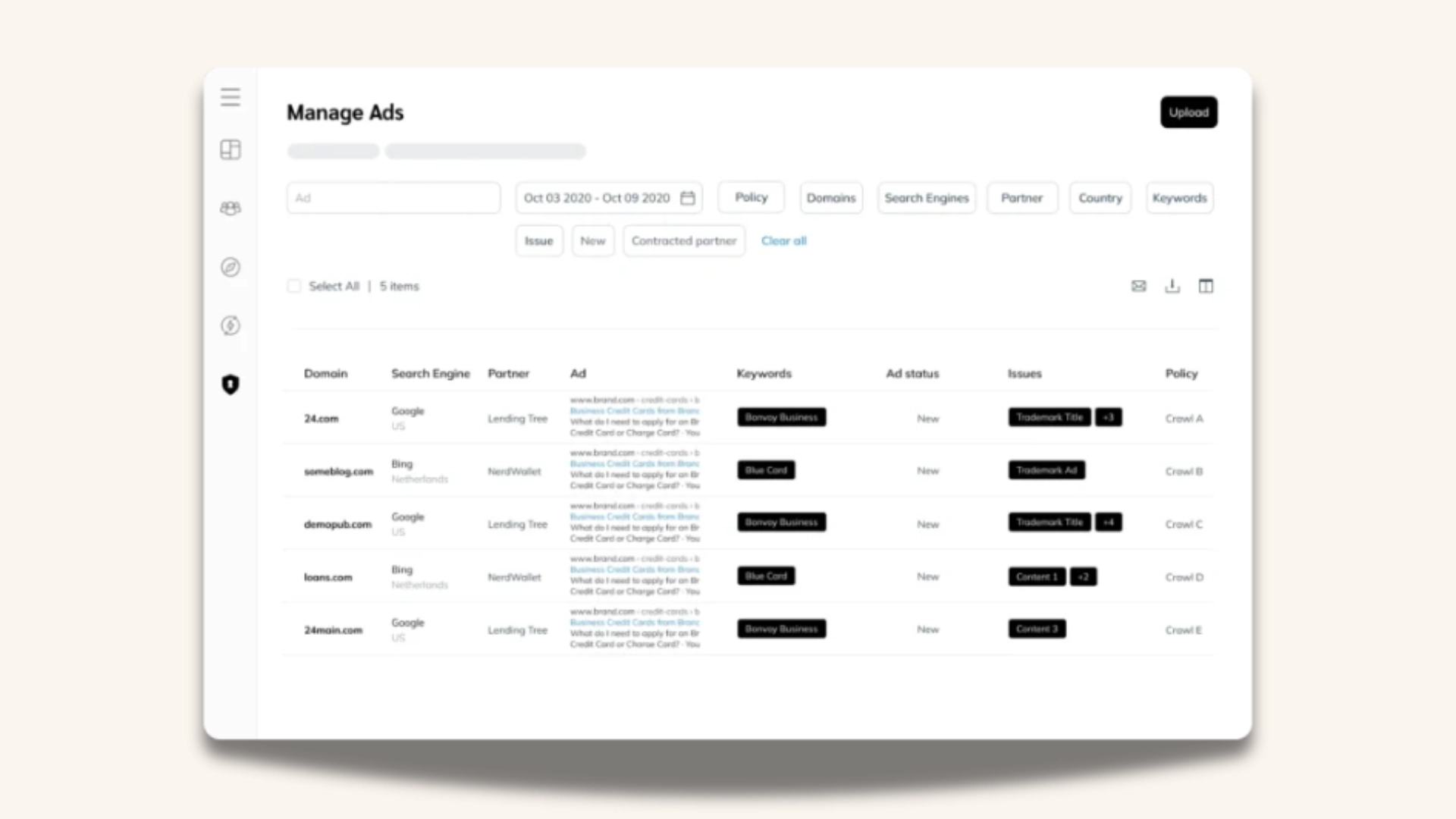
Host approved creatives and current offers in a central spot
Treat this stage as freeing up time for the partners who need a real conversation, not eliminating the need for one. A short weekly routine works better here than a system—one where you segment by tier, template the routine updates, and protect calendar time for your top partners.
| Manual approach | Automated approach |
|---|---|
| Pulling partner performance together by hand to explain how the program is doing | Performance gets visualized and broken down on its own, so the story in the data is easy to see and share |
| Manually compiling and re-sending your product list and details to partners as it changes | A live product catalog that stays current and available to partners on its own |
| Emailing a partner or updating their status yourself every time they hit a milestone or fall behind | Emails go out, and partner status updates on its own when a partner hits a milestone or stalls |
| Negotiating and approving each piece of partner content and offer terms one email at a time | Content proposals, negotiations, and approvals move through a shared workflow instead of a back-and-forth inbox |
Protect and Monitor: catch fraud without a compliance team
This is the stage that lapses fastest without dedicated headcount, and the one where that lapse costs the most. Undetected fraud wastes spend and corrupts decisions made from the data underneath it, including which partners look like they’re performing, which commission tiers look justified, and which channels look worth scaling.
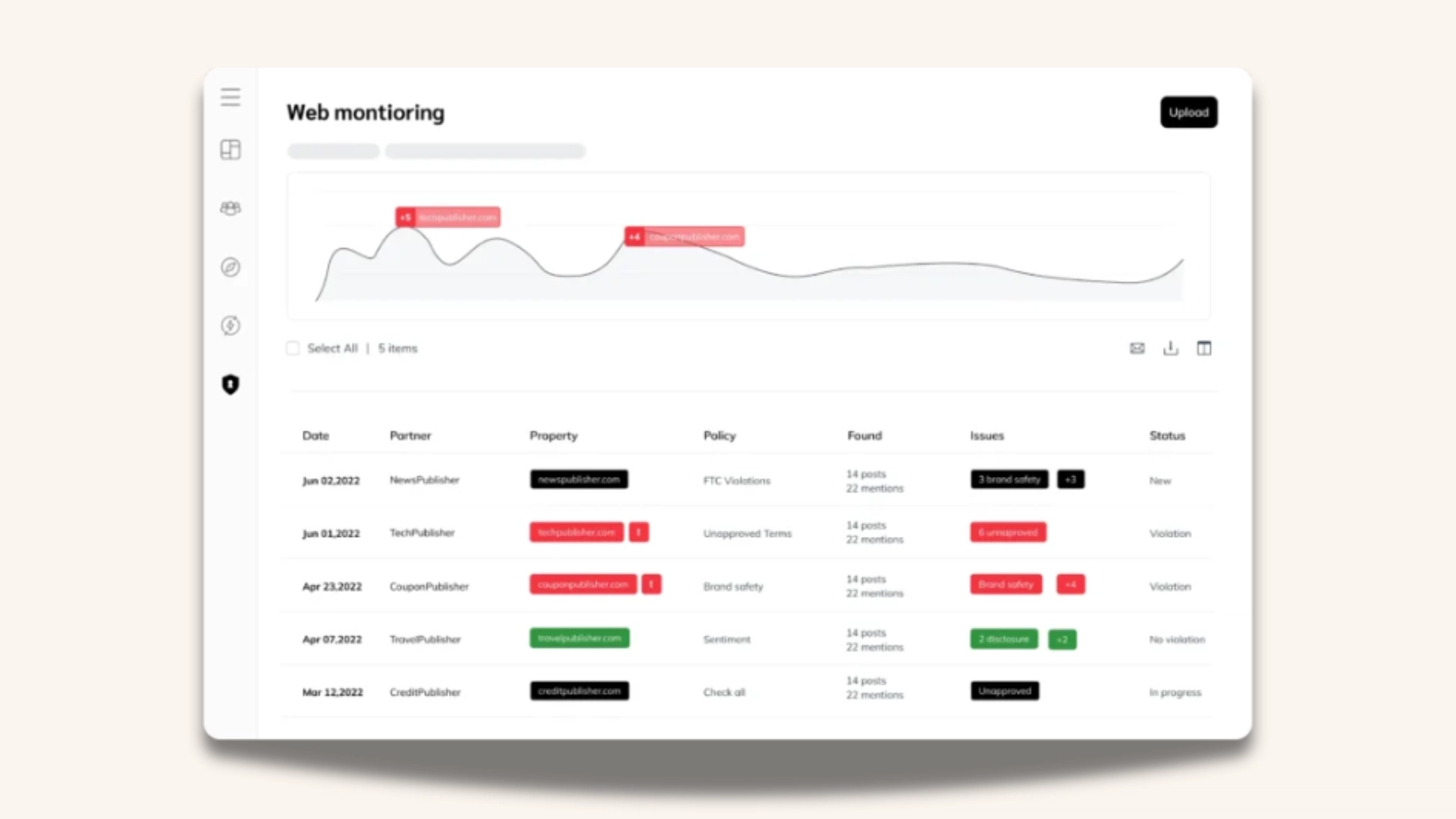
Web Monitoring tools track the how your partners promote your brand
Automated fraud detection is also a diagnostic step. For a solo manager who’s never run it, it’s often the first honest look at how much of the program’s reported performance was ever real.
| Manual approach | Automated approach |
|---|---|
| Checking by hand whether other sites are bidding on your branded keywords and quietly diverting high-intent traffic | Keyword use across the web gets monitored and enforced on its own, so branded search traffic doesn’t leak to someone else |
| Reading through partner content yourself to catch a compliance issue in a regulated industry | Partner copy, creative, and offers get scanned continuously for compliance risk, before it becomes a regulatory problem |
| Manually searching the web to see how your brand is actually being represented by partners | The web gets scanned on an ongoing basis for how the brand is being promoted, surfacing reputational risks early |
| Discovering a promo code has been leaked or reused only after customers already complained | Promo code use gets tracked and flagged the moment it’s misused, before it costs you the sale or the customer’s trust |
Optimize: make decisions without a dedicated analyst
Optimize isn’t a dashboard problem. A solo manager doesn’t have time to build a full analytics practice, and trying to is how this stage gets skipped entirely. The goal is a short, repeatable routine with one consolidated report, a handful of numbers, and one decision, all reviewed every week rather than once a quarter.
For scale, impact.com’s 2025 “Global State of Affiliate Marketing” report found that teams of four or five people typically manage up to 100 partners. A solo manager cannot hit that ratio alone, which shows how much ground automation has to cover to make one person enough.
| Manual approach | Automated approach |
|---|---|
| Building forecasts by hand and finding out weeks later whether they held | Performance projects forward on its own, so you’re planning against where the program is headed, not just where it’s been |
| Scanning reports yourself to catch a problem before it eats into the budget | Unusual shifts in performance surface on their own, before they compound into something bigger |
| Crediting whichever partner touched the sale last and overlooking who influenced it earlier | Value gets attributed across the whole funnel, not just the final click |
Taylor & Hart: how one solo manager ran all six stages
Taylor & Hart’s affiliate program produced a 3,755% ROI once a single affiliate lead was running it end-to-end, no extra hires required (per the case study).
Getting there meant undoing the setup that used to run the program. Before impact.com, no one owned that outcome, and multiple contributors split onboarding, contracting, refunds, and reporting. Automation didn’t add a person back into that mix. It removed the manual work each of those people had been doing, stage by stage.
| Stage | What Taylor & Hart automated | Result |
|---|---|---|
| Discover and Recruit | Creator Discovery and Extended Search helped identify creators and content partners aligned with the brand | Recruitment moved from manual sourcing to a repeatable, filtered process |
| Contract and Pay | Automated contracting and onboarding replaced manual paperwork. Dynamic commissioning shifted closed user groups (CUGs) from a flat fee to a pay-based on the qualified intent they generated | CUGs became one of Taylor & Hart’s most effective acquisition channels |
| Track | A Salesforce integration unified leads, consultations, and sales in one system, making early-funnel partner influence, like CUGs, visible for the first time | The team could finally credit the partners shaping early intent instead of just the last click, revealing CUGs as a top source of high-quality leads |
| Engage | Prospects and Groups are used to segment partners by agreement stage and funnel stage | The team no longer needed a separate internal CRM to manage partners |
| Protect and Monitor | Event Risk Reports and subnetwork URL visibility flagged fraud in real time | The roughly 35% of clicks and transactions that had been fraudulent stopped distorting the data, and leadership began trusting the numbers again |
| Optimize | Advanced Action Listing consolidated ROI, click-to-conversion timing, device performance, and promo code data into one report | Helped the team refine commissioning and scale the channel with confidence |
With the manual work gone, the affiliate manager could focus on strategic growth, such as recruiting brand partners, engaging creators, and refining commissioning models. The program generated a 60% increase in leads, a 123% boost in transactions, and £450,000 in revenue, per the same case study.
A management platform running all six at once is the team you don’t have
You cannot run a successful affiliate program alone if you try to manage it in pieces. A traditional marketing team works well because different people handle different tasks simultaneously. As a solo manager, a single affiliate management platform is your team. It is the invisible assistant that recruits, tracks, pays, and protects in the background while you focus on growth.
The platform approach is how Taylor & Hart turned its program around. It replaced a messy stack of tools with one system. This change lets a single manager run a complex program without burning out.
FAQs
One person can manage an affiliate program alone, but only if manual work is automated at every stage of the partner lifecycle, not just the most visible one. A solo manager who automates discovery, contracting, tracking, and fraud monitoring can spend their limited time on partner relationships and strategy instead of administrative upkeep. Programs that stay manual at multiple stages usually hit a ceiling long before the roster grows large enough to justify a second hire.
The parts of affiliate program management that should be automated first are the ones that repeat the most: partner discovery and filtering, commission calculation and payouts, and fraud detection. These tasks consume the most manual hours without requiring much judgment once rules are set. Partner relationship management and strategic decisions, like which partners to prioritize, still benefit from a person’s attention and shouldn’t be fully automated.
How much time affiliate program management takes each week depends heavily on how much of the manual work has been automated. A program still running manual tracking, contracting, and fraud checks can consume most of a full workweek in administrative tasks alone. Once those stages are automated, a solo manager’s time shifts toward partner outreach, relationship building, and weekly performance review, work that’s harder to compress but far more valuable than reconciling spreadsheets.
Cut the work a person never needed to do
Running an affiliate program alone was never a staffing problem to solve with more hours. It’s a manual-work problem, and manual work shows up at every stage of the partner lifecycle, not just the one that happens to be loudest that week.
Taylor & Hart’s program didn’t shrink to fit one person. It automated enough of the manual layer that one person was already enough. That’s the real measure of a program built for a team of one. It isn’t how much the manager can personally push through. It’s how much of the pushing never needed a person at all.
If your program has already outgrown this stage, with more partners than one platform’s automation can absorb or more relationship work than templates can carry, the next read is “From transaction to value: modern affiliate program management tips,” which covers what changes once a team, not just a platform, is running the program.
Further readings:
Optimizing Partnership Program Management: A Three-Step Guide (worksheet)
How to find affiliate marketing partners at scale through AI-powered discovery (blog)
5 effective affiliate commission structures: Models, examples, and benefits (blog)
4 email templates for effective partner recruitment (worksheet)
How modern marketers can boost campaign effectiveness with performance marketing attribution (blog)