
A premium accessories brand tried to expand into fashion with the same playbook that had worked in tech and gaming: scroll Instagram, find promising accounts, send outreach. Fifty emails. Three replies.
Knowing how to find fashion influencers is easy: type the keyword into Instagram or TikTok and thousands of accounts appear. The harder question, the one that separates revenue from burned budget, is whether their audiences will actually buy what you’re selling.
Fashion spans dozens of distinct niches with audiences that aren’t interchangeable, and broad-category searches treat them as if they are.
The brands building programs that scale aren’t searching for the biggest name in the category. They’re matchmaking using niche definitions, audience demographics, and conversion data to find creators whose followers overlap with their actual buyers. This guide shows you how to build that process and introduces fashion creators on impact.com who are already delivering results.
3 steps for finding profitable fashion creators
Most brands approach fashion creator discovery as a search problem: enter the category, filter by follower count, scroll until something looks right. Matchmaking treats it as a targeting problem—starting from the customer and working backward to the creator.
Building that process starts with three decisions you make before jumping into creator discovery.
Step 1. Define your match criteria
These three filters shape every search decision that follows:
Niche. Fashion is a category. Sustainable denim, petite workwear, and modest fashion are niches—each with a distinct aesthetic, audience, and buyer’s intent. Brands that can’t articulate their niche end up competing for the same over-solicited creators.
Target audience. Pull your customer data. Who actually buys from you? What’s their age, income, aesthetic sensibility, and platform behavior? A creator with 100,000 followers whose demographic matches yours is worth more than one with a million who doesn’t.
Program model. Are you building for awareness, conversion, or long-term partnership? Performance-based influencer programs need creators with verifiable conversion data.
Step 2. Vet the data points that actually predict success
Once you have match criteria, evaluate prospective creators against the signals that predict program performance.
| Signal | What it measures | What to look for |
| Engagement rate | How actively a creator’s audience responds to their content | Consistent engagement across posts, not spikes on viral content |
| Audience demographics | Whether the creator’s followers match your buyer profile | Verify demographic data through your discovery tool before you commit |
| Conversion history | Whether the audience buys | Creators with a track record of affiliate sales or promo code usage (most direct evidence of commercial influence, when available) |
Step 3. Screen for brand safety and long-term fit
The data gets you to a short list. These questions get you to a decision:
- Does their content quality match the aesthetic you’re building? Mismatched aesthetics produce content that looks out of place in a creator’s feed and off-brand in yours.
- How do they handle brand partnerships? Creators that partner selectively carry more trust than those that promote everything.
- Do their values align with yours? This includes representation, body image, and sustainability positioning—areas where audience trust is hard-won and easy to damage.
Once you put your candidates through these tests, you can eliminate expensive mismatches before they happen.
Upgrade your creator discovery process
Learn exactly how to find and vet the best influencers for your brand with automation.
14 fashion creators on impact.com who are driving real results
The creators below are curated across key fashion niches on impact.com. Each has been evaluated for niche fit and brand alignment, giving you a targeted starting point for your search.
Affordable fashion influencers
Price-conscious shoppers are one of the most motivated audiences in US fashion. Affordable fashion creators are the only ones making content built specifically for them.
These creators’ hauls, outfit roundups, and dupe finds draw a price-conscious but style-motivated following with strong purchase intent.
Melissa (AlwaysMeliss)
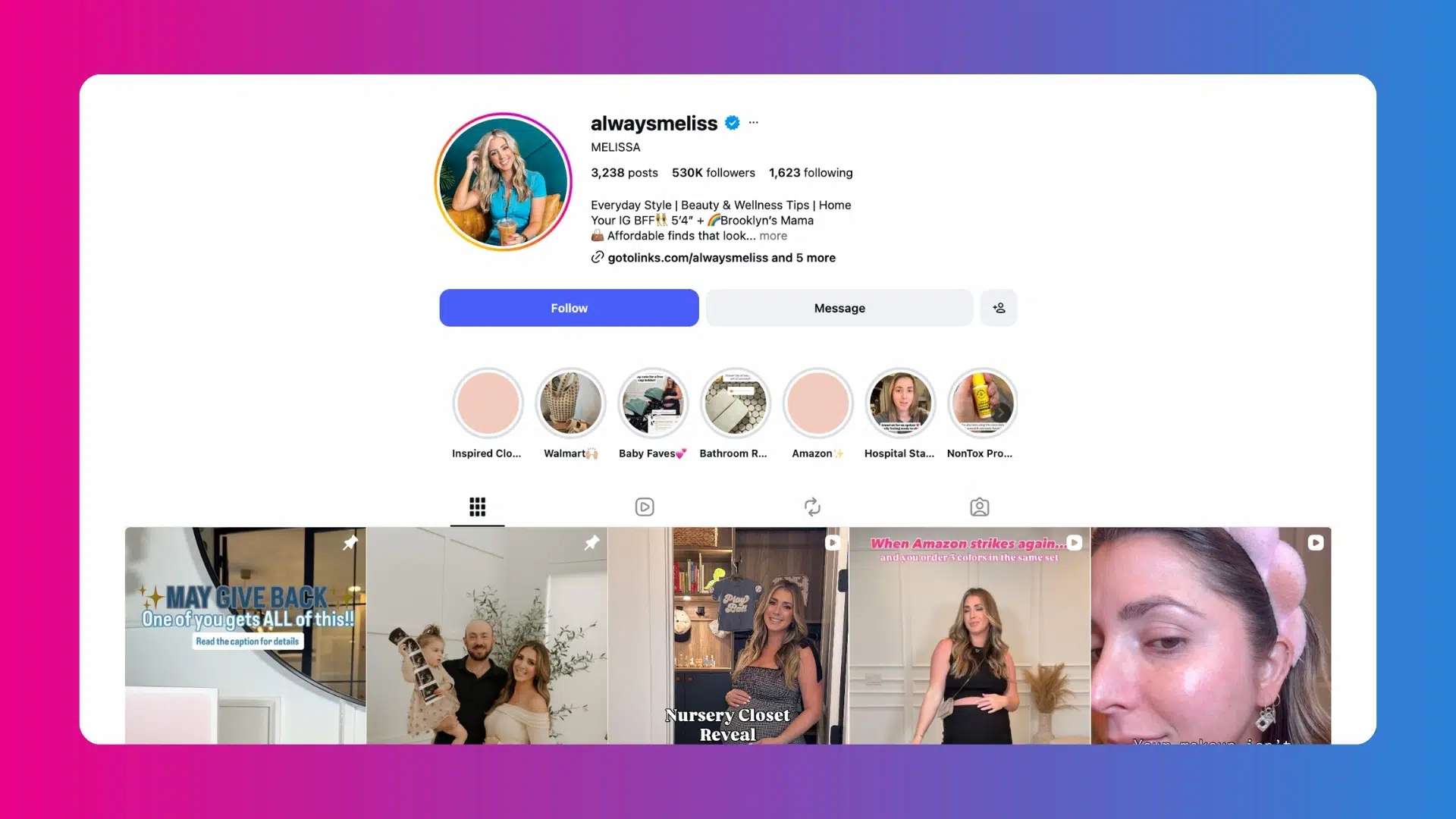
| Primary platforms | Follower count |
| alwaysmeliss.com | 1.1k monthly visitors |
| 529k | |
| TikTok | 62k |
Melissa built her following around a specific aesthetic: feminine, casual style that looks more expensive than it is.
Her content delivers on that promise through real outfits, real price tags, and a personal policy of only featuring what she’d actually wear. That trust is what turns her content from inspiration into a shopping cart add.
Heather (TallMomFinds)
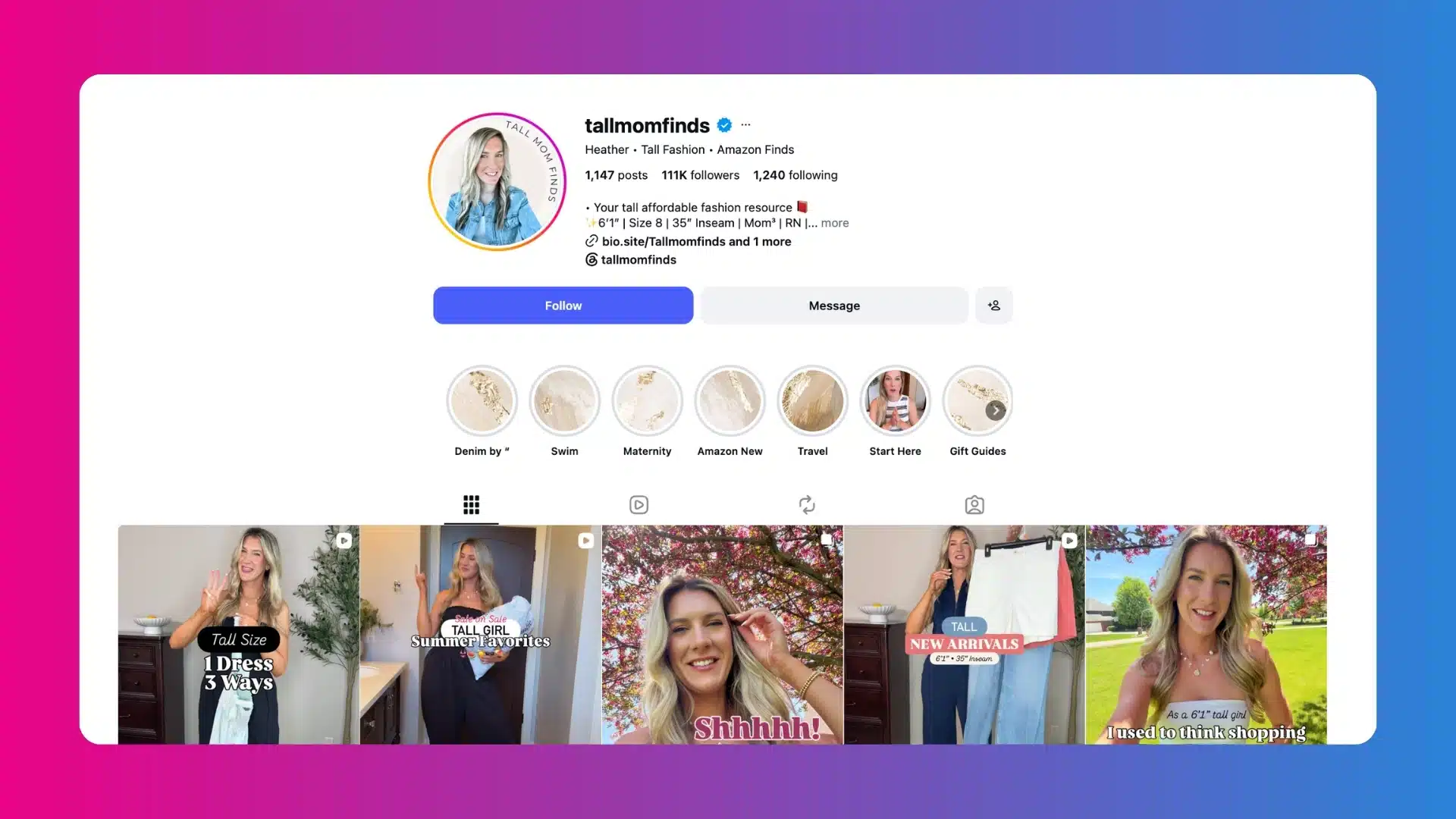
Heather started TallMomFinds because she couldn’t find affordable clothes that fit her 6’1″ frame—and discovered millions of women had the same problem. A registered nurse turned stay-at-home mom, she shares her exact measurements with every outfit so her audience can shop with confidence.
She has built a loyal community of tall women who return to her because she solves a problem most brands don’t even acknowledge.
Marnie Goldberg (MsGoldGirl)
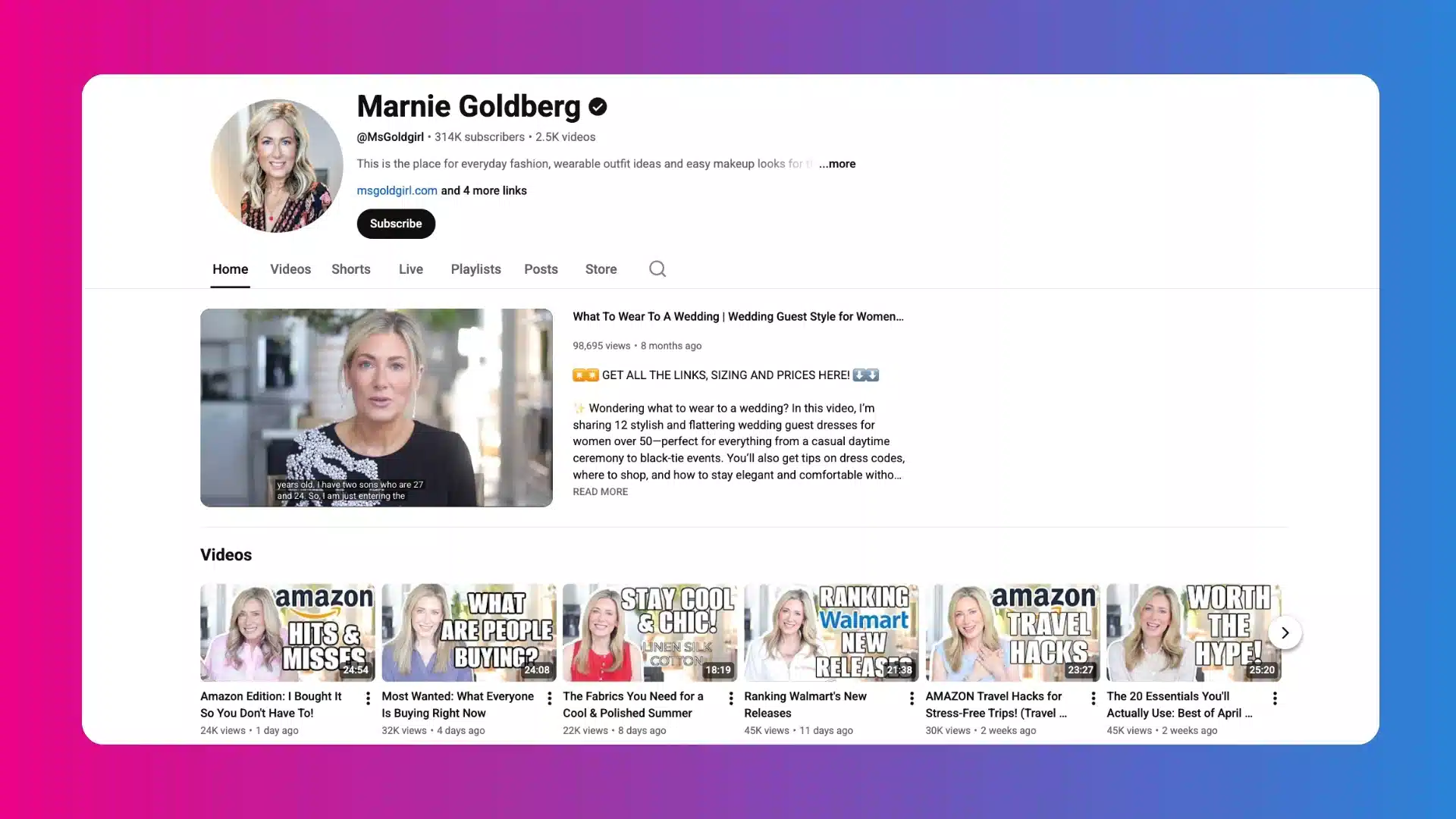
Marnie came to fashion in her late 30s, which is exactly why her audience trusts her. A former elementary school teacher from San Antonio, she built MsGoldGirl around the idea that practical, wearable style doesn’t require a fashion background or a fashion budget.
She designed the Marnie Satchel, GiGi New York’s top-selling handbag, signaling her influence beyond social media.
Midsize fashion influencers
Midsize describes women in sizes 10-16, a range that straight-size and plus-size fashion content wasn’t built to serve.
Creators who reach this audience produce outfit ideas, workwear, and styling content for a body type that mainstream fashion largely skips.
Ryanne (The Recruiter Mom)
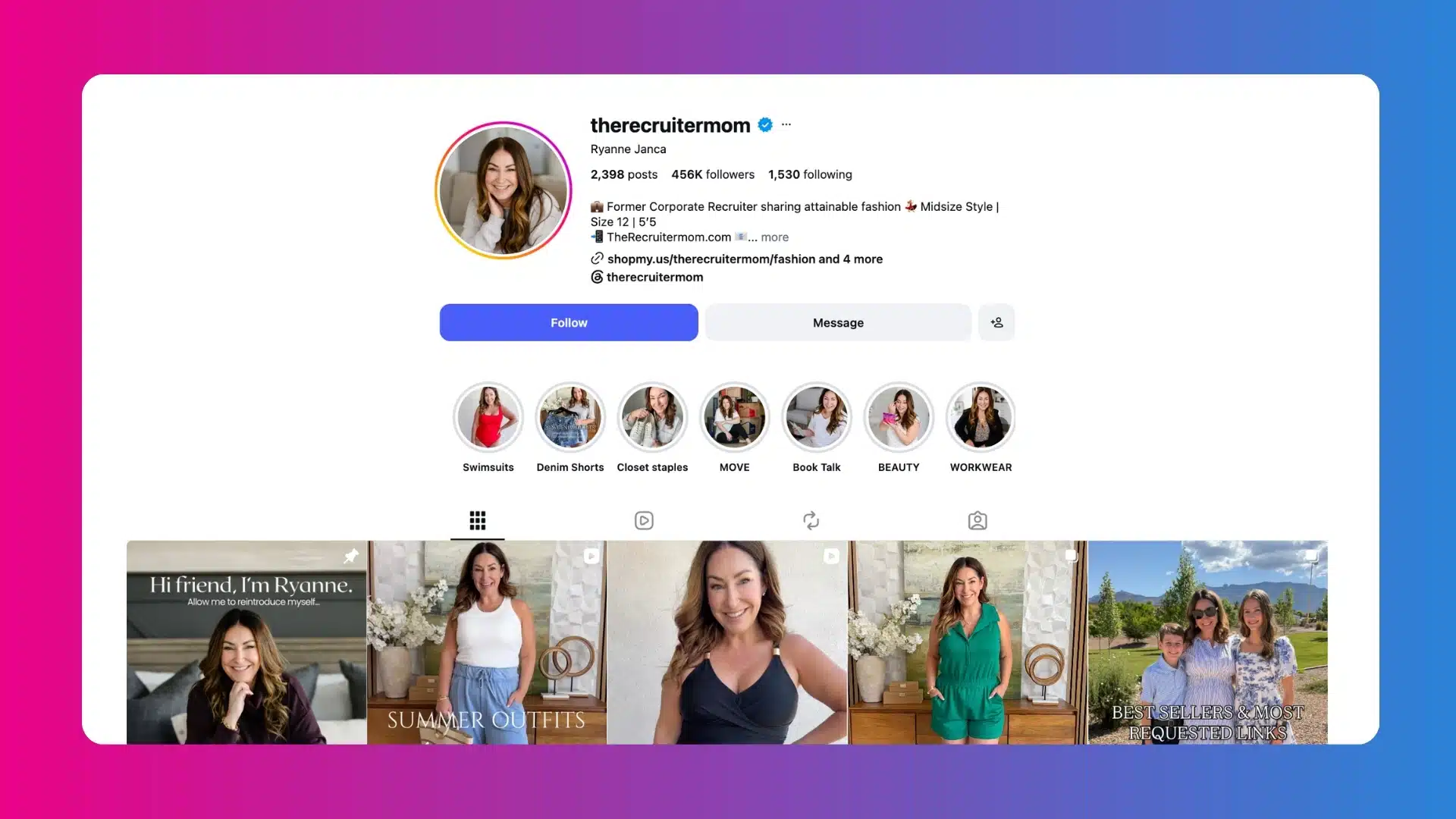
| Primary platforms | Follower count |
| therecruitermom.com | 8.2k monthly visitors |
| 456k | |
| 45k |
Ryanne built The Recruiter Mom around a niche intersection in the fashion world: midsize style and professional life. A former corporate recruiter who left the workforce to raise her family, she creates outfit content specifically for midsize women navigating careers—a shopper who knows what she wants and buys with purpose.
She started creating because the content she needed didn’t exist, and the following she built reflects that.
Plus-size fashion influencers
According to a Chain Store Age study, only 2.3% of women’s apparel at the country’s largest multi-brand retailers is plus-size, despite the fact that the majority of American women wear a size 14 or above.
Plus-size influencers serve this audience directly and build communities where following a creator is as much about representation as it is about product discovery.
Corissa Enneking (fatgirlflow)
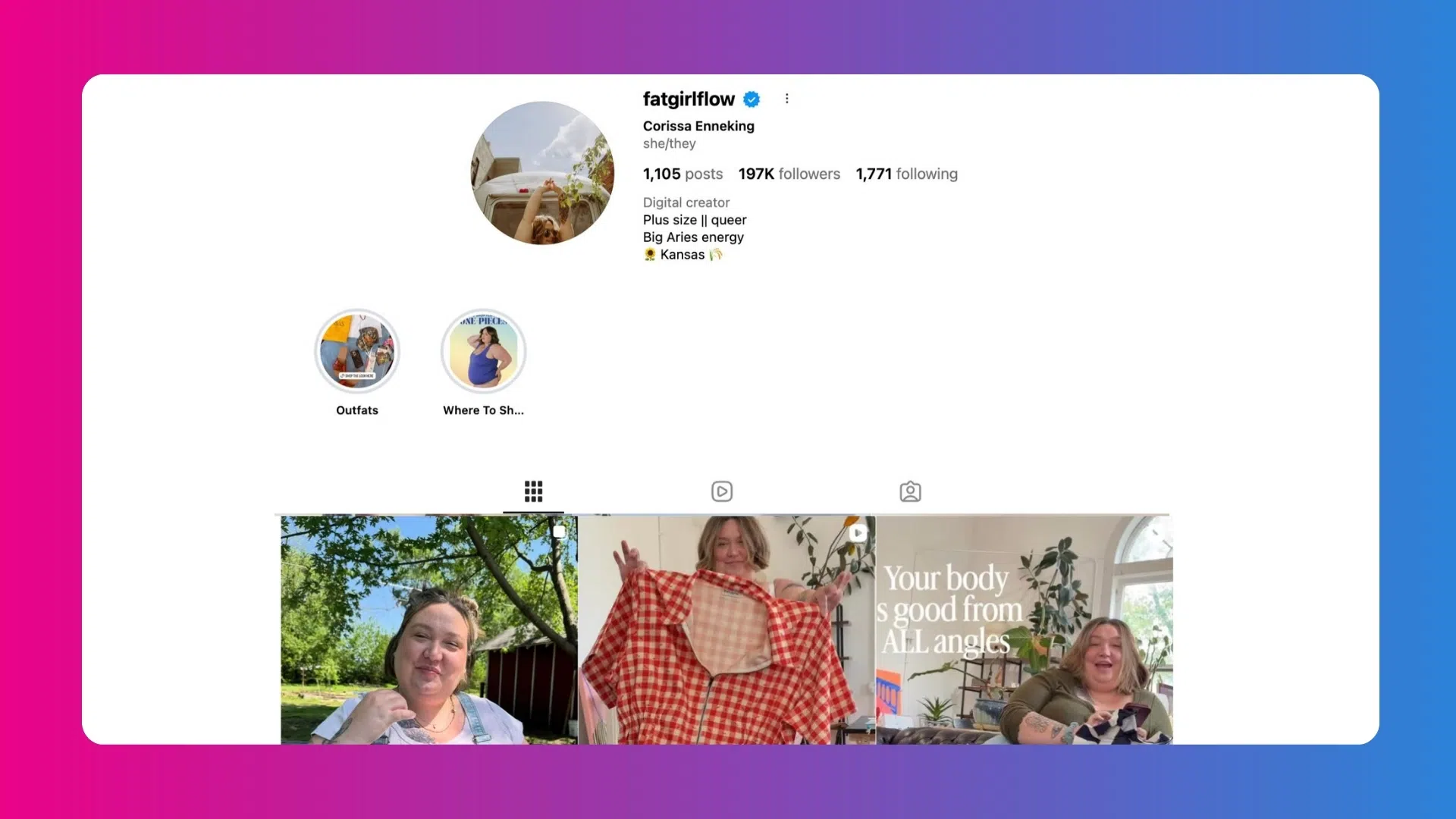
| Primary platforms | Follower count |
| fatgirlflow.com | 24k monthly visitors |
| 197k | |
| TikTok | 10k |
Corissa built Fat Girl Flow as a practical resource: which brands actually fit, which fabrics work, and which companies are genuinely committed to plus-size shoppers versus those treating it as an afterthought.
That editorial rigor—and a fat acceptance framework she deliberately distinguishes from body positivity—gives her the kind of credibility that purely aspirational plus-size content rarely achieves.
Fashion influencers over 40
Fashion creators over 40 serve a demographic that mainstream fashion content largely overlooks: women in their 40s, 50s, and beyond. Their audiences follow them because the content reflects their life stage: fit, longevity, and wearability over trend-chasing.
Alison Gary (WardrobeOxygen)
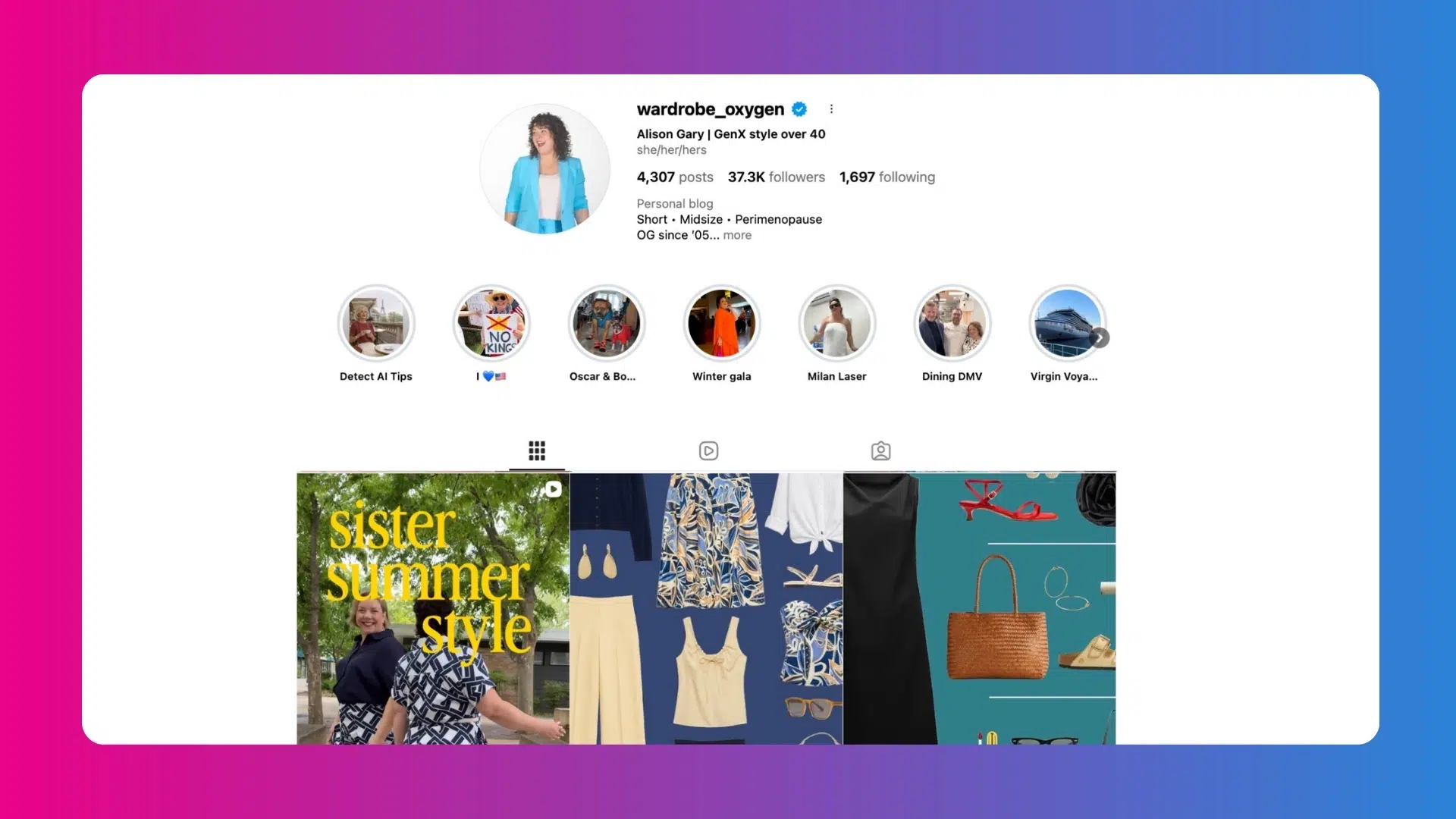
| Primary platforms | Follower count |
| wardrobeoxygen.com | 85k monthly visitors |
| 43k | |
| 37k |
Alison has been publishing style advice for women over 40 since 2005, making her one of the most established voices in her niche. She styles looks on herself, which makes her content a rare combination of aspiration and accessibility for an audience mainstream fashion typically overlooks.
Beyond outfit styling, she covers trend translation, capsule wardrobes, and detailed product reviews across fashion, beauty, and lifestyle—giving her commercial influence well beyond a single category.
Serena Butler (Style with Serena)
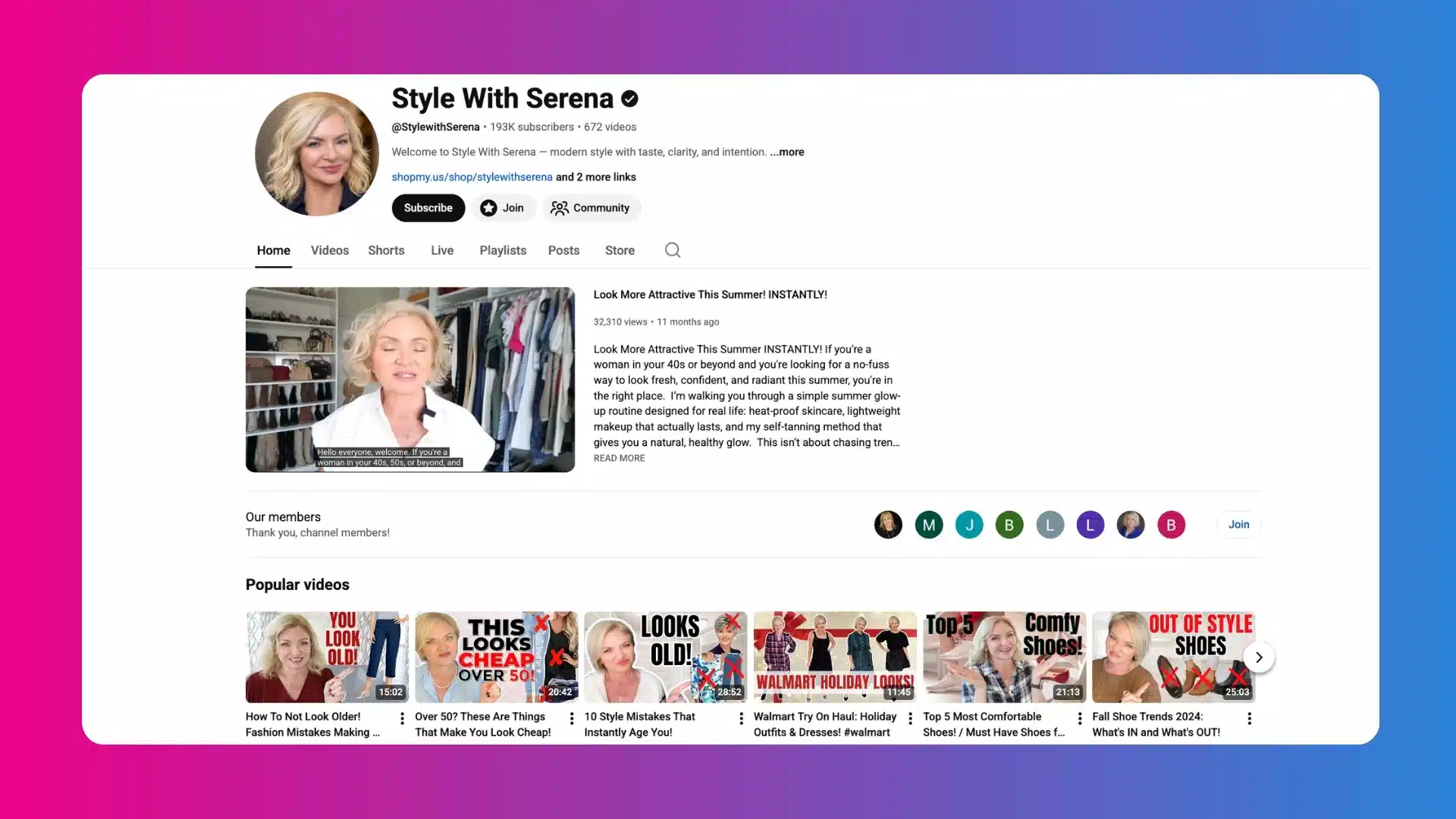
Serena built her platform around a counterintuitive position: midlife isn’t when a woman’s style declines—it’s when it should peak.
That conviction drives her instructional content: outfit formulas, wardrobe-building guidance, and affordable finds for women over 40 who want to dress with intention rather than just keep up with trends.
Her content extends beyond outfit styling into beauty, skincare, and wellness—a scope that gives brands reach into the full lifestyle of a midlife woman.
Stefana Silber (stefanasilber)
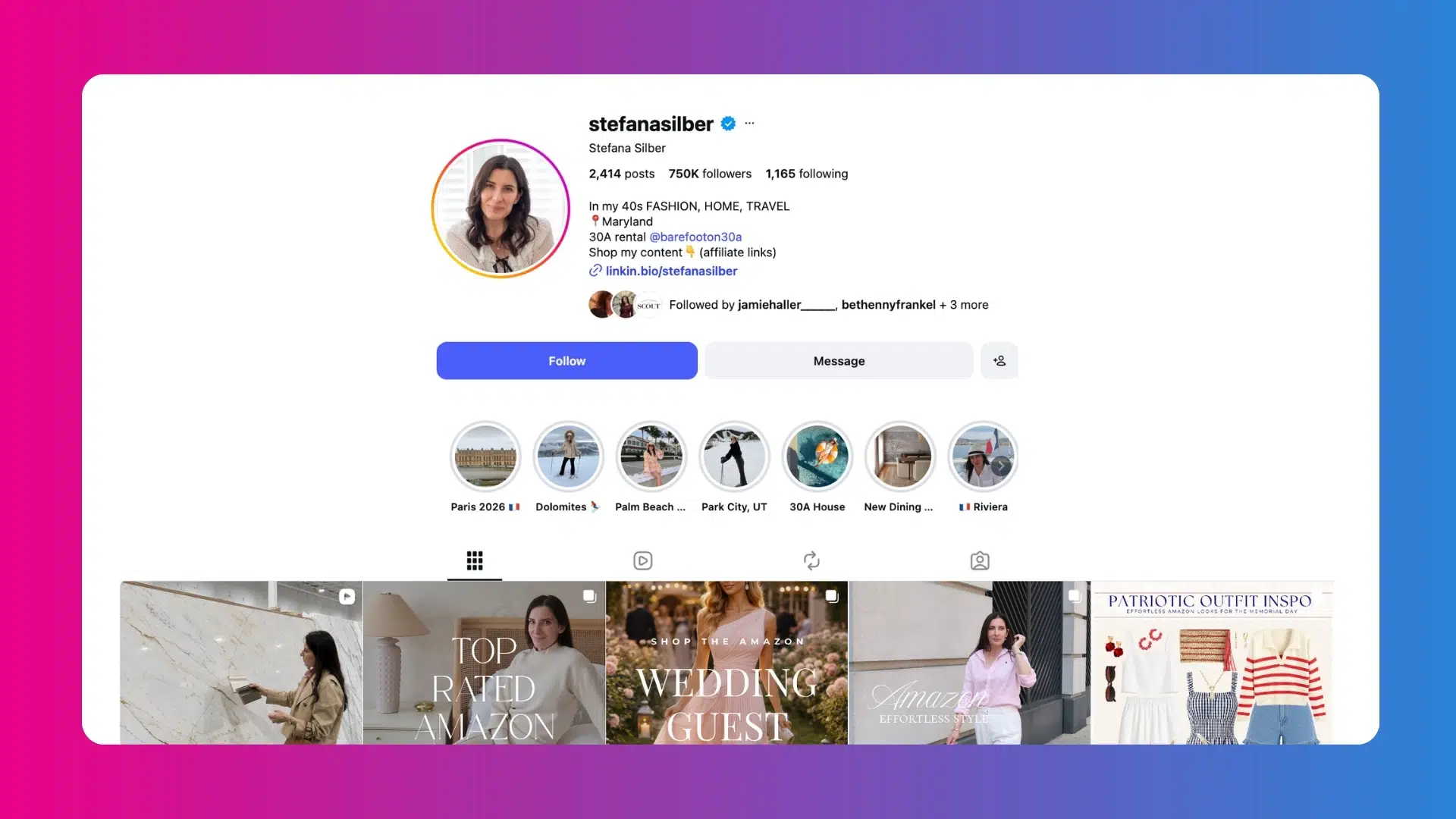
Most creators in this space focus narrowly on outfit styling. Stefana Silber doesn’t. Her content moves across fashion, home design, and travel. Her audience isn’t just fashion shoppers—they’re aspirational lifestyle buyers who trust her across multiple purchase categories at once.
She has a long track record of creating affiliate-driven content, producing posts built for discovery and conversion rather than visual polish alone.
Stylist and style expert influencers
Stylist creators bring professional credibility to fashion content—their recommendations read as expertise rather than personal preference, which builds strong audience trust. Their followers come specifically to learn: how to dress their body type, build a wardrobe, or apply a stylist’s eye to everyday choices.
Chesley Carele (chesleycarele)
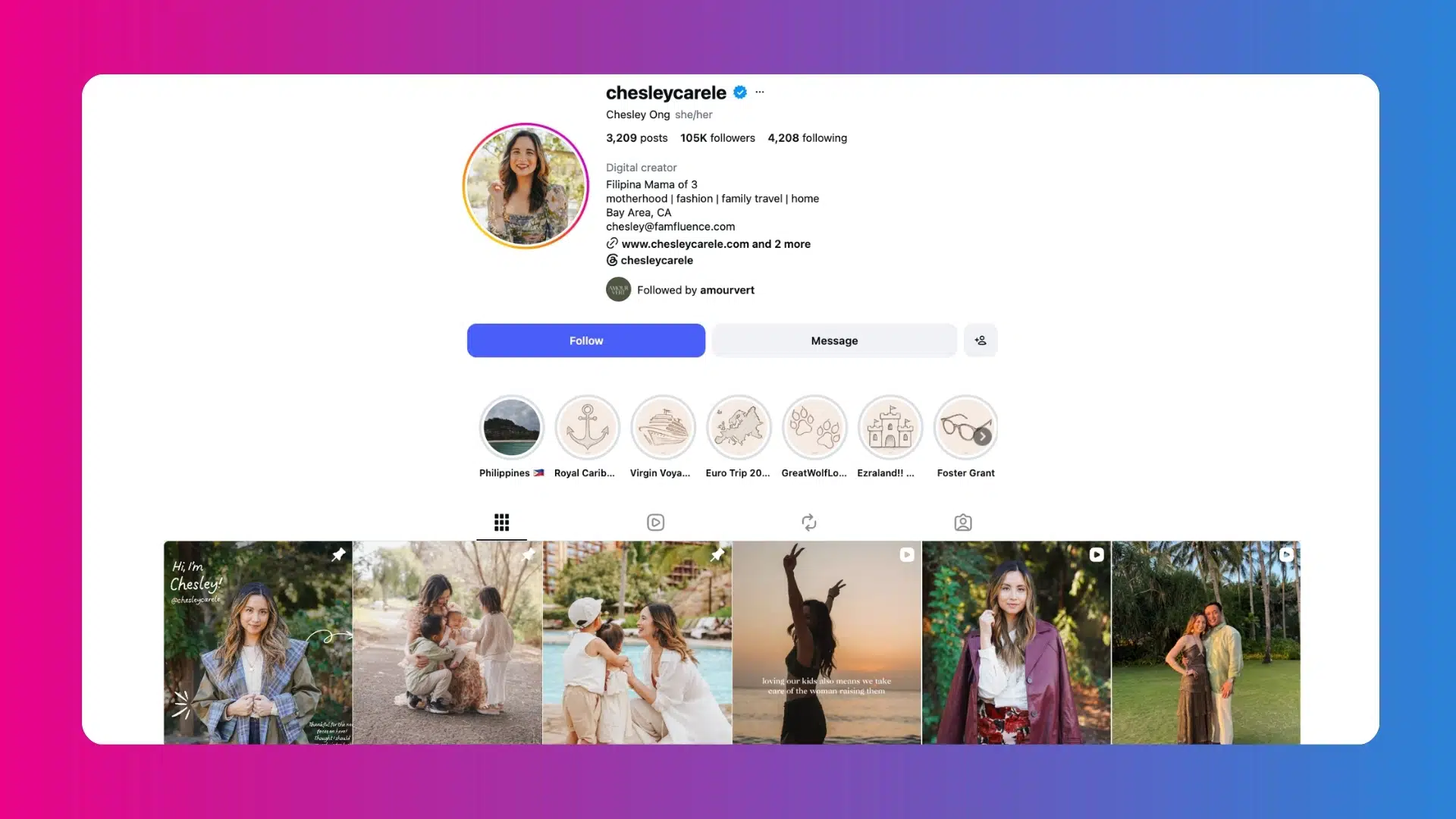
Chesley is a working fashion stylist with 12 years of professional experience across e-commerce, editorial, retail, and advertising. That background shapes the content she makes: precise, deliberate styling rooted in how clothing actually works, not just how it photographs.
Her content blends stylist-level expertise with her life as a Bay Area mother of three—a combo that closes the gap between aspirational fashion and a buyer’s real wardrobe decisions.
Patricia Foster Klein (backwardinheels)
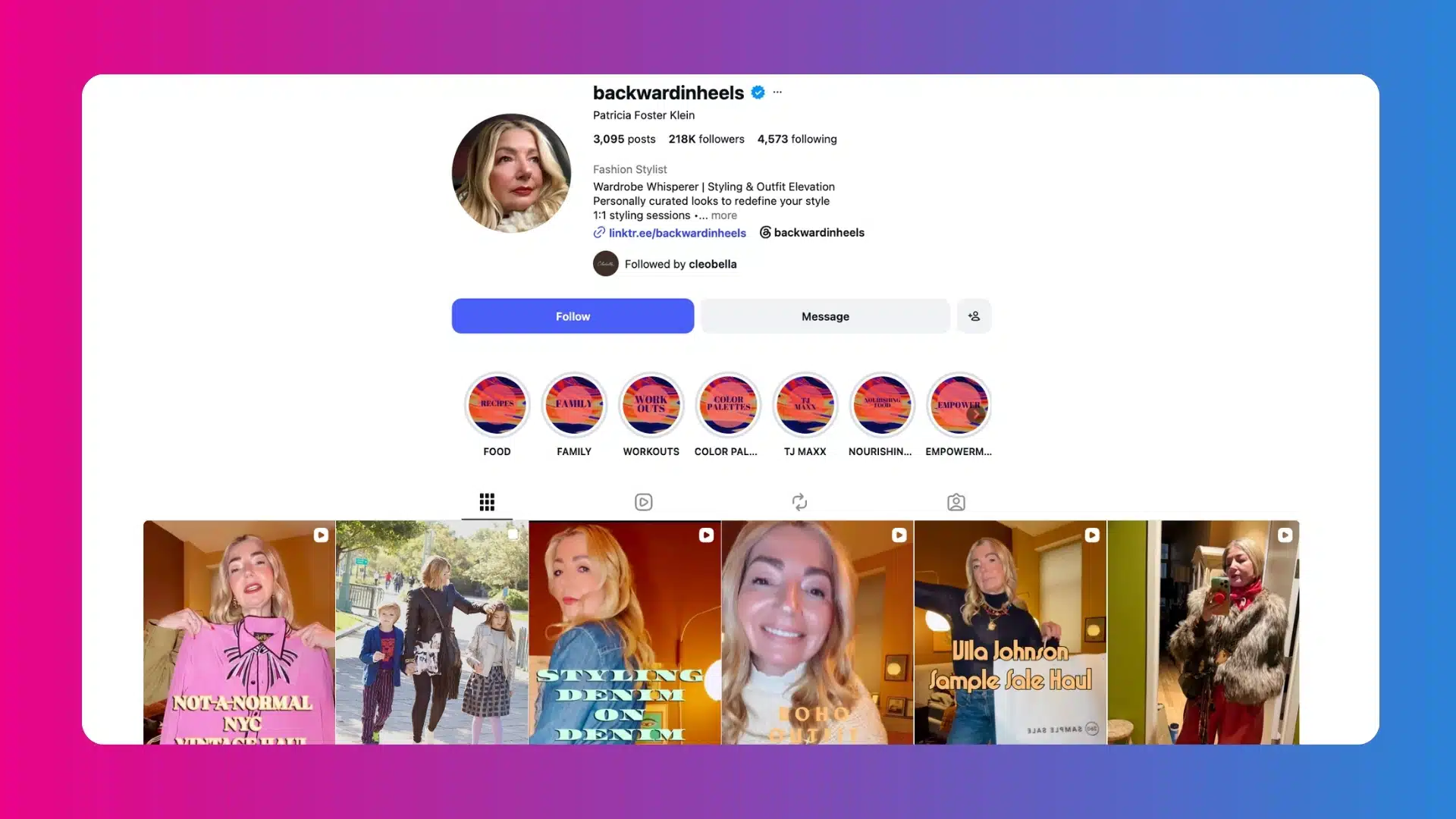
| Primary platform | Follower count |
| 216k |
Patricia spent 20 years as a Creative Director and jewelry designer in the fashion industry before building Backward in Heels. Her content carries a level of professional authority that most creators try to approximate.
Based in NYC, she creates outfit styling, trend education, and seasonal wardrobe content that pushes her audience past the conservative choices age-related fashion messaging tends to nudge them toward.
Alex Nusinkis (Acquired Revival)
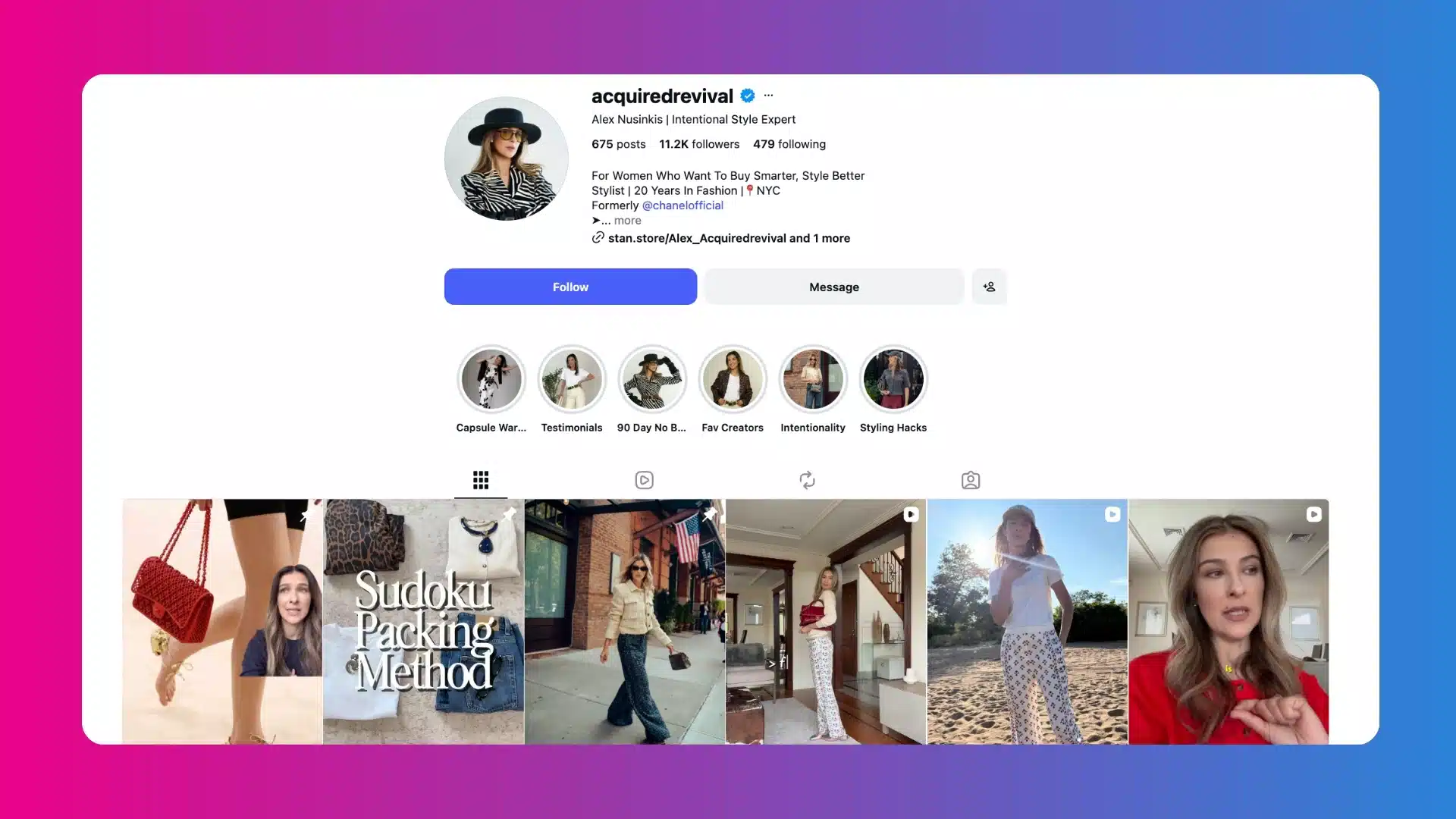
| Primary platform | Follower count |
| 11k |
Alex spent nearly two decades at Chanel and Dolce & Gabbana before building Acquired Revival—and that background is the point. Her content centers on rejecting fashion’s consumption cycle: shop your closet first, invest in staples deliberately, and treat getting dressed as a practice rather than a pursuit of newness.
Based in NYC, her aesthetic—clean, refined, quiet luxury—draws an audience that has moved past trend cycles and wants a more considered framework for how they dress.
Men’s fashion influencers
The global menswear market reached $654 billion in 2025, according to Business Research Insight’s 2026 Global Menswear Market Report, and creator content built around it is still catching up. Creators who build followings in this space serve audiences that sought them out specifically, which makes their recommendations land differently than in more saturated categories.
out_of_indigo
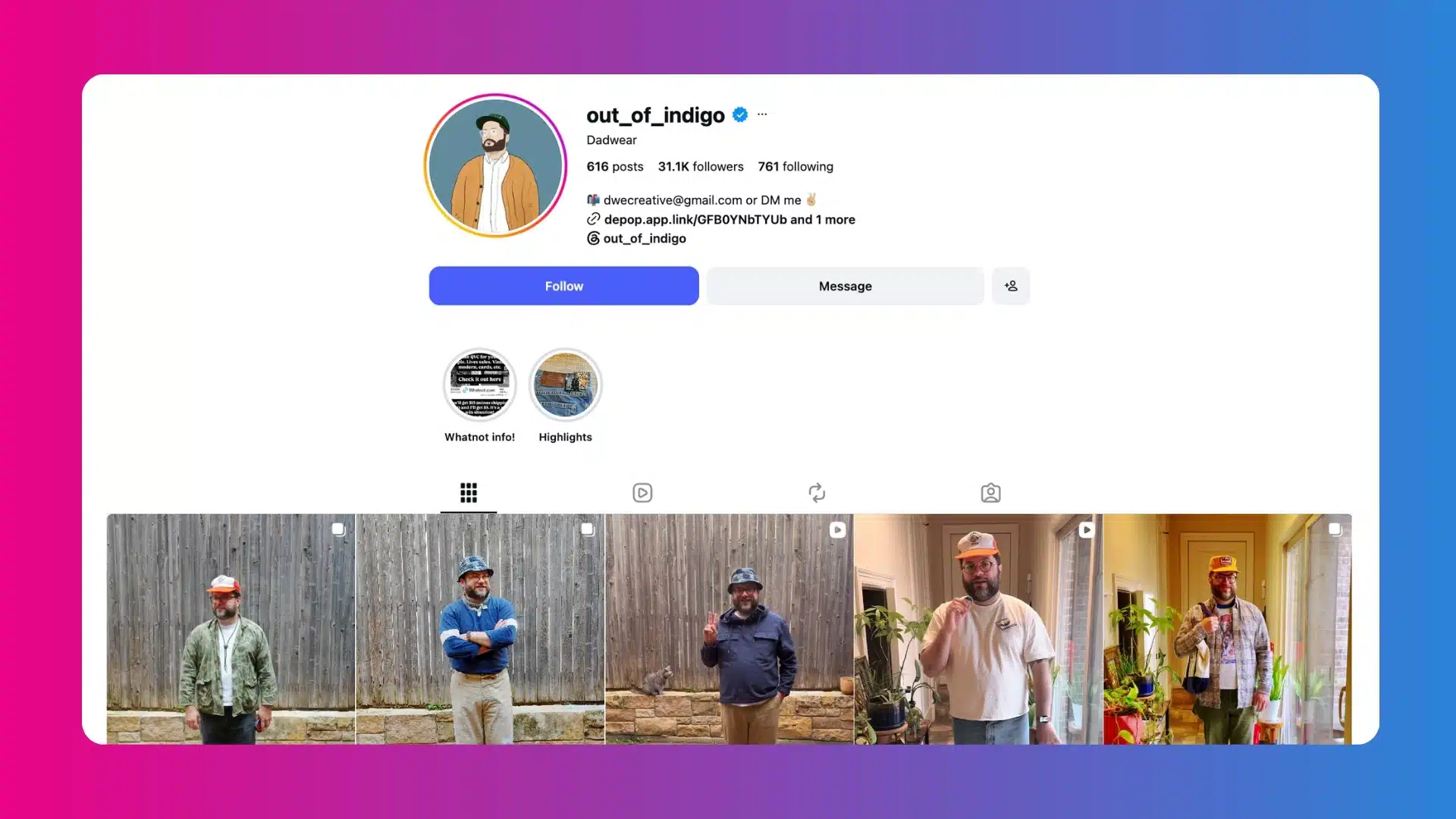
| Primary platform | Follower count |
| 31.1k |
Out of Indigo is menswear content rooted in real life—outfits that sit alongside fatherhood, hobbies, and everyday living rather than apart from it. That’s his differentiator: style content that doesn’t ask its audience to be someone that they’re not.
Based in Fort Worth, he offers brands a non-coastal, non-editorial introduction point to a style-oriented male audience
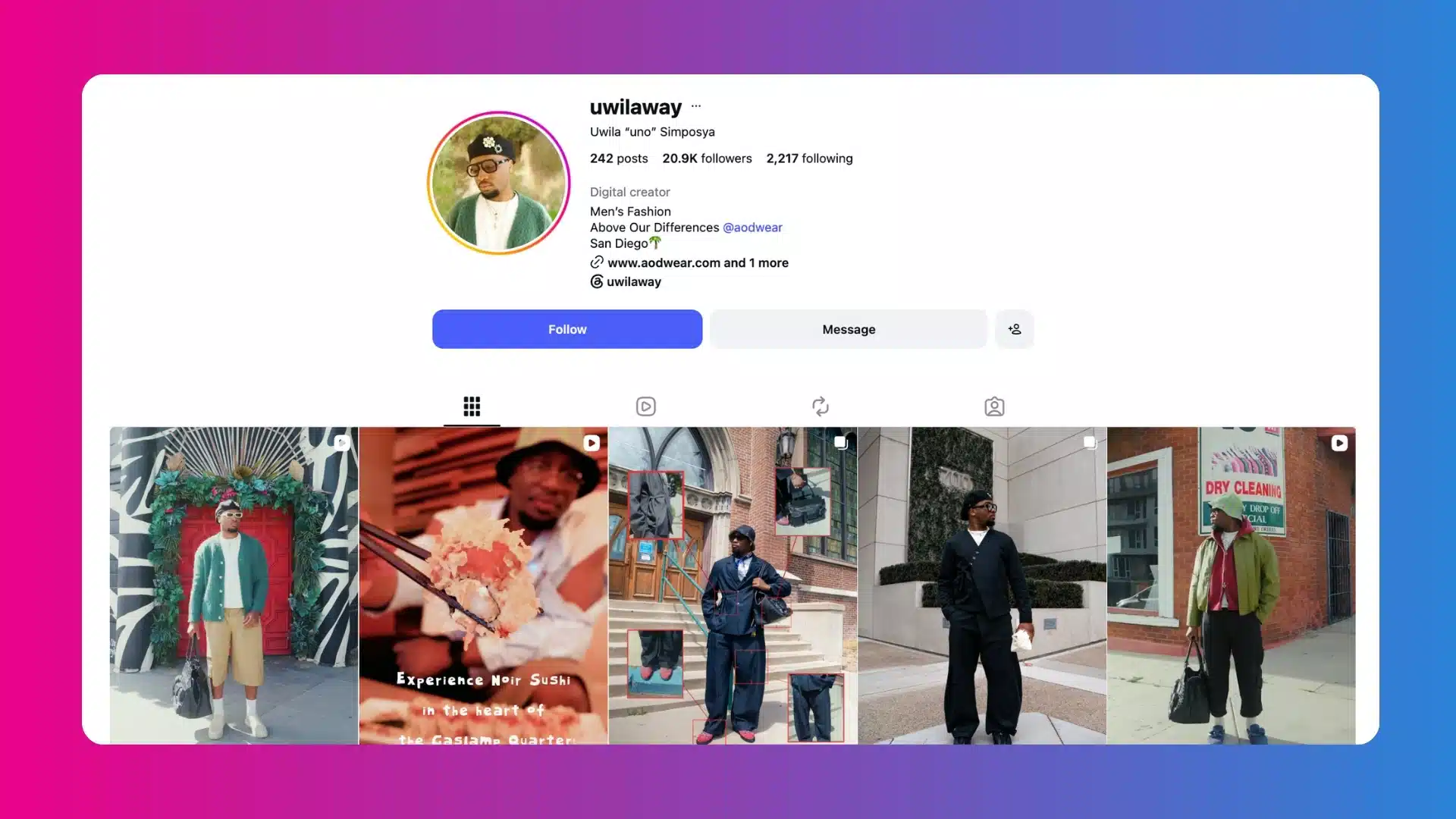
Uwila Simposya (uwilaway)
| Primary platform | Follower count |
| 20.9k |
For Uwila, fashion started as a problem to solve. Growing up with limited resources, he learned to express himself through what he had rather than what he could buy. That origin story still runs through everything he posts.
San Diego-based and Zambian-American, he co-founded apparel brand Above Our Differences (AOD). The brand reflects the same intersection that runs through his content: heritage, street culture, and a style philosophy rooted in authenticity.
Oregon Grail
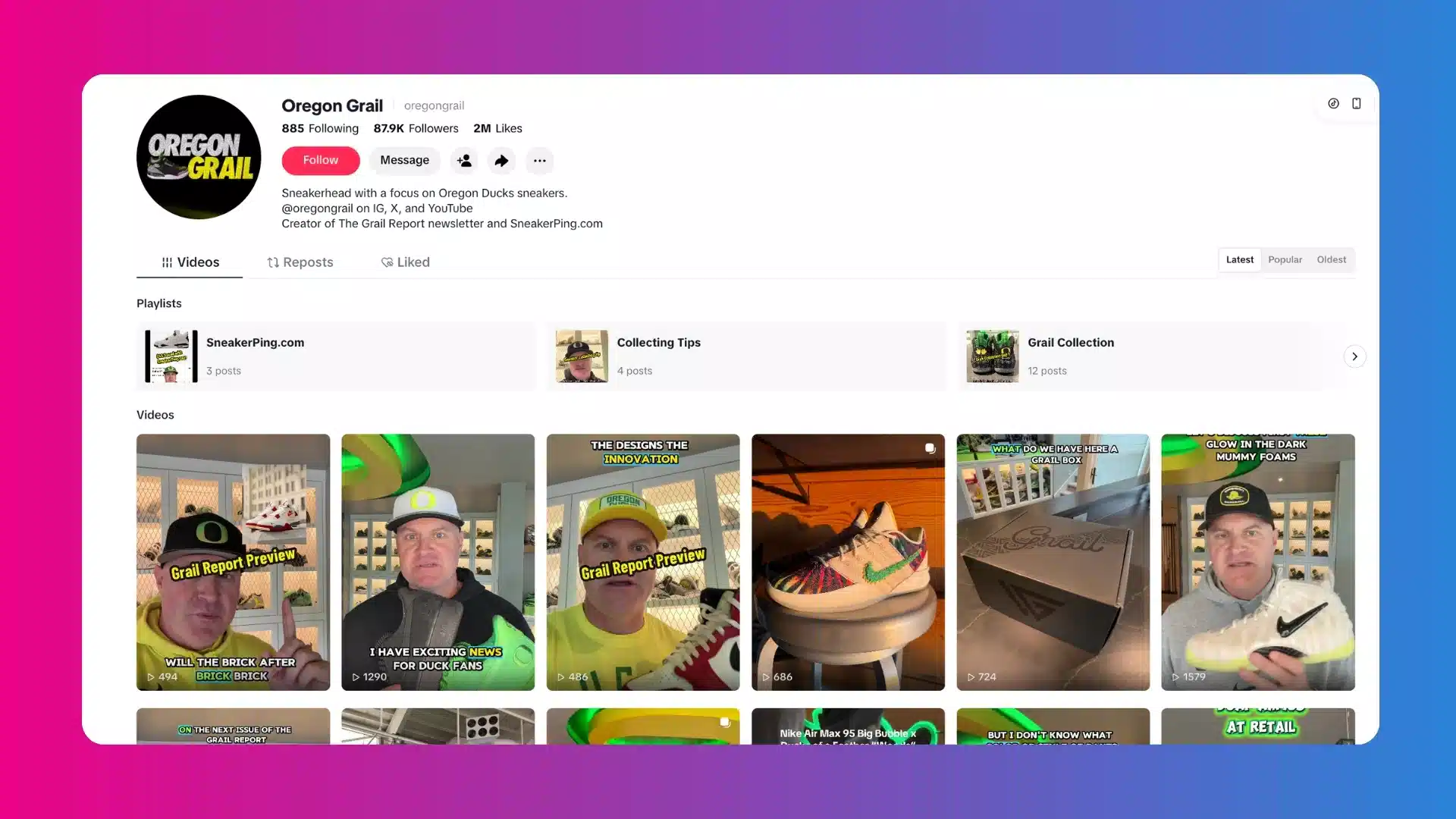
Oregon Grail is the go-to destination for Oregon Ducks sneaker content. The account is built around the largest documented collection of Nike and Jordan shoes made exclusively for University of Oregon athletes, a category that drives collector demand.
His content includes release coverage, unboxings, and game-day drops for an audience built around specialist knowledge and genuine fanhood.
How to pitch a fashion creator collaboration (without cold DMing)
High-impact creators often field dozens of brand pitches each week, so generic DMs and email templates don’t cut it. These three moves can change that:
- Use a platform, not a DM. A partnership commerce platform like impact.com lets you filter by audience composition, engagement quality, and brand safety before you send a single message.
- Be specific about what you’re offering. Creators evaluate deals on compensation structure, creative freedom, and performance expectations—and eight out of 10 say clear pay and performance expectations from the start are important, according to impact.com and Adweek’s Ghosted No More research.
- Give one clear next step. A link to apply, a brief with deliverable details, or a calendar invite keeps up the momentum.
Get these three things right, and you start turning cold pitching into matchmaking.
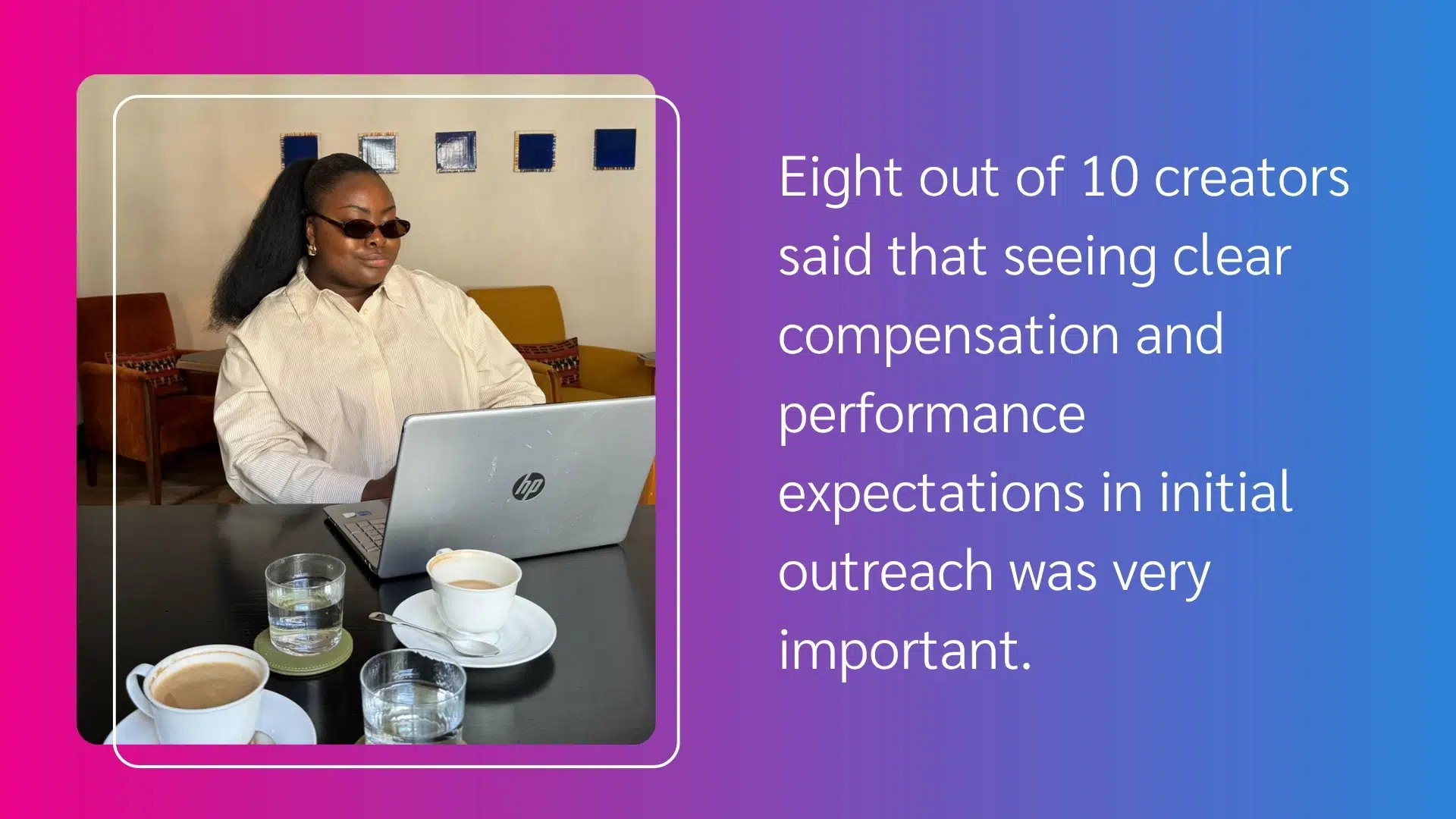
Source: impact.com and Adweek’s Ghosted No More research
Build a creator program that compounds over time
Fashion influencer marketing fails when brands treat it as a transaction. The programs that scale treat it as portfolio building rather than a one-time search.
The distinction is structural. Broad-category discovery in 2026 is crowded by design: every brand runs the same searches, surfaces the same accounts, and competes for the same partners. The matchmaking framework works because it starts from your buyer data rather than the category.
The longer you run a precision-matched program, the more your data reflects your actual buyers. Category searches can’t build that, and the gap widens every quarter. As AI-driven discovery automates broad-category search for every brand simultaneously, it widens faster.
The brands still searching by category this year won’t just be inefficient. They’ll be playing catch-up against programs that started building this infrastructure now.
FAQs
To identify fashion creators with highly engaged followers, look beyond follower count to engagement rate. A rate consistently above 2–3% on Instagram signals an active audience. Check comment quality too. Genuine engagement produces specific, conversational responses, while generic comments and emoji chains signal low-quality engagement.
The best free approach is niche hashtag research on Instagram, TikTok, or Pinterest. Search specific terms like “modest fashion” or “men’s street style” rather than broad fashion categories.
If your brand sells on Amazon, Amazon influencer storefronts are also searchable and free, surfacing creators who already have affiliate infrastructure in place.
The tradeoff is time. Free discovery requires manual vetting, whereas some platforms handle it automatically.
To collaborate with fashion creators on Instagram, identify creators whose audience matches your buyer profile and reach out through a platform or direct pitch specifying what you’re offering.
The three most common structures are:
- Affiliate: the creator earns commission on tracked sales
- Gifting: product in exchange for organic coverage—no guaranteed deliverables
- Paid sponsorship: flat fee or hybrid for specific content deliverables
For brands building long-term programs, affiliate-linked Instagram content—shoppable posts, Stories with link stickers, bio link placements—creates trackable conversion data that lets you prove and scale what’s working.
For finding fashion influencers for product launches, a two-phase approach works best. First, gift products to niche-fit creators to build social proof and organic content ahead of the release. During launch week, pair creator-driven affiliate content with a time-sensitive offer—a limited code, early access, or a launch-day livestream—to convert built-up awareness into trackable sales.
To find affordable fashion creators for a small business without a platform subscription, start with niche hashtag research on Instagram and TikTok.
Search specific terms—”affordable workwear,” “budget style,” “dupe fashion”—rather than broad fashion categories. Creators who consistently produce well-performing content in that space, with an engaged comments section and a post cadence that includes affiliate links, are worth vetting further.
Amazon influencer storefronts are also free to search and surface creators who already have affiliate infrastructure in place. Look for storefronts featuring products in your category and price range with consistent posting frequency—that combination signals buying habits that align with your brand.
The tradeoff is time: free discovery requires manual vetting of audience demographics and engagement quality that a paid platform handles automatically.
To find fashion creators willing to work on commission, look first for creators who already have affiliate infrastructure in place: active Amazon storefronts, LTK collections, or promo code links in their content all show they’re structured for performance-based partnerships and comfortable with the model.
These creators don’t need to be sold on commissions—they’re evaluating whether your rate, product fit, and program terms are worth adding to what they’re already doing.
The impact.com marketplace takes the manual search out of the process. It surfaces creators who have actively opted into affiliate partnerships, so you’re starting from a pool that’s already commission-ready rather than qualifying from a broader list. You can filter by niche, audience composition, and brand safety before reaching out.
When you pitch, lead with the commission structure and rate upfront. Experienced affiliate creators evaluate deals quickly—specificity closes faster than general outreach.