
A high-quality publisher evaluating affiliate programs makes their decision in seconds. They’re scrolling through dozens of listings in a single session, looking for evidence that a program is worth their time before they invest a single hour creating content for your brand. The commission rate is visible. So is everything else—or the lack of it.
Most programs look the same. Vague descriptions. Incomplete contact information. No assets. No clear sense of who the brand is or what kind of partner they’re looking for. Publishers read that absence as a signal too: this program isn’t worth the effort.
According to impact.com’s 2025 Global State of Affiliate Marketing report, 38% of brands now allocate 21–30% of their total marketing budget to affiliate marketing. With that level of investment, the competition for high-quality publishers has never been more intense. And yet most brands are still trying to win that competition with commission rates alone.
The brands attracting the best publishers aren’t the ones paying the most. They’re the ones whose programs communicate quality before a publisher ever applies—through a profile that signals investment, automation that signals organization, and outreach that signals they’ve actually done their homework.
When Strand—a heritage Australian luggage retailer repositioning itself as a fashion brand—structured its program presence, and impact.com identified the alignment with Are Media’s fashion-focused audience, the introduction led to a five-month content partnership that delivered 160% revenue growth and an 89% increase in average order value. Strand’s previous partner mix was cashback-heavy and bottom-funnel. It couldn’t get close to those numbers—not because the commission was wrong, but because the wrong publishers were in the program.
This is a guide to building the kind of program that attracts the right ones.
Signal program quality before publishers ever apply
High-quality publishers—whether that’s a niche blog with 10,000 loyal readers or a mid-tier content site with a highly engaged audience—are making a business decision when they evaluate your program. They’re not just looking for the highest commission. They’re looking for evidence that your program is worth their time before they invest a single hour creating content for your brand.
A well-managed Marketplace profile demonstrates that a program is designed for collaboration, making it easier for publishers to justify investing time and creative resources in a brand.
| Profile section | Recommendation | Strategic impact | Best practice example |
| Program card | Use a high-res logo and clear brand identity. | Builds immediate trust and brand recognition. | Use a 1080x1080px logo with a transparent background. |
| Keywords | Add search-friendly terms and preferred partner models. | Increases visibility to relevant, high-intent partners. | Select “Content/Reviews” if you’re seeking editorial partners. |
| Contact & links | Provide up-to-date contact info and key URLs. | Reduces friction for partners wanting to learn more. | Link directly to your affiliate-specific landing page. |
| Service areas | List all countries you ship to. | Attracts partners with the right geographic audiences. | If you ship globally, specify any key regional exceptions. |
| Commission terms | Clearly display default payout, referral window, and bonuses. | Sets clear expectations and attracts partners motivated by your terms. | “10% commission, 30-day cookie, with a 5% bonus for top performers.” |
What high-quality partners look for
Picture this: a partnership manager for a publication in your niche has a 30-minute window between meetings to find their next brand partner. They’re scrolling through dozens of listings, coffee in one hand, mouse in the other. What makes them stop and lean in closer to your profile?
Experienced publishers are detectives looking for clues that a program is worth their time. They’re running a business, and they need to see a clear return on their investment of time and effort. They’re drawn to brands that:
- Clearly articulate how their partnerships are structured.
- Show indications that a program is well-managed and built for collaboration.
If your information is vague or incomplete, their default response is to move on. The effort required to investigate your program simply outweighs the perceived reward.
The strongest programs treat their Marketplace listing like a sales page—anticipating quick-scan decisions and making it effortless for the right partners to find what they need.
Optimize the “program card” (your 5-second pitch)
A strong program description answers one question in seconds: Why is this brand worth my attention?
It is often the first touchpoint publishers have with your brand in the Marketplace. Sometimes, a program description can be the deciding factor in whether a publisher clicks through to evaluation or keeps scrolling.
Publishers scan quickly, and many evaluate dozens of programs in a single session. Strong program cards offer visual clarity, which is critical for gaining immediate attention.
Attract attention with:
- A high-resolution logo (1080 × 1080, 300 dpi).
- A transparent background to help your brand stand out.
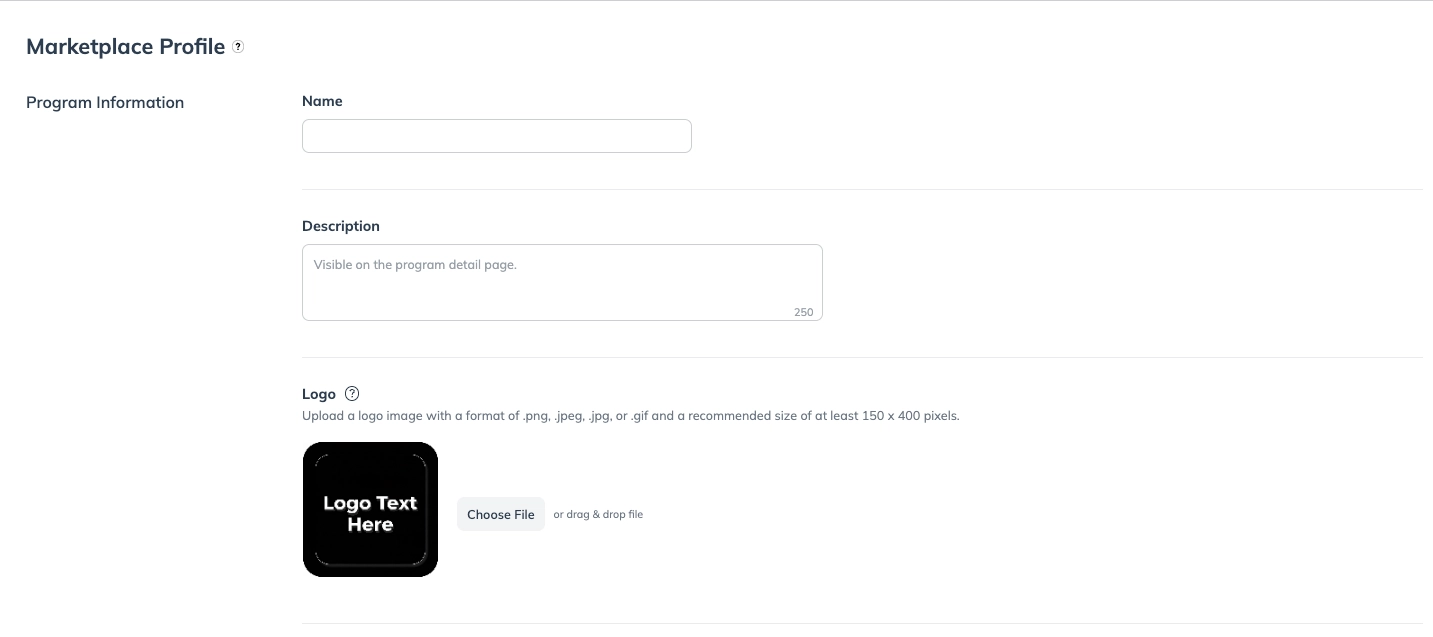
Here’s how to start adding your Marketplace on impact.com.
Keep in mind that pixelated logos make recognition harder and can reduce credibility before publishers engage further.
Once a brand clicks through to your profile, your elevator pitch needs to do the rest of the work. Use a short description to clearly communicate:
- Who your brand is and what it stands for: Mention your product categories or core offerings, for example, “fitness tech, or “minimalist home decor”.
- Brand differentiators: What makes your brand stand out from competitors? Is it sustainability, premium materials, or product innovation?
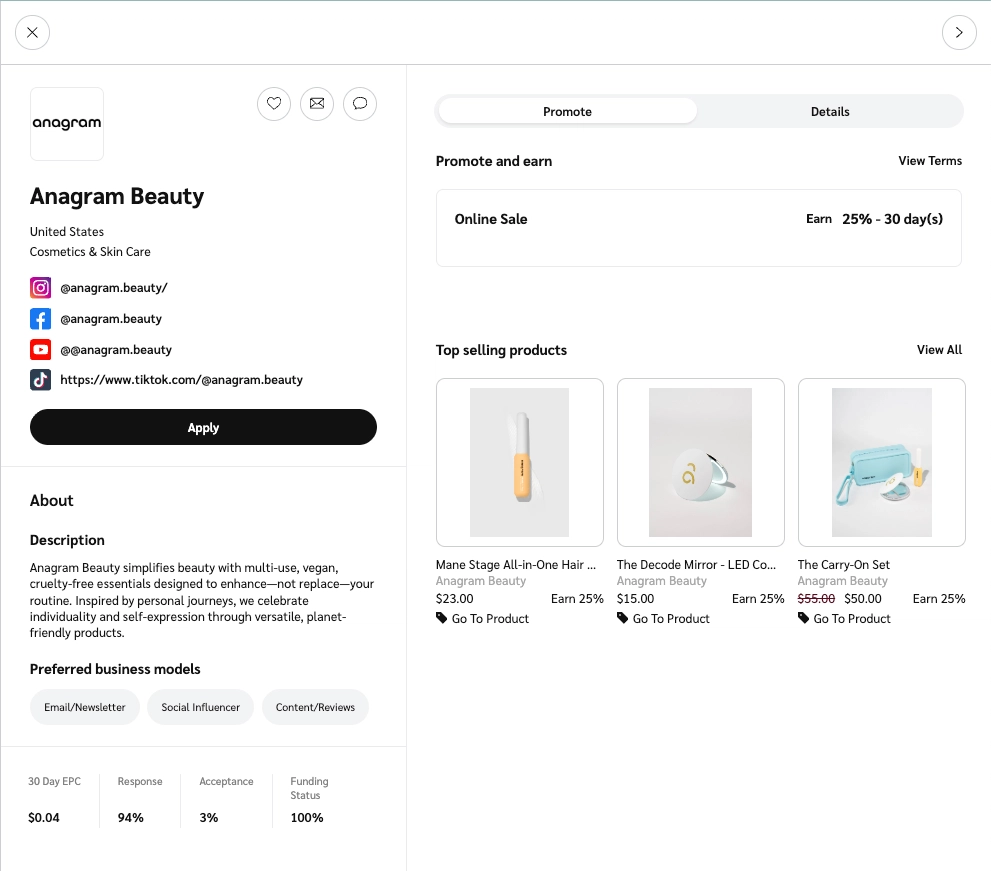
Anagram Beauty promotes their brand by highlighting their vegan and cruelty-free products.
Complete branding and clear positioning surface your listing in curated placement and category views—putting it in front of publishers who are already looking for a program like yours. This increased visibility helps strong programs attract higher-intent publishers without relying solely on outbound recruitment.
Use relevant keywords to attract the right publishers, not just any publishers
Keywords are like a roadmap that guides right-fit publishers to your brand. These keywords draw in publishers that are far more likely to be aligned and invested in growing the partnership.
Treat this section the same way you treat on-site SEO. Use the same heading terms and category language you target in Google search to help ensure your program appears in relevant Marketplace searches:
- Add search-friendly language tied to your vertical and product categories in the “Search Keywords” box. Good keywords include vertical categories, products, and relevant content topics.
- Choose from the drop-down list what your preferred “Partner Business Model” is. You can pick multiple options, such as loyalty programs, Content/Reviews, newsletters, content sites, or creators.
- Selecting options from the “Features you are offering” box helps publishers quickly determine whether your program fits their content strategy.
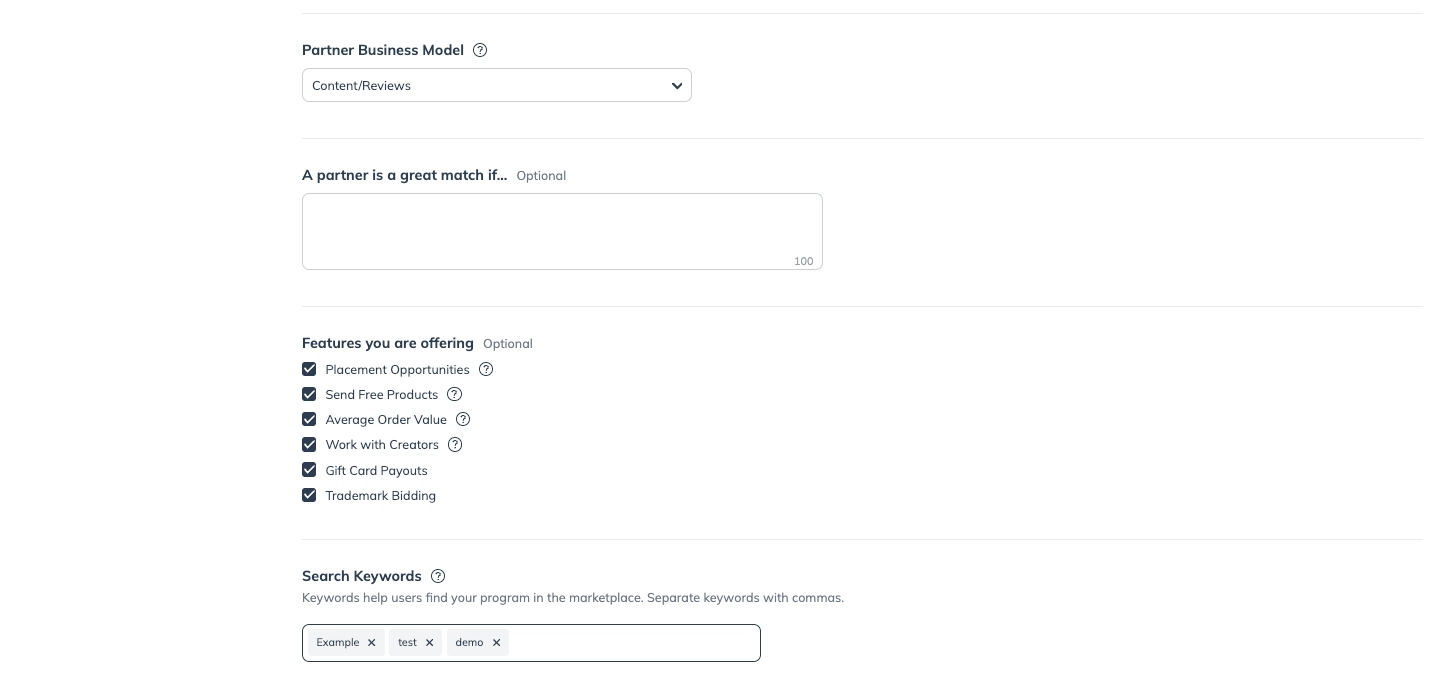
The Partner Business Model and Features you are offering section allows you to attract aligned partners.
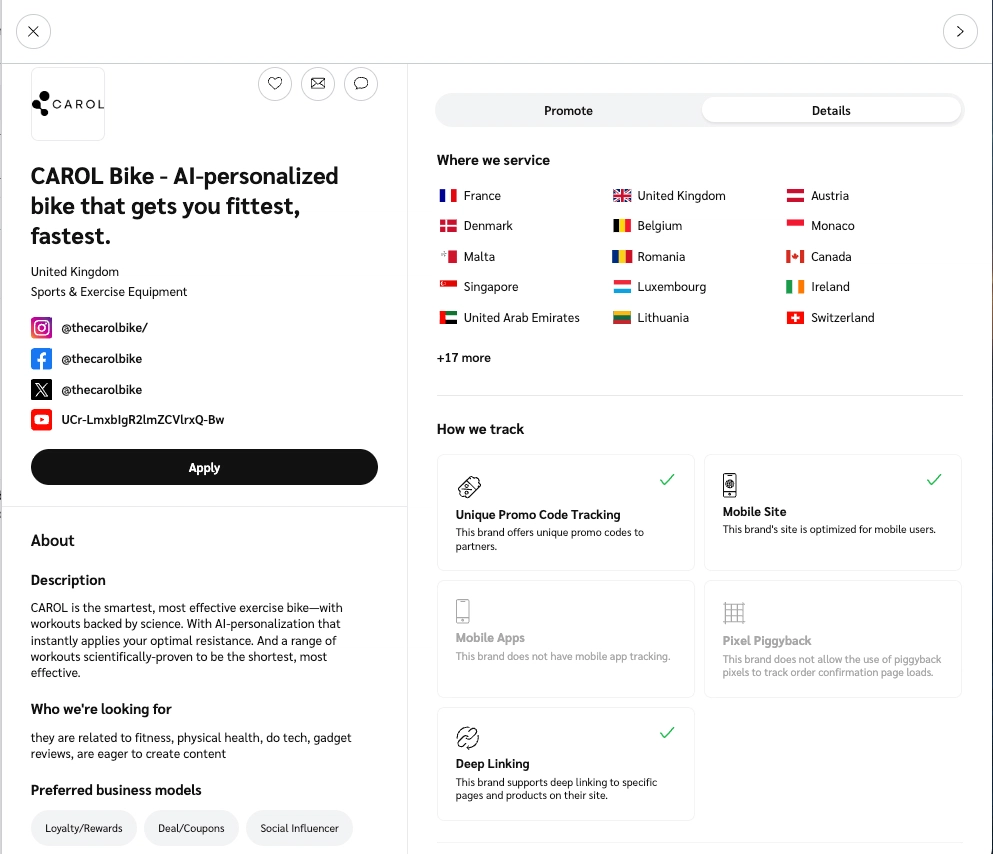
Exercise bike brand CAROL lists a range of partner types they’re willing to work with.
The more clearly you define your ideal partners, the more effectively your Marketplace description acts as a built-in quality filter.
Quality filters are critical because misalignment is costly on both sides. Unclear program descriptions result in brands spending more time reviewing applications that never activate, while publishers invest effort applying to programs that ultimately aren’t a fit.
When done right, clear descriptions lead to fewer stalled partnerships and a higher percentage of publishers who move from approval to activation. The publishers who aren’t aligned are more likely to self-select out.
Add relevant contact information and program links
Contact info: A well-put-together profile becomes a throwaway when partners don’t know who to get in touch with. Select the best user for responding to partner inquiries and proposals. If you work with an agency, add their details as well and grant them access to your profile. Ensure the info is always up-to-date with the correct info.

Program resource links: Add website links in all three URL fields. A link to your affiliate or partnerships program’s landing page will be a great fit for the “Program Information” field. This step is essential for helping publishers get a sense of the look and feel of your brand and what it stands for.
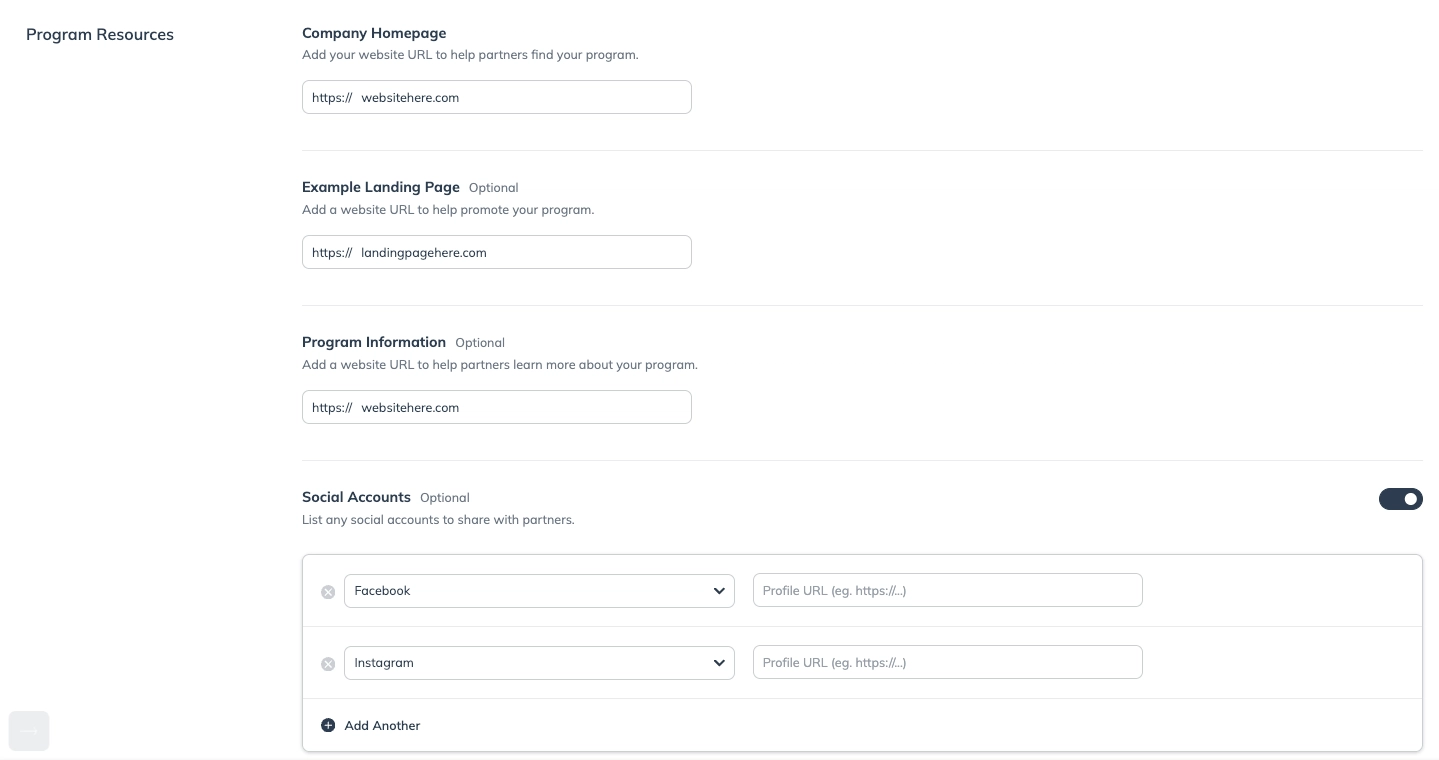
Add program resources to give partners the tools they need to succeed
Additional info: Here you can add any other links you think may entice the right publishers, such as URLs of popular products, your About page, and PDFs of product catalogs.
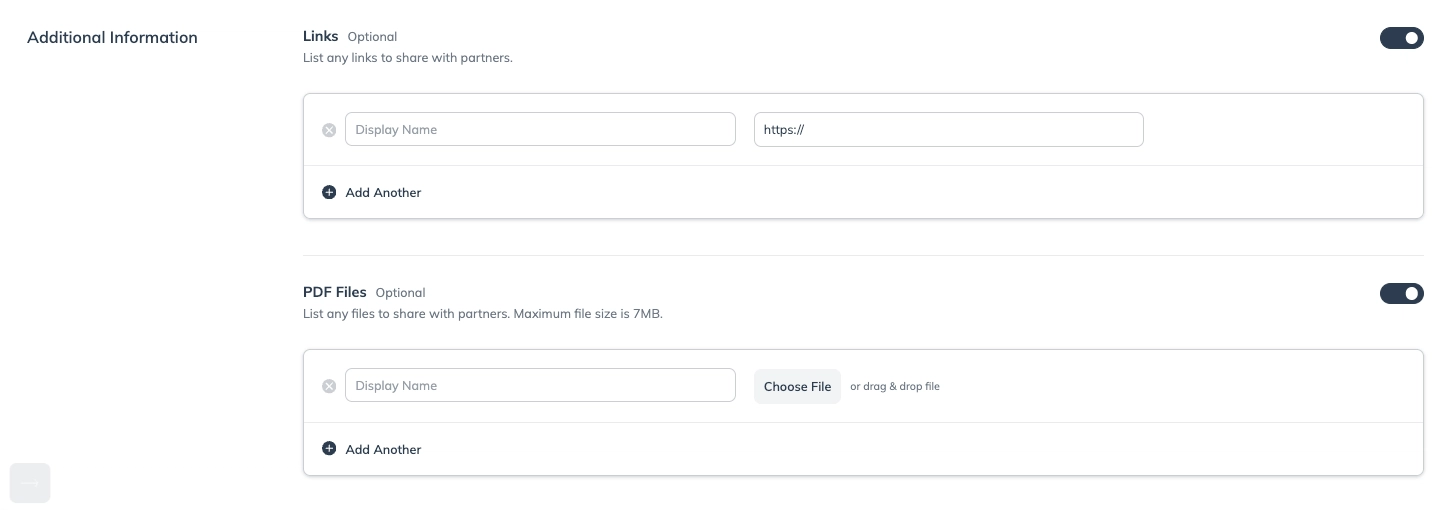
In the Additional Information section, add URLs of popular products, your About page, and PDFs of product catalogs.
Service areas and categories: List the countries that you service or ship products to, so your partners can align with the most relevant audiences. Additionally, list all categories related to your brand so publishers who promote these categories will be enticed to apply.
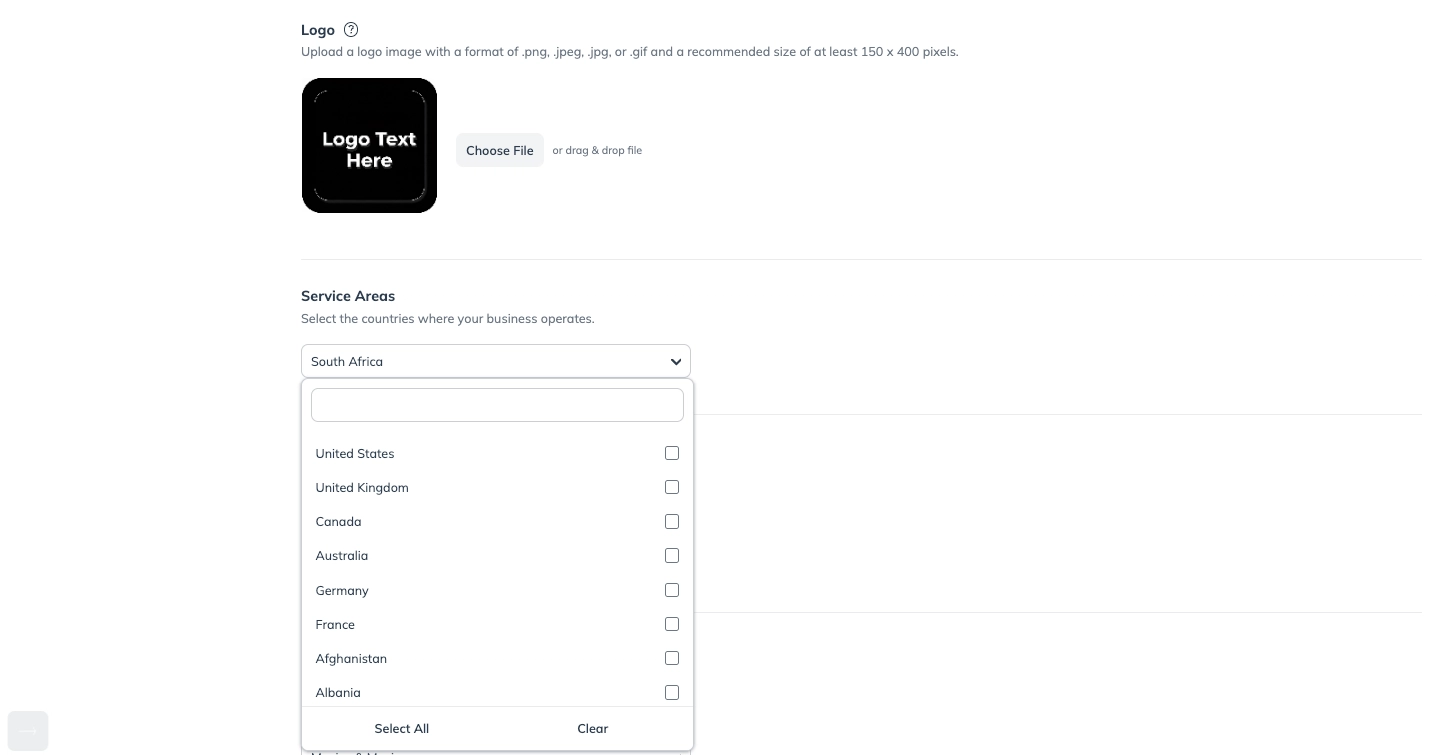
Add all relevant service areas to ensure publishers in the right geographical location sign up.
Make your commission terms readable at a glance
Publishers evaluating your program are weighing the effort of content creation against the potential return. Make that calculation easy.
To set expectations early, add:
- Payout terms: List your commission rate in the “Default Payout” field and the attribution period in the “Referral Window” field.
- Enticing bonuses: Use the “Performance Bonus” field to show how strong performance can unlock higher-level earnings.
- Restrictions: The “Payout Restrictions” and “Action Locking” sections allow you to set rules to protect your program from paying for actions that didn’t lead to the sale.
- Payout schedules: Set an automated payment schedule to reduce manual workload.
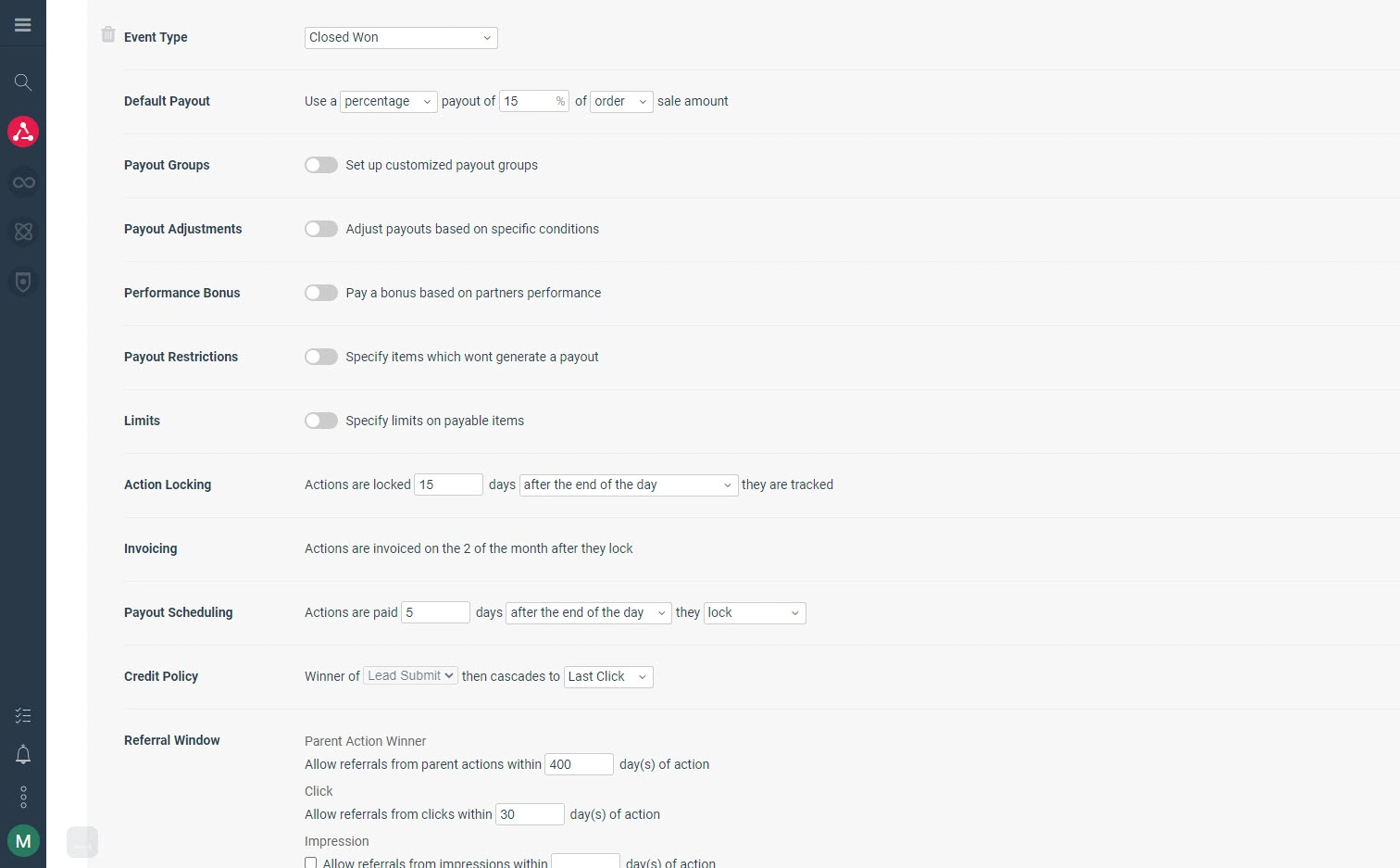
Set fair payouts and bonuses for good performers to attract high-quality publishers.
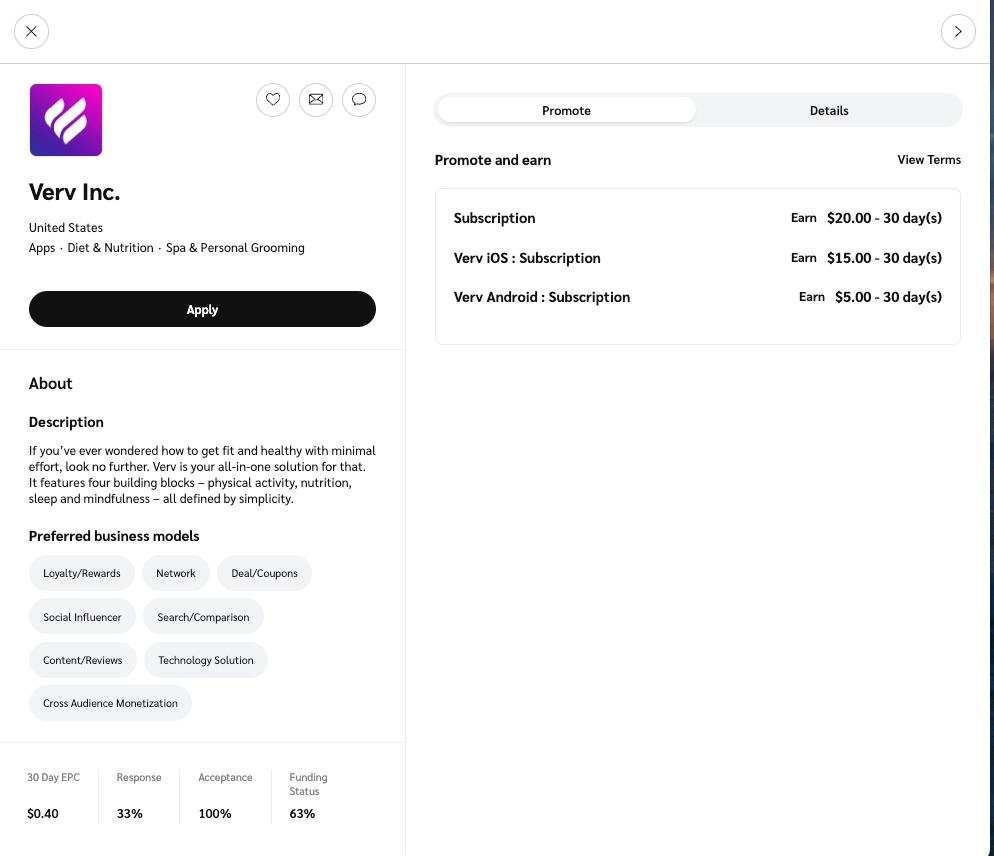
Fitness app Verv shows various commission structures and on its profile.
Automate the “no” so your team can focus on the “yes”
As application volume grows, manual review creates a backlog that slows onboarding for the publishers most likely to perform.
Performance marketing automation tools like impact.com enable teams to automate the “no” as application volume increases. This filter cuts recruiting time and attracts the publishers most likely to deliver long-term value.
Without clear automation filters, brands risk approving partners who don’t align—or missing those who do.
Set smart auto-approval rules in the workflow
Next, you need to add strategic rules that act as early quality filters. These rules give high-quality publishers space to demonstrate alignment and provide an easy out for low-intent applicants.
Smart auto-approval rules allow brands to quickly partner with publishers without sacrificing quality control. Clear, rules-based criteria streamline onboarding for publishers who already meet program standards. As a result, teams move faster while maintaining alignment.
To enable faster activation, you can set auto-approving publishers based on factors such as:
- Business model, including content sites, creators, or premium loyalty platforms.
- Audience characteristics, such as size, age, gender and location.
- Marketplace verified: Are they verified partners on the impact.com network?
- Followers and subscribers: Ideal if you’re looking for a minimum or maximum follower/subscriber base. Ensure you also consider smaller and mid-tier publishers or affiliates, as they tend to have greater engagement rates.
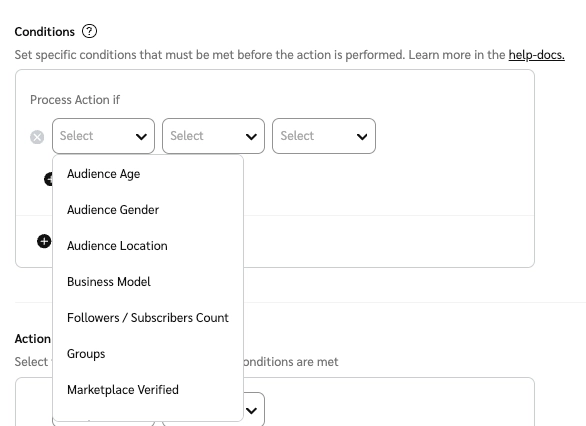
Set conditions to automatically weed out misaligned publishers.
Fast onboarding gives publishers confidence that your program is well-organized and ready to support collaboration.
Automating approvals for qualified partners also reduces manual backlogs, enabling your team to focus on supporting publishers most likely to drive long-term value.
Upload assets to successfully “sell” your brand
A full asset library shows publishers how easy it is to quickly create high-quality content for your brand. It also signals that your brand is organized and invested in the partnership marketing relationship. Here are some steps to take:
- Upload lifestyle and product imagery that shows your products in real-world settings.
- Provide the appropriate links to key landing pages and priority collections.
- Offer full product feed access so publishers can easily surface relevant products.
- Refresh seasonal assets monthly to align with campaigns, promotions, and product launches.
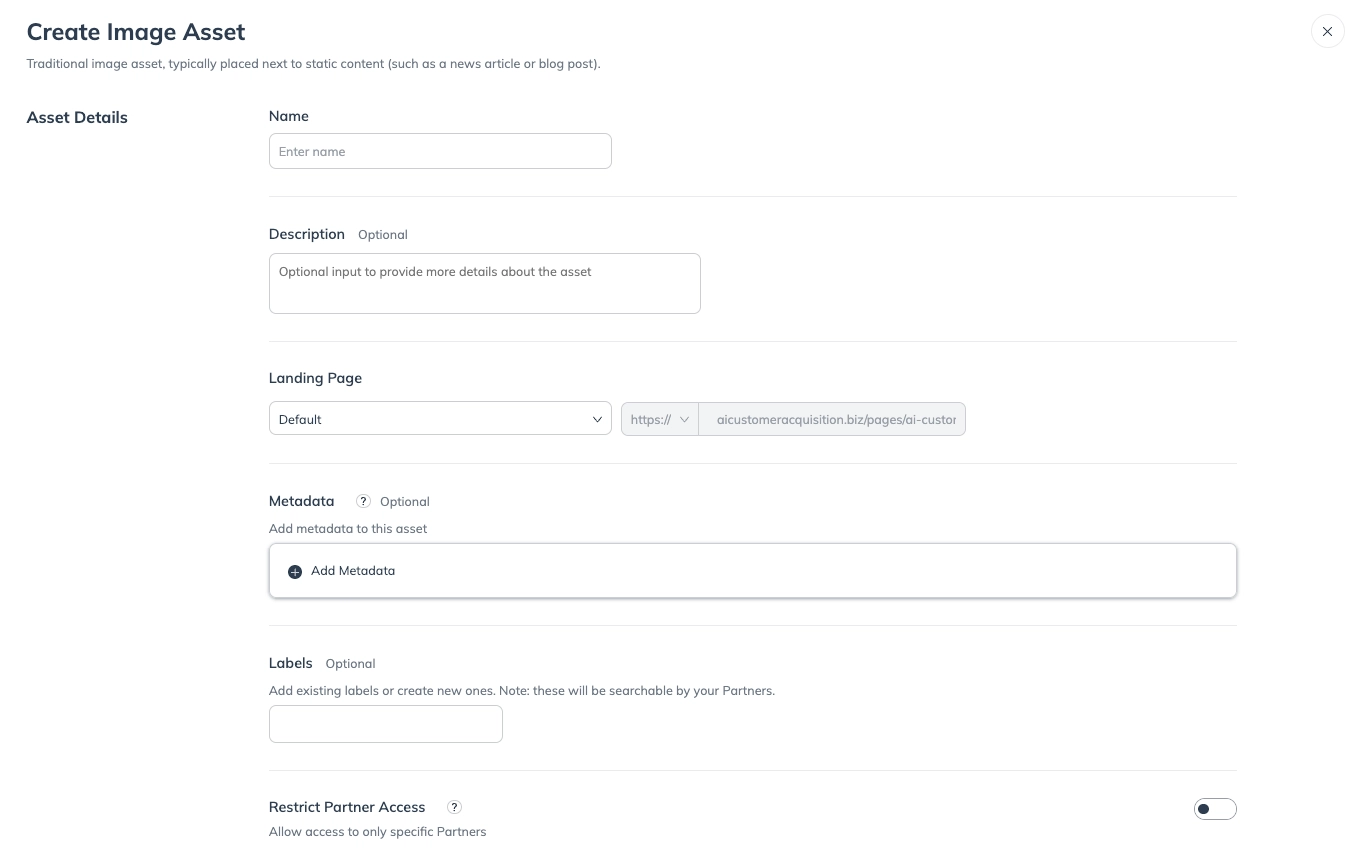
To save some time, you can also Bulk upload assets to support quick activation and ongoing performance.
When publishers don’t have to chase down creative or build assets from scratch, they can focus on what matters most—telling your brand story and driving results.
Go find the publishers who aren’t looking for you
The Strand and Are Media partnership didn’t start with Are Media browsing the Marketplace. impact.com’s team identified the alignment between Strand’s repositioning goals and Are Media’s fashion-focused audience and made the introduction. That’s what proactive recruitment looks like at its best—and it’s replicable.
The “new partner bounty”
The first few weeks of a partnership reveal whether a program is built for collaboration or just collecting applications. A first-sale bonus (even a modest one) isn’t primarily a financial incentive. It’s a design signal: this program is structured to help you succeed quickly, not just sit in your portfolio.
Proactive outreach with “recruit bios”
Many high-quality publishers aren’t actively browsing the Marketplace, which makes proactive outreach an essential part of partner recruitment. impact.com’s Discover tool lets you identify publishers based on specific criteria, even if they haven’t engaged with your program yet.
Once you identify a potential fit, send a tailored recruitment message that:
- References the publisher’s niche or content focus.
- Explains why your brand fits their audience.
- Highlights partnership opportunities relevant to their platform or content format.
- Includes the impact.com sign-up link.
Thoughtful recruitment messages show that you understand their audience and content strategy, helping to position your brand as a partner worth engaging with.
By proactively recruiting, brands build a stronger partner mix over time, unlocking incremental reach and connections with high-intent audiences.
How to reach out to partners with impact.com
Account-level-sign-up link. Send prospective partners a unique sign-up link. The link directs them to a registration page where they can log in or sign up for a partner account to apply for your programs. Partners who apply via this link must be reviewed and approved by you.
Program sign-up page. Share a dedicated program sign-up page URL. Partners applying through this page are only applying to that one program and are subject to your approval process. They will need to verify a media property to sign up and join your program.
Contract proposal: Add partners via template term actions that include a proposal. Once this proposal is accepted by the partner, they are automatically enrolled in your program.
Reputation and speed-to-approval
Building a strong application and auto-approval process helps brands protect their program reputation and demonstrates that the program is well-managed and ready for collaboration. Brands that prioritize speed, transparency, and recognition are more likely to gain and retain high-quality publishers invested in long-term growth.
To strengthen your program reputation:
- Maintain predictable review and approval timelines: Aim for a 3–5 day approval window.
- Pay reliably and communicate clearly. Automated payouts on impact.com make this process much easier.
- Celebrate publisher milestones, such as first sales or performance achievements.
- Share success stories to highlight what’s working.
Building long-term relationships with high-quality publishers leads to greater ROI
“The most unexpected benefit of the Are Media partnership has been the conversions,” Strand acknowledged afterward. The results reshaped how it approaches partnerships entirely—moving beyond the cashback-heavy, calendar-moment approach that had previously defined its program and expanding its content publisher network year-round.
That’s the compounding effect of building a program that attracts the right publishers. Commission rates get you applications. Program design gets you partnerships worth having.
Want to learn more about collaborating with successful partners? Check out these resources:
- Beyond bargain bins: A guide to partnering with coupon partners and deal sites for growth (blog))
- How publishers and brands can tap into Reddit affiliate marketing to build strong community engagement (blog)
- Performance marketing automation for partnership programs: Scaling strategies with limited resources (blog)
- Introducing Prospects: a more effective tool for partner recruitment (blog)
- Global state of affiliate marketing 2025 (research)
FAQs
The best affiliate marketing platform will depend on your brand’s specific needs. Generally, look for a platform that manages the entire partnership lifecycle for all partner types (influencers, affiliates, mobile apps, B2B). Also, ensure the software has deep reporting and tracking capabilities, the ability to automate manual tasks, and advanced fraud detection. Platforms like impact.com allow for direct communication and negotiation with partners. You can create custom contracts, set flexible commission structures (like performance bonuses or CPA models), and maintain a branded interface.
A strong Marketplace profile for an affiliate marketing platform functions as your program’s first impression—and often, its best recruiting tool. Use a high-resolution logo and write a short, compelling description that instantly communicates who you are and what you offer. Add relevant SEO keywords for your industry and products, and specify the types of partners you want to work with (e.g., content creators, loyalty programs, coupon sites etc.). Stock your profile with high-quality logos, banners, product images, and other assets. These elements equip partners with the tools they need to start promoting your brand immediately.
To get higher-quality publisher applications, build a “quality filter.” Start by setting clear and detailed contract terms; this ensures that only partners who agree to your standards will apply. Next, use templates to create pre-approved, tailored deals for different partner segments, which speeds up onboarding. Finally, use automated approval rules to instantly accept or decline partners based on criteria you set, such as their business model or location. By automating these decisions, you stop wasting time on manual reviews and can focus your energy on building relationships with your most valuable partners.