

When Medicube—a Korean skincare brand barely two years into its U.S. expansion—started posting over 1,000 percent year-over-year growth on TikTok Shop, established beauty brands took notice. Not because Medicube had better products or a bigger creator budget. Because they’d built something most competitors hadn’t: a structural social commerce engine.
A hybrid model that paired product seeding with commission-based creator rewards. A livestream program designed to turn scheduled sessions into predictable conversion windows. According to WWD, citing Charm.io data, the brand’s Glass Glow skincare set alone cleared $18.8 million in revenue over 12 months on TikTok Shop.
The content wasn’t the variable. The commerce model underneath it was.
Many brands are active on social channels, but far fewer run social commerce programs that convert—and the gap is wider than most teams realize. According to impact.com’s 2025 Global State of Affiliate Marketing report, which surveyed 818 marketers across eight countries, fewer than one in five brands tracks customer acquisition cost or average order value by partner.
Without those metrics, teams can’t tell which social efforts are generating revenue and which ones are generating impressions.
Most brands aren’t facing a content problem. They’re facing a structural one.
The social commerce examples in this guide show what solving that structural problem looks like in practice. Each one focuses on how a brand connected discovery, influence, and purchase into a measurable system—not just a content calendar. By the end, you’ll have a clearer way to evaluate which social commerce models fit your goals, your channels, and how your customers actually buy in 2026.
What qualifies as a social commerce example (and what doesn’t)
A post can go viral, a creator can drive huge engagement, or a brand can build a loyal following.
None of that automatically qualifies as social commerce. Social commerce involves what happens after discovery.
For social media engagement to qualify as social commerce, you need three elements:
- Product discovery happening within a social environment
- Influence shaping consideration or intent
- Purchase following through a trackable path
Many social strategies still optimize for visibility. Likes, views, and comments can show that content resonates—not whether it contributes to revenue.
Without a way to connect social interactions to actual purchases, it’s hard to know which tactics are driving growth and are worth scaling. The goal is to evaluate which social commerce approaches align with:
- Your goals
- Your channels
- How your customers actually buy

Your next growth leap starts with social commerce
See the five strategic social commerce benefits every brand needs.
5 real social commerce examples that show how brands make social ecosystems sell
These five social commerce examples focus on cases where social platforms play a clear role in how people discover products, build trust, and move toward a purchase.
In some cases, that purchase happens directly within a social platform. In others, it follows a trackable path that starts with social content and ends in conversion elsewhere.
1. iStock lifted conversions with a curated community of niche creators
Instead of relying on high-profile influencers, iStock by Getty Images expanded its program to micro- and mid-tier creators serving niche creative audiences.
The program’s performance came from structuring influencer content around a clear affiliate path that tied education directly to conversion.
Each creator produced educational videos showing how iStock’s generative AI tools and stock assets could be used in real projects. Since creators paired these videos with trackable affiliate links, each post drove traffic and conversions.
The content format wasn’t new. The difference was the affiliate structure that converted niche authority into demand.
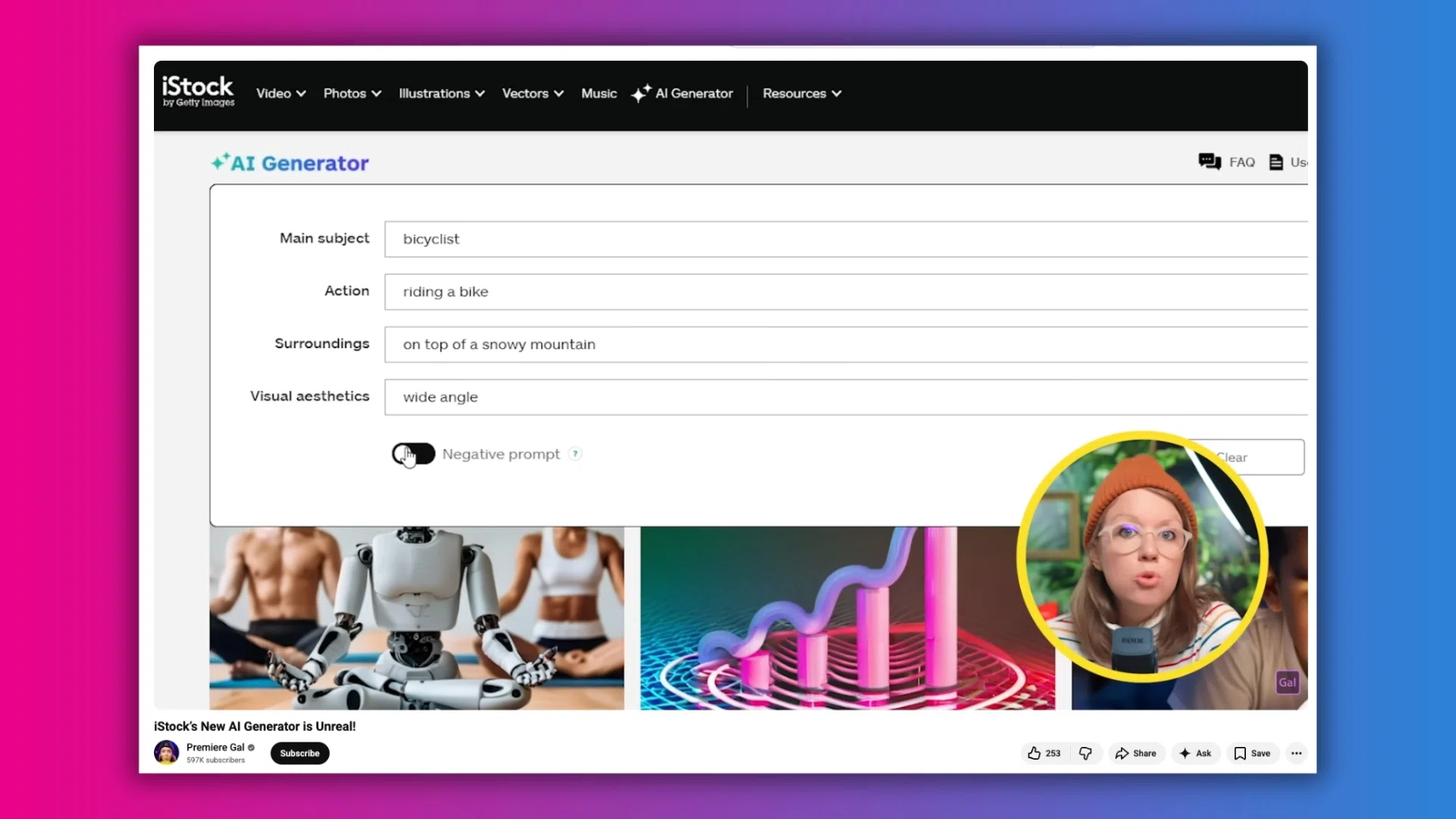
Premiere Gal shows how iStock’s AI image generator works.
Over time, the team could see which creators and content formats resonated most and use those insights to refine the program.
The result was a repeatable creator program built around long-term creator relationships. Rather than treating creator partnerships as one-off campaigns, iStock created a scalable creator program that could continue driving qualified traffic and conversion long-term.
Strategic breakdown for iStock
| Category | Details |
| Social commerce models | Affiliate marketing content |
| Measured impact | – Conversion lift – Over 15 million impressions |
| Key structural advantage | Prioritizes niche authority over reach, using affiliate structure to convert specialized audiences into scalable demand |
| Why it works | Educational creator content builds credibility, while affiliate links turn that trust into measurable conversions |
| When to replicate | – The product requires explanation or demonstration – Purchase decisions depend on expert credibility (perfect for B2B social commerce) – You want conversion data to guide creator optimization – Paid channels are expensive and content offers lower-CAC opportunities |
2. OLIPOP’s hybrid influencer model drives 12% of total sales
OLIPOP built a social commerce program that paired product seeding with commission-based rewards. Creators tried the product first, then earned a commission when their content drives sales.
The brand worked with a diverse mix of micro-influencers and subject-matter experts, including registered dietitians, who could credibly explain what makes OLIPOP different to health-conscious audiences.
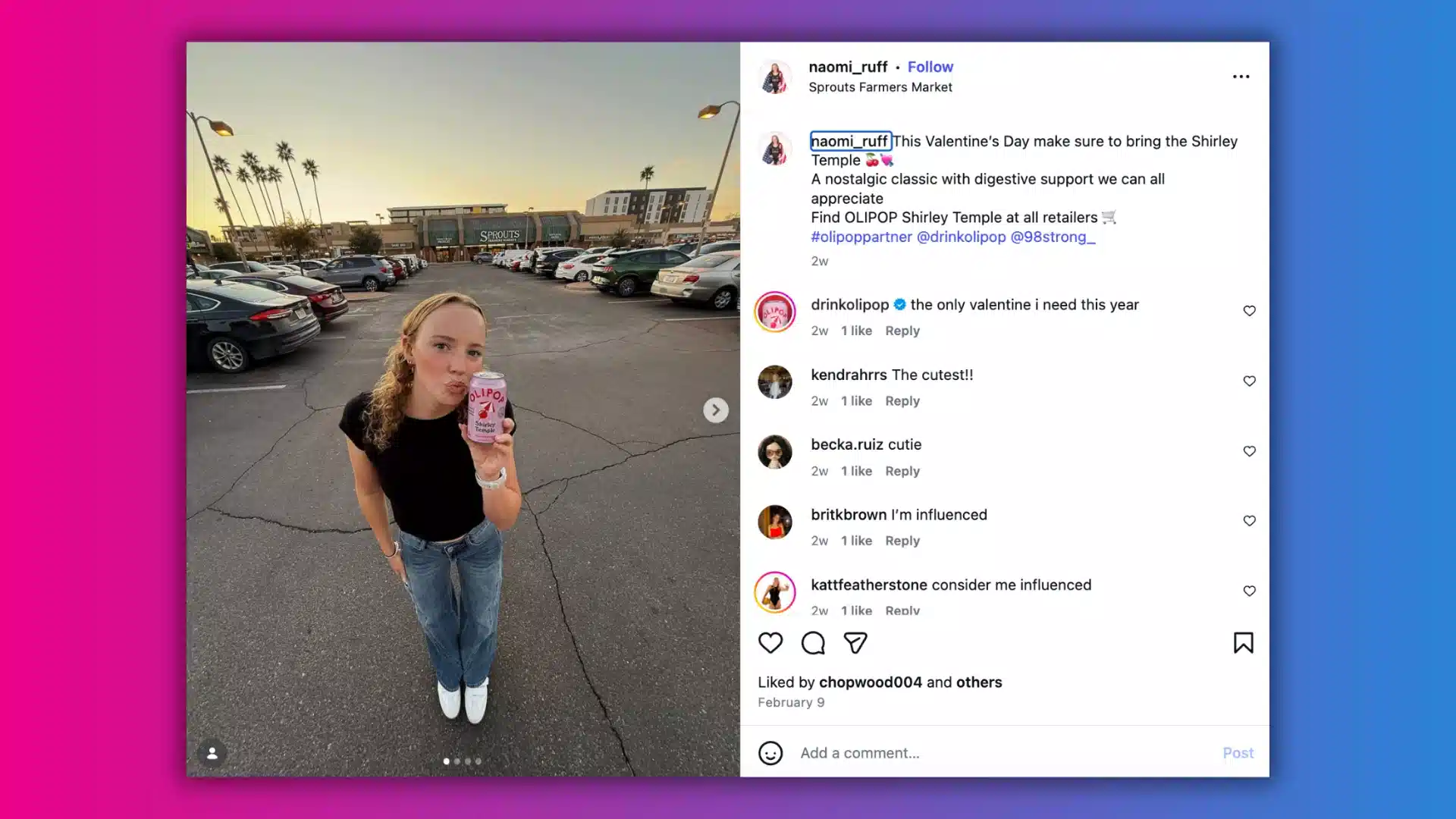
Micro-creator Naomi Ruff promotes Olipop.
Many beverage brands work with health-focused creators. What separated OLIPOP was aligning creator incentives directly with revenue through commission-based rewards.
Because creators paired their content with trackable links, each post connected directly to traffic and conversions. This turned everyday social posts into a measurable commerce channel instead of another awareness play.
The team doubled down on the creators and formats that performed best, evolving the program into an engine built on long-term creator partnerships.
Strategic breakdown for Olipop
| Category | Details |
| Social commerce models | – Sponsored content – Affiliate marketing content – Product seeding (supporting model) |
| Measured impact | – Creator content drives 12% of total sales – 982% average ROI over four years |
| Key structural advantage | Smart incentive design converts trust into predictable, performance-based revenue |
| Why it works | Hands-on product experience builds trust, while commission motivates continued promotion |
| When to replicate | – Product trial increases likelihood of purchase – Margins support commission-based incentives – Revenue growth depends more on retention than one-time transactions – You can scale and track product seeding effectively |
3. Booktopia activated reader communities to boost revenue by 38%
Book discovery starts with recommendations, conversations, and communities. Booktopia built its social commerce strategy around that reality, working with authors, ambassadors, and book-focused communities alongside a diverse portfolio of traditional influencers.
The broader mix mirrored how book communities already discover and recommend titles—and gave those conversations a direct path to purchase.
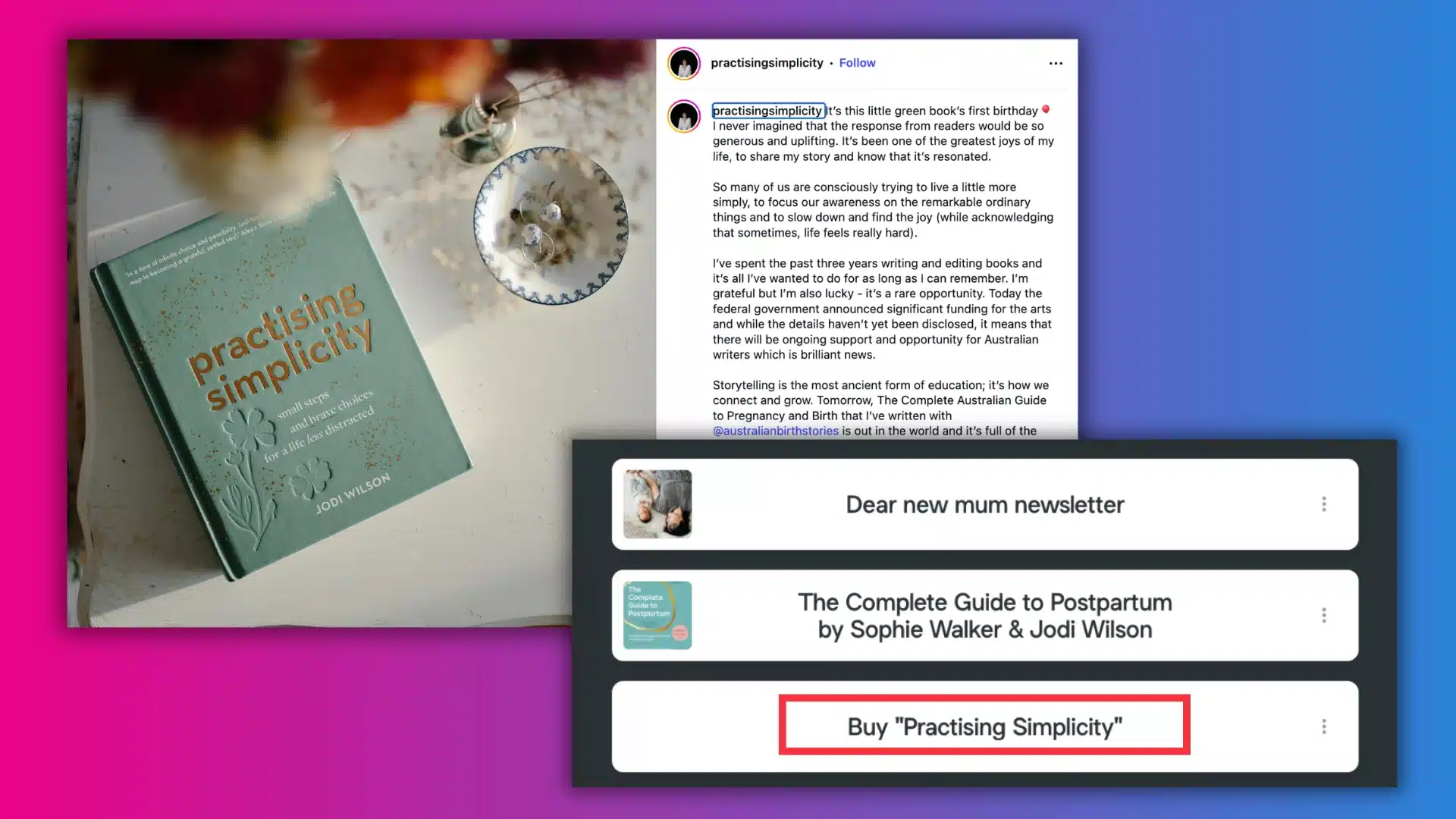
Booktopia offers authors like Jodi Wilson affiliate links to tap into their existing audiences and community.
Links, promo codes, and QR codes connected social and community content to trackable paths to conversion. This allowed Booktopia to monetize discovery without changing how people naturally talk about books.
Together, these pieces created a flexible social commerce model that supported the full reader journey, from first recommendation to final purchase.
Strategic breakdown for Booktopia
| Category | Details |
| Social commerce models | – Affiliate marketing content – Community-driven programs (supporting model) |
| Measured impact | – 38% year-over-year revenue growth – 16% increase in ROAS – 30% reduction in CPA |
| Key structural advantage | Uses a layered partner ecosystem to amplify word-of-mouth and convert community influence into measurable revenue. |
| Why it works | Community recommendations build trust, while trackable links, promo codes, and QR codes turn that trust into measurable sales. |
| When to replicate | – Paid media alone doesn’t capture full influence – Purchase decisions rely heavily on peer recommendations – Organic community conversation already influences demand – You can attribute conversions across multiple attribution paths |
4. Resident doubled the value of UGC in a high-consideration category
Most of the time, big purchases like mattresses don’t happen on impulse. People compare options, read reviews, and take their time before committing.
For high-consideration brands, that creates a gap: influencer content builds awareness, but affiliate content captures intent—and the two often operate separately.
Rather than treating influencer and affiliate as separate channels, Resident paired user-generated content (UGC) with affiliate-driven content to support how people actually buy big-ticket products.
Creators produced real-world content focused on comfort, fit, and everyday use, so users discovered and evaluated the brand more easily.
But this content didn’t live only at the top of the funnel. Resident then built an evergreen UGC library and reused high-performing assets across paid and affiliate channels. Each piece of content continued to work beyond the original post, increasing its long-term value.

Creators like Tori crafted conversion-focused content that Resident could repurpose as ads.
UGC introduced the brand and built credibility early in the journey. Affiliate partners then supported late-stage decisions with reviews, comparisons, and purchase-ready content. Together, they covered the full decision cycle—from first exposure to final checkout.
As the program progressed, the team could see which creators, formats, and placements drove results and refine the program around what worked best. The result was a connected social commerce model that brought awareness and performance into one system.
Strategic breakdown for Resident
| Category | Details |
| Social commerce models | – Affiliate marketing content – Sponsored content – UGC integration (supporting model) |
| Measured impact | – Doubled the value of each post and video – Influencer-led ads outperformed brand-produced ads on ROAS – Shifted ads from below break-even to profitable |
| Key structural advantage | Connects trust-building UGC with intent-capturing affiliate content to support longer purchase cycles |
| Why it works | UGC builds trust in a high-consideration category, while affiliate formats convert and tie creative influence to measurable outcomes |
| When to replicate | – Buyers research extensively before purchase – Engagement is strong but conversion lags – You want to extract more revenue from existing creative |
5. Love, Bonito’s livestream-based program drove nearly 20% of total new orders
Live shopping doesn’t work everywhere. But in markets where it’s already part of how people browse and buy, it can become a powerful social commerce channel. Love, Bonito built its strategy around that opportunity in Southeast Asia.
Many brands experiment with livestreams. What differentiated Love, Bonito was building an always-on, in-house commerce model that turned scheduled livestreams into predictable conversion windows.
Instead of treating livestreams as one-off moments, the brand invested in an in-house live shopping program. Hosts could demo products, answer questions, and guide viewers toward purchase in real time.
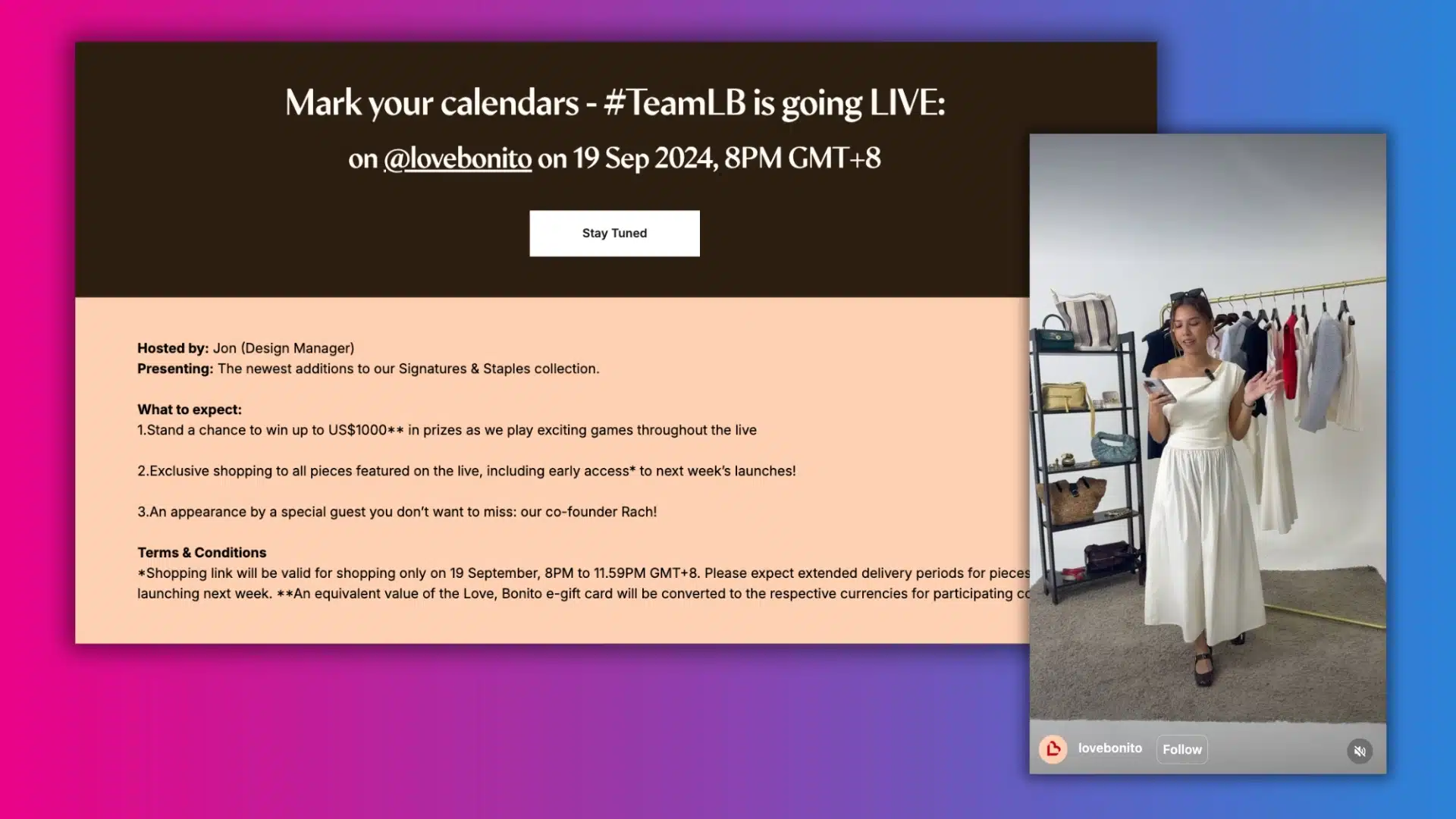
Love Bonito’s in-house livestreams offered giveaways and other incentives to encourage conversion.
Creator content then supported livestreams across social platforms. Influencers helped build awareness and anticipation, while the livestreams captured demand when interest was highest. Together, these channels supported the buying journey, from discovery to purchase.
The brand turned livestreams into a predictable conversion engine, creating repeatable spikes in engagement and sales. Instead of relying on sporadic live events, the brand built a repeatable social commerce program built around consistent livestream programming.
Strategic breakdown for Love, Bonito
| Category | Details |
| Social commerce models | – In-house livestream shopping program – Sponsored content (drives livestream awareness) |
| Measured impact | – 253% quarter-on-quarter revenue growth – Drove nearly 20% of total new orders |
| Key structural advantage | Converts influencer-driven demand into real-time purchases. |
| Why it works | Influencers build anticipation ahead of each session, while in-platform checkout captures demand at peak intent. |
| When to replicate | – Livestreams are widely adopted in your market or category – You want to convert influencer-driven demand in real time – Product benefits from live demo or active objection handling – You can sustain an in-house, scheduled livestream program |
Comparing social commerce examples at-a-glance
The five examples above take different approaches—different platforms, partner mixes, and conversion paths. This breakdown shows what’s driving results in each case and when the model is worth replicating.
| Brand | Primary growth lever | Core structural move | When this wins |
| iStock | Niche authority | Layer affiliate infrastructure under expert-led educational content | When purchase decisions depend on credibility and CAC pressure favors content-led acquisition |
| OLIPOP | Habit formation + retention | Align incentives through hybrid seeding + commission | When product trials drives repeat purchase and LTV justifies performance payouts |
| Booktopia | Word-of-mouth amplification | Monetize multiple partner roles across the buying journey | When organic recommendations influence demand across multiple touchpoints |
| Resident | Mid-funnel conversion | Integrate UGC with affiliate into a full-funnel system | When engagement is strong but high-consideration buyers hesitate before purchase |
| Love, Bonito | Demand concentration | Build an in-house livestream engine that converts influencer momentum in real time | When livestream commerce is culturally adopted and immediate checkout improves conversion |
Choose the right social commerce model for your brand
The examples in this guide show that in order to run a successful social commerce program, you must understand how people move from interest to purchase.
What social commerce looks like in practice will vary by brand. For some, it’s creator content that helps people understand a product before they’re ready to buy in-app. For others, it’s affiliate-led paths that capture high-intent demand. There are nearly endless tactics you can deploy depending on your goals.
Brands that treat social commerce as a content challenge will keep seeing inconsistent results. The brands that treat it as a structural system are the ones turning social attention into predictable revenue.
Find out more about building a social commerce engine that drives sales:
- Types of social commerce: A strategic guide to building models that drive higher sales (blog)
- Creator marketing attribution models: The modern marketer’s guide (blog)
- From affiliate to creator: How Vistaprint built a hybrid partnership program that drives revenue and brand awareness (blog)
FAQs
Small businesses tend to see the strongest results when social content connects directly to a clear path to purchase. Common social commerce examples include:
- Creators sharing trackable links or promo codes
- Livestream shopping events that allow viewers to buy in real time
- Community-led recommendations that link straight to product pages
In each case, followers can move from discovery to purchase without leaving the social experience, making it easier to turn attention into revenue.
A common social commerce example is a brand hosting livestream shopping sessions where products are demonstrated in real time and viewers can buy during the stream. Hosts answer questions, show how products work, and share direct purchase links or in-stream checkout options. This setup lets discovery, influence, and conversion happen in one moment, making it easier to drive immediate purchases.
A common social commerce example is brands repurposing customer or creator content and pairing it with product tags that link directly to shoppable pages. User-generated posts show real people using the product, while tags make it easy to move from inspiration to purchase in a few clicks. This combination helps build trust and reduces friction at the moment of intent.
The most effective examples combine visual-first content with in-platform shopping features. This includes creators tagging products in short-form videos, brands hosting livestream shopping sessions with real-time checkout, and shoppable posts that link directly to product pages. These formats let people see how products look and fit in real life, then buy without leaving the platform, which helps convert browsing into purchases.
Strong social commerce examples connect discovery and checkout in a single flow. This includes shoppable posts with product tags, creator content with trackable links, and livestream shopping where viewers can buy in real time. The key is reducing friction, so people can move from seeing a product to purchasing it in as few steps as possible.