Influencer marketing trends in 2026 show that creators aren’t just driving awareness anymore. They’re driving sales for brand partners.
During Cyber Week 2025, social media influencers nearly doubled their share of total orders year-over-year. Influencer-driven spend jumped 51 percent while commission costs stayed flat. That’s not a trend—that’s proof the infrastructure finally works.
You already know the pressure. Media costs keep climbing. Attribution is messy. And for years, creator return on investment (ROI) was a black box—great for awareness, impossible to optimize for acquisition. Conversion gets harder every quarter. And you need channels that actually deliver.
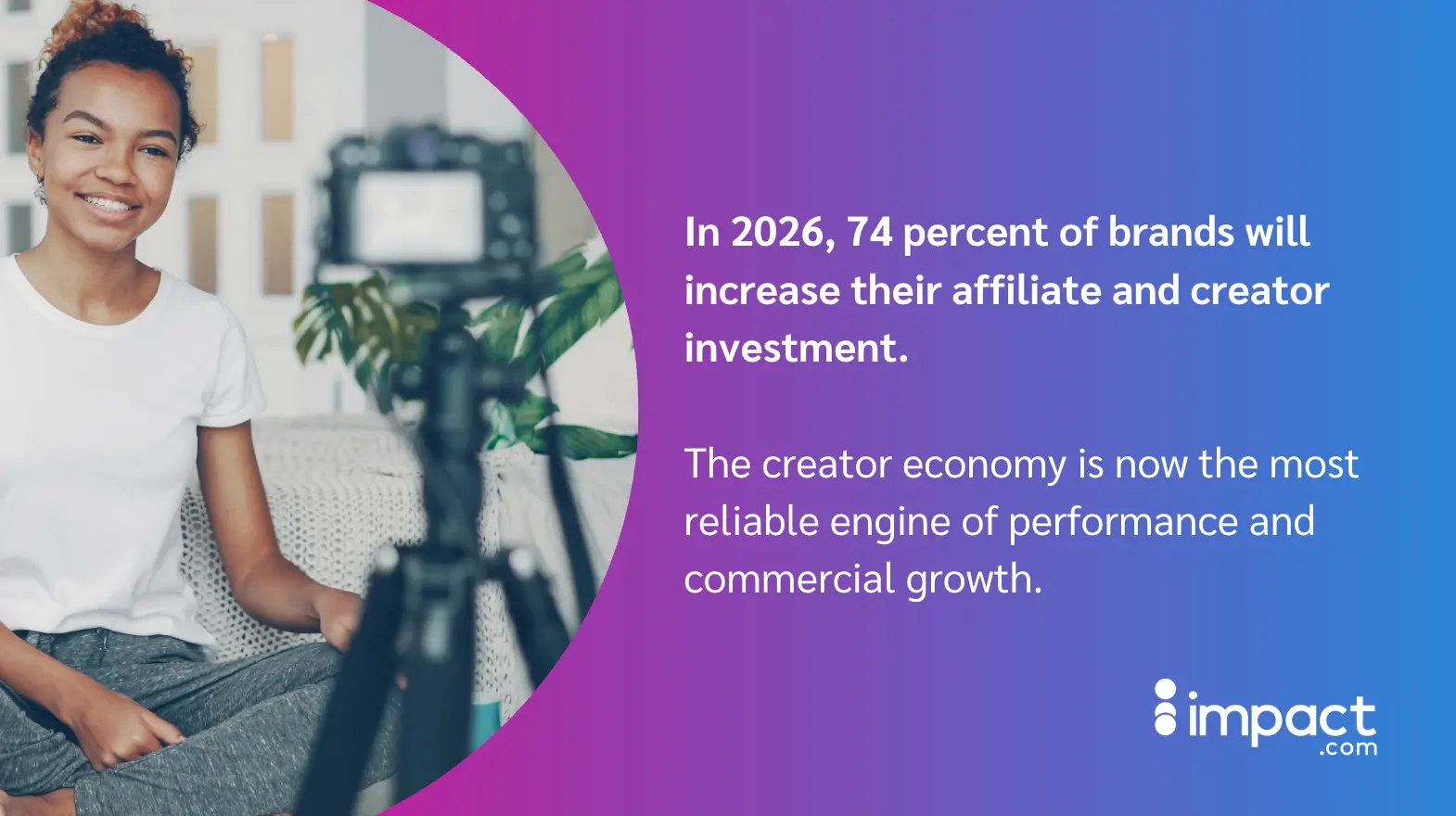
That’s why 74 percent of brands are moving budget into creator programs in 2026. Not as experiments. As their core strategy. Measured by customer acquisition cost (CAC), average order value (AOV), and ROI—the same standards as your paid media.
This guide shows you how to build programs that perform. Four trends. Thirteen experts. Practical steps you can implement now.
Influencer marketing trends 2026: Four essential performance-driven trends
You want creator partnerships that influence every stage of the customer journey and deliver commercial results you can track and scale.
These four trends show exactly how the industry will evolve, and how you can build creator programs designed for longevity instead of one-off buzz.
Trend #1: The full-funnel performance accountability revolution: Creator commerce takes the lead
One of the defining influencer marketing trends of 2026 is the industry’s break from vanity metrics. Likes and impressions alone no longer tell the full story.
Your brand needs creator partnerships that prove their impact across the full funnel. The demand for accountability will reshape how you structure your creator relationships.
Creator commerce: From influence to measurable sales
Creator commerce is the shift from paying for impressions to paying for results.
“Creator Commerce will define the next phase of creator marketing,” says Jeff Melton, Senior Director of Global Creator Community & Consulting at impact.com. “Brands want more rigor and measurability from their growing creator marketing budgets.”
Here’s what that looks like in practice: A creator posts a TikTok reviewing your product, includes a trackable link, and you can see exactly how many people clicked, added to cart, and purchased. You pay commission on actual sales, not potential reach.
This is why Sanchit Sareen, RVP of Influencers & Creators at impact.com, sees “the traditional lines between ‘brand’ and ‘performance’ budgets finally blur.” Creators aren’t just building awareness. They’re driving trackable revenue using their curation power, trust, and authenticity to convert attention into sales.

“The most significant trend will be the holistic integration of the creator into the core marketing engine, which will see the traditional lines between ‘brand’ and ‘performance’ budgets finally blur.” – Sanchit Sareen, RVP of Influencers & Creators at impact.com
Holistic integration: The core marketing engine
The days of running creator campaigns in a silo are over.
Alison Rinaldi, Vice President of Affiliate Marketing at Assembly Global, sees this clearly: “Influencer marketing is becoming a true commerce engine. Influencer 2.0 is here: creators are no longer just content partners, they’re commerce partners.”
What does this actually mean for your program? Stop treating creators as a separate line item from affiliate, paid media, and commerce. Start building systems where creator content connects directly to conversion—influencing discovery, consideration, and purchase, not just awareness at the top of the funnel.
Brands winning this shift integrate creator content across every customer touchpoint: product pages, email campaigns, paid ads, and checkout experiences.

Measurement is non-negotiable
Success in the coming year means treating influencer spend like any other performance channel—with clear accountability and real-time data.
“The most effective programs will diversify across creator types and content formats, integrate affiliate and amplification strategies, and continuously optimize based on data,” says Amelia Glynn, Vice President of Influencer Client Services at Acceleration Partners.
But most brands aren’t there yet. According to impact.com’s State of Affiliate Marketing Report, only 20 percent track CAC, and just 18 percent measure AOV in their affiliate programs. As performance pressure climbs in 2026, these metrics won’t be optional—they’ll be the baseline.
How do brands measure influencer marketing ROI in 2026?
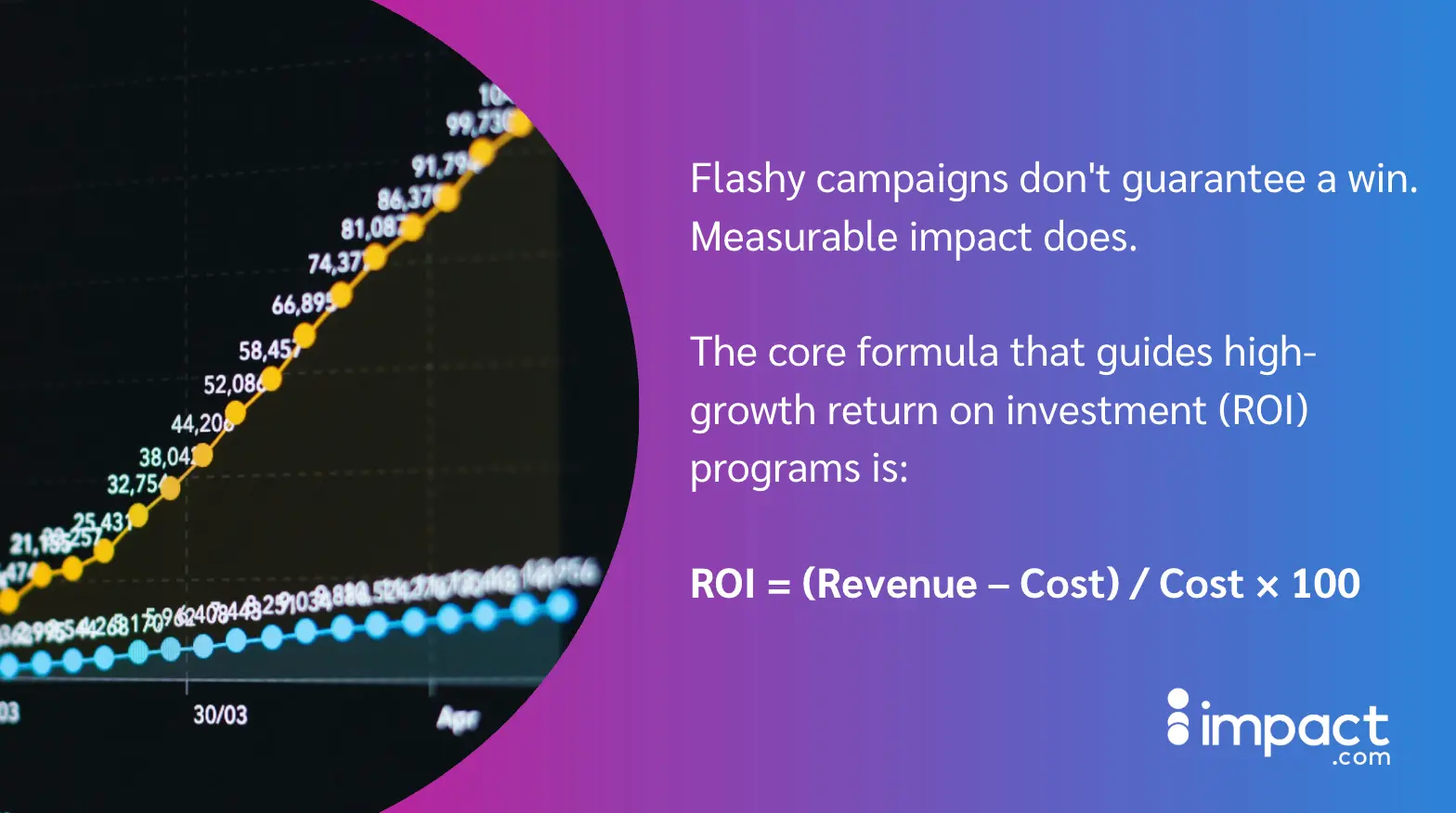
Flashy campaigns don’t guarantee a win. Measurable impact does. That means moving beyond impressions and engagement and grounding every creator program in business outcomes.
The core formula that guides high-growth ROI programs is:
ROI = (Revenue – Cost) / Cost × 100
This simple equation highlights what works and where you need to move budgets to drive the highest commercial return.
What attribution models work best for creator campaigns?
Your attribution system needs to answer one question: which creators actually drive sales?
That means tracking every click, add-to-cart, and purchase across TikTok Shop, Instagram links, YouTube Shopping, and any other platform your creators use. You need consistent measurement so you can compare a nano-creator on TikTok to a macro-influencer on YouTube using the same data.
“Your influencer budget should be held to the same KPIs as other digital spending,” says Charlie Calabrese, President and CEO at All Inclusive Marketing. “That means implementing tracking across platforms, linking payouts to measurable results, and segmenting influencers by performance tiers, not just aesthetics.”
Once you have clean attribution data, you can segment creators by actual performance—top converters, volume drivers, high-AOV specialists—and structure your compensation accordingly.

“Your influencer budget should be held to the same KPIs as other digital spending. That means implementing tracking across platforms, linking payouts to measurable results, and segmenting influencers by performance tiers, not just aesthetics. Smart brands are also reallocating traditional paid media budgets to creators with proven conversion ability.” – Charlie Calabrese, President and CEO at All Inclusive Marketing
Action item: Quick win for trend #1
Audit your tech stack
Confirm that you can track real-time attribution across major commerce platforms, including:
- TikTok Shop
- YouTube Shopping
- Social storefronts
You need full visibility into CAC, AOV, and the revenue impact of every creator-driven sale to optimize spend confidently.
Trend #2: Building scalable creator infrastructure for long-term partnerships
Another major influencer marketing trend is the shift toward scalable creator infrastructure and long-term partnerships. Long-term growth depends on treating creators as an extension of your business and not as temporary add-ons to a marketing calendar.
The rise of scalable creator infrastructure
If you want to win in 2026, it’s not always a case of running more creator campaigns. Instead, you need to prioritize infrastructure.
Kristina Nolan, Vice President of Media Services at DMi Partners, says the shift is unmistakable: Your brand needs to “own the relationships, data, and content pipelines that drive measurable ROI.” When you own the system, you own the outcomes.
Successful brands will invest in:
- Unified creator databases
- Automated workflows
- Standardized briefs
- Integrated reporting dashboards
These foundations enable teams to manage dozens of creators without compromising quality or visibility into performance.
When the infrastructure is strong, the entire creator program accelerates.

Blueprint for a win #1: The Sephora Squad
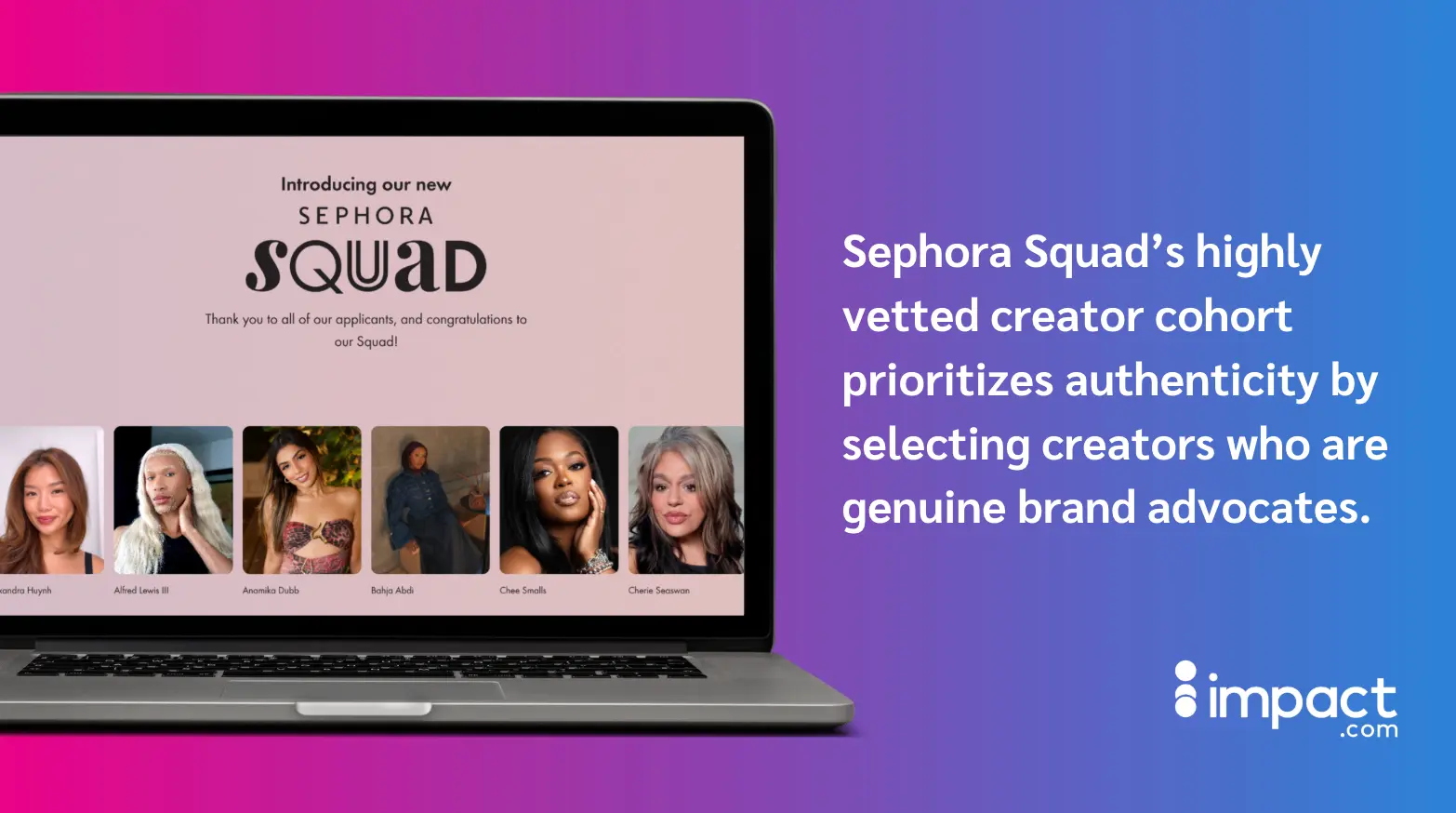
Sephora Squad’s highly vetted creator cohort prioritizes authenticity by selecting creators who are already genuine brand advocates. The application process centers on real customer testimonials, ensuring the squad reflects true community voices.
Brand win: By spotlighting creators with existing affinity, Sephora boosts credibility and drives higher conversion. The content feels natural because the enthusiasm is genuine.
Creator win: Members receive product gifting, exclusive event access, networking opportunities, and entry into a creator community that supports growth and collaboration.
Your goal for 2026: Shift from sporadic, transactional posts to an ongoing, trusted endorsement cycle powered by creators who already love your brand.
Blueprint for a win #2: The Walmart Creator ecosystem
Walmart has built a creator ecosystem, giving the brand direct control over onboarding, content access, measurement, and community development.
Brand win: With full ownership comes consistency. Walmart gains evergreen access to creator content, stronger brand storytelling, and performance insights that would be impossible through fragmented campaigns.
Creator win: Creators benefit from a unified hub with better tools, clearer incentives, and simplified tracking for performance-based payouts, all within one streamlined experience.
Your goal for 2026: Transform creator spend from episodic campaign costs into a scalable, measurable asset that drives continuous performance.

The power of the micro-creator
One of the most talked-about influencer marketing trends is the rise of micro-creators (10K-100K followers) as one of the most cost-effective performance levers.
Simply put, their audiences actually trust them. A micro-creator recommending a product feels like a friend’s suggestion, not an ad. That intimacy translates directly to conversion.
“Brands are shifting toward deeper, more trusted connections inside niche communities—the places where influence feels personal, not performative,” says Micaela Abrahams, Senior Campaign Manager at impact.com.
Micro-creators consistently deliver higher engagement rates than macro-influencers while costing 60-70 percent less. Their audiences are smaller but more engaged, leading to better conversion rates and lower customer acquisition costs.
Amanda Mount, Director of Affiliate and Influencer at Monks, recommends a portfolio approach: “Shift spend from one or two hero creators to multiple trusted micro and mid-tier creators who deliver better ROI. They’re not only more affordable, they’re passionate and create higher quality content—resulting in higher engagement and longer viewership.”
It’s time to reallocate budget from a few big names to a roster of 10-20 high-performing micro-creators who convert consistently within their niche communities.

“Shift spend from one or two hero creators to multiple trusted micro to mid creators who deliver better ROI. They are not only more affordable, they are more passionate and create higher quality content resulting in higher engagement and longer viewership.” – Amanda Mount, Director of Affiliate and Influencer at Monks.
Action item: Quick win for trend #2
Pilot a creator team
Launch a small, annual cohort of 10-20 highly vetted micro-creators who already advocate for your brand. You’ll have an immediate, low-risk way to build long-term relationships, test scalable workflows, and generate authentic, conversion-ready content.
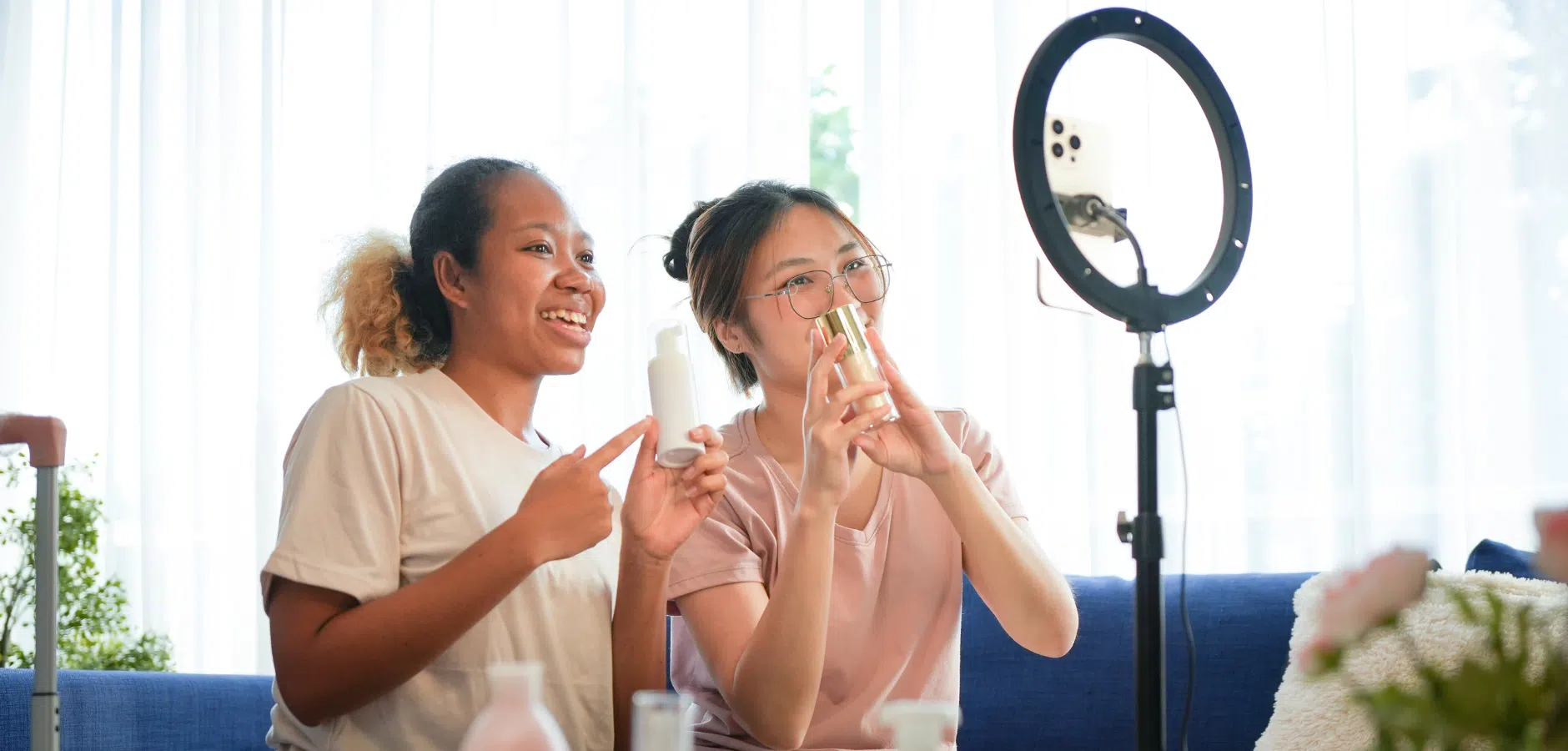
Micro-influencer marketing: How to partner with smaller content creators in 2026
Nano- and micro-influencers offer a cost-effective and authentic marketing solution for brands. Discover how these creators can help achieve big results with a small investment.
Trend #3: The authenticity mandate: Human connection as the strategic differentiator
Authenticity remains one of the most important influencer marketing trends heading into 2026. As you push for measurable outcomes, remember that human connection drives trust, clicks, and conversions.
The human edge: A strategic differentiator
The creator role is more than publishing content. They’re now direct sales drivers with meaningful influence over what people buy and why. Their personality, lived experience, and connection to their audience are advantages brands simply can’t manufacture in-house.
And creators know it. Our research found 75 percent say brand-curated creator communities increase their loyalty to the brand. It’s a clear signal that when brands invest in genuine relationships, creators show up with deeper commitment, better ideas, and stronger performance.
This push for genuine, human connection is shaping where creators invest their effort. Lollo Nene, Campaign Associate at impact.com, highlights that creators are focusing bandwidth on “formats and verticals that help them build strong communities and lasting connections,” including niche audiences, live commerce, and recurring content series.

“Creators are putting more energy into formats and verticals that help them build strong communities and lasting connections. This not only strengthens trust but also drives meaningful conversions.” – Lollo Nene, Campaign Associate at impact.com
Entertainment first and the community mindset
The creators who win usually entertain first and sell second.
When content feels fun, human, and genuinely worth watching, every recommendation lands more naturally. Nothing feels scripted or forced.
Brands are catching on. And as AI-generated content floods the internet, human-led storytelling becomes even more valuable.
As Mount, explains, brands will rely heavily on creators for authentic UGC in their paid ads because creators are moving to “entertainment-first” content—a shift that builds genuine trust and makes the UGC feel like “a real recommendation, not a scripted ad.”
Live shopping: The real-time commerce opportunity
Live shopping events are emerging as one of the highest-converting creator formats—especially on TikTok, where limited-time drops create urgency that drives immediate purchases.
“We’re going to continue to see a rise in live shopping events,” says Olivia Savage, Senior Marketing Strategist at impact.com. “There’s great success with them especially on TikTok. They’re a great way for shoppers to get special discounts or access to very limited supplies of items in a competitive online event.”
The format works because it combines entertainment, scarcity, and instant gratification. A creator goes live, showcases products in real-time, answers questions, and offers time-limited deals. Viewers can purchase without leaving the stream. The urgency drives conversion rates that static posts can’t match.
Blueprint for a win: QVC Group’s 24/7 live social shopping
QVC Group is leveraging its expertise to dominate social commerce.
- Pioneering format: Launched the first U.S. 24/7 live social shopping experience on TikTok Shop in April 2025.
- Strategic alignment: Combines QVC’s established live video and retail expertise with TikTok’s large audience and discovery engine.
- Scale and adoption: Since QVC’s initial August 2024 launch on the platform, over 74,000 TikTok creators have featured their shoppable items.
- Commercial impact: This model capitalizes on the urgency of real-time commerce to drive higher conversion rates and AOV.

“We’re going to continue to see a rise in live shopping events. There’s great success with them especially on TikTok, and they’re a great way for shoppers to get special discounts or access to very limited supplies of items in a competitive online event.” – Olivia Savage, Senior Marketing Strategist at impact.com
Action item: Quick win for trend #3
Lead with entertainment
Refocus briefs away from pure product demos and toward storytelling that feels fun, human, and scroll-stopping. Then license that authentic UGC to power your paid ads. You’ll boost engagement and drive down cost per acquisition (CPAs) with content that actually looks and feels like your audience.
Trend #4: The Al imperative: Augmenting accountability, not replacing authenticity
AI integration is among the fastest-growing influencer marketing trends reshaping how brands measure and optimise creator programmes. AI is moving beyond basic automation to become the engine for creator program accountability—predicting what converts, optimizing spend in real time, and enabling precision at scale.
AI influencers as brand-managed personas
AI influencers will become a powerful tool according to Yehuda Jason Neuman, Senior VP of Influencer Marketing at Partner Centric.
Like corporate social media accounts, you’ll have to maintain AI personas that accurately convey your values. He adds, “From presenting thought leadership in the brand’s vertical to sharing product reviews, brands that begin developing these personas earlier will be ahead of the curve.”
From manual vetting to precision matching
Finding the right creators is probably one of the biggest hurdles you face every day. AI helps remove that friction.
Instead of sifting through endless profiles, you can now use precision-matching engines that surface creators based on real influence—not surface-level metrics.
How does it work?
Modern algorithms analyze millions of data points to understand:
- True expertise
- Audience demographics
- Content quality
- Sentiment

Real-time performance and predictive payouts
AI will turn creator measurement from a slow, backward-looking report into a live, predictive engine.
Instead of waiting for results, you can assess in real time which creators, formats, and channels are likely to outperform before the campaign ends.
AI adoption has skyrocketed. Nearly every brand (97 percent), creator (96 percent), and publisher (87 percent) uses AI in some capacity. But most are only scratching the surface.
The real breakthroughs happen when you move beyond simple tools like chatbots and start using AI for:
- Performance analysis
- Predictive payouts
- Precision matching
Expert spotlight: Lindsey Gamble’s take on why YouTube is your brand’s hot ticket in 2026
According to Creator Economy Expert and Consultant Lindsey Gamble, YouTube is making one of the biggest power moves in creator marketing.
What used to be on the fringes is now a non-negotiable part of a high-performing influencer mix.
What’s fueling YouTube’s rise?
- Improved measurement: Brands finally get clear, reliable visibility into what works and why.
- New ad formats: More monetization paths for creators and more ways for brands to tap into creator-driven demand.
- Connected TV (CTV) dominance: YouTube captures living-room screen time making it one of the few creator channels that lands on every screen in the home.
The real upgrade is what will come next: Dynamic Brand Segments.
This upcoming feature lets creators swap out brand integrations in existing videos—just like updating ads in a podcast. One upload becomes multiple monetization opportunities. For your brand, that means fresher placements, smarter targeting, and efficient spend.
And unlike short-form content that disappears within a day, YouTube keeps working. Videos rank, resurface, and convert. An investment made once can generate value for months, sometimes years.
Action item: Quick YouTube wins for 2026
Rethink how you use AI
Shift from treating AI as a content shortcut to using it as a precision engine. It can help you analyze performance, optimize partnerships, and make smarter investments across YouTube and beyond.

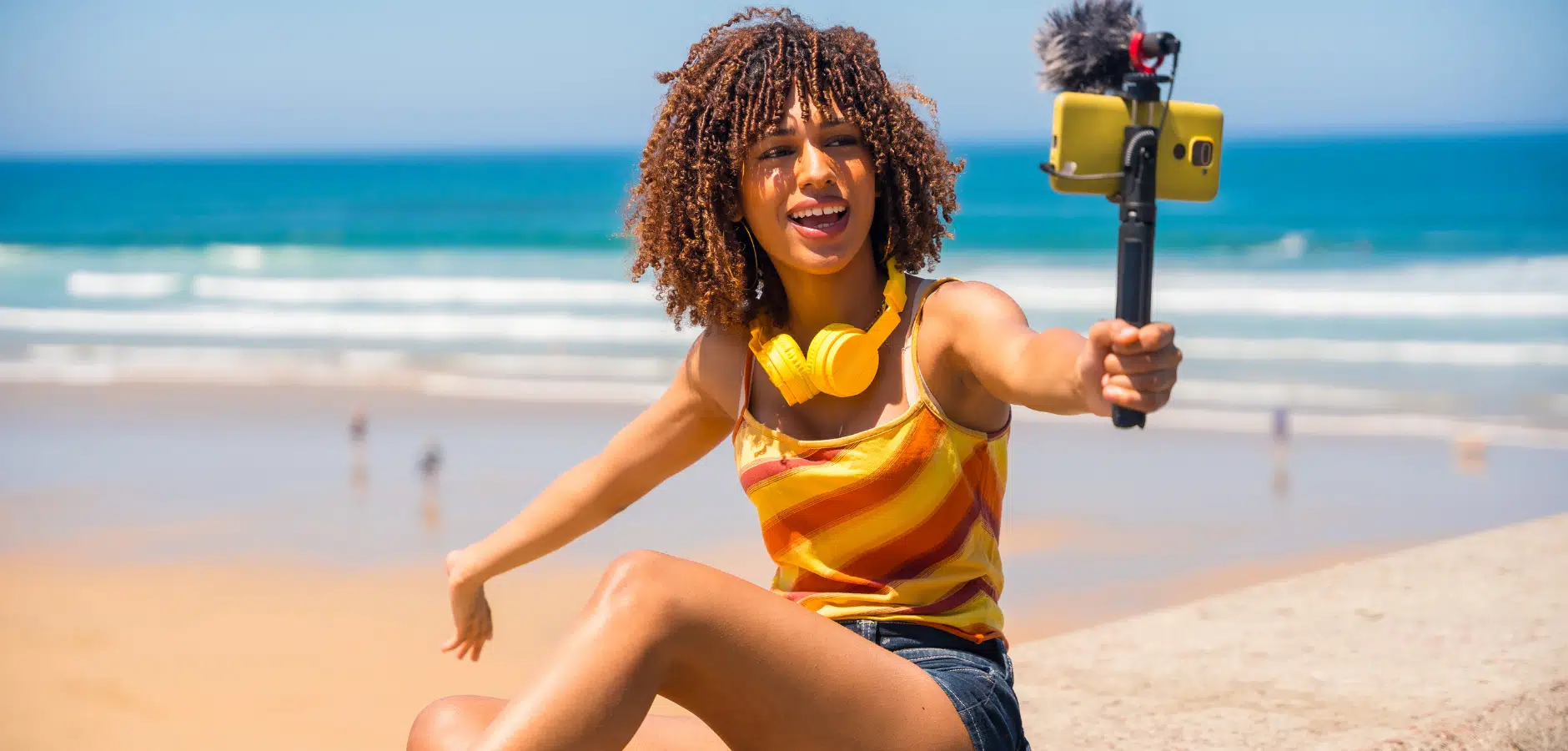
Influencer marketing strategy: How to work with YouTube influencers in 2026
For a successful 2026 strategy on how to work with YouTube influencers, shift from transactional flat fees to performance-based partnerships. Next, leverage niche micro-influencers and integrate social commerce to convert educational content into measurable revenue. Keep reading to learn more.
Understanding the creator economy: Competitive intelligence for winning partnerships
Understanding influencer marketing trends gives you a competitive edge when it comes to securing and retaining top creator talent. Your competitors are chasing the same creators. The difference between getting a creator’s best work vs their B-tier effort? Understanding how their business actually works.
Creators prioritize brands that offer transparent tracking, fair hybrid compensation, and long-term partnership potential. When you structure programs around what creators need, you become the brand they want to work with.
Where top creators are investing their time (and why it matters to your brand)
Creators will increasingly operate like professional micro-media companies and will reduce their reliance on platforms they don’t control.
Why creators are investing in owned communities
Relying on a single algorithm, or a single monetization stream, is too risky for creators in 2026. One platform update can wipe out reach, revenue, or both. That volatility is driving creators toward owned communities, where they control distribution and the relationship with their audience.
Brands are shifting with them. As Neuman explains, brands will increasingly turn to “a community mindset” and invest in spaces like WhatsApp, Telegram, Discord, and Facebook Groups to reach audiences that aren’t burnt out and are far more engaged.
Creators are taking the same approach. Nolan, notes that the smartest creators understand “relying on one algorithm or one monetization stream is risky,” which is why they’re building multi-channel ecosystems that function more like micro-media companies than traditional influencer accounts.
To protect their businesses and deepen loyalty, creators are investing in written platforms like Patreon and Substack, and cultivating private communities on Discord and Geneva—spaces where engagement is higher and no algorithm stands in the way.

“Communities across messaging platforms like WhatsApp, Telegram, Discord and Facebook Groups will become a larger line item as brands begin to search out unique opportunities from non “burnt out” audiences.” – Yehuda Jason Neuman, Senior VP of Influencer Marketing at PartnerCentric
The diversification imperative: Partnering with multi-platform creators
The most successful creators don’t bet everything on one platform. They build multi-channel ecosystems that protect their reach and strengthen their commercial impact.
A cross-platform strategy is now the default:
- Discovery happens on social
- Trust is built inside community spaces.
- Conversion takes place through owned storefronts
These creators guide audiences through the full journey. So they’re far more valuable partners for brands looking to drive consistent and measurable performance.
The B2B creator boom: Untapped opportunity for professional brands
A quiet revolution is happening in the creator economy, and it’s not on TikTok. It’s happening on LinkedIn, inside newsletters, and across long-form content hubs where B2B creators are having their breakout moment.
These creators behave more like niche analysts than traditional influencers, offering depth, expertise, and credibility that consumer creators simply can’t match.
As Abrahams notes, the biggest platform shift is the rise of LinkedIn as a fast-growth creator space, where professionals and subject matter experts are using Creator Mode, Newsletters, and Carousels to become influential thought leaders. This evolution “opens a vital new lane for B2B influencer marketing,” she explains, “One where brand credibility is built through peer-to-peer expertise rather than traditional advertising.”

“The most significant platform shift is the continued rise of LinkedIn as a fast-growth platform for influencers. B2B professionals, executives, and subject matter experts are leveraging the platform’s ‘Creator Mode’ and formats like Newsletters and Carousels to become influential thought leaders.” – Micaela Abrahams, Senior Campaign Manager at impact.com
For your brand, this represents a powerful and still underused opportunity.
Creator spotlight: Justin Welsh, the micro-media B2B analyst
Justin Welsh is a prime example of the B2B creator boom. With 800,000+ LinkedIn followers and a popular newsletter, he operates exactly like a micro-media company, not a traditional influencer.
He bypasses advertising by building brand credibility through peer-to-peer expertise on LinkedIn, demonstrating the power of a single, highly credible subject-matter expert to shape B2B buying decisions. He is the model for the new wave of influential thought leaders.

Aligning with the creator economy: Understanding performance influencer marketing from the creator’s perspective
Creators are more commercially sophisticated and view their influence as a business with a growth strategy.
Why performance-minded creators are your best partners
Performance-minded creators are becoming some of the most valuable partners your brand can work with.
Many now run their channels like full-fledged businesses—what Kayla Lee, VP of Growth at Autumn Communications, describes as “a real professionalization of the mid-tier and micro creator class,” where creators study their analytics and build recurring revenue streams through affiliate partnerships. That level of sophistication, she notes, will only accelerate in 2026.
More creators are gravitating toward programs plugged into easily trackable systems like TikTok Shop, where performance is transparent, commissions are clear, and real-time attribution replaces guesswork.
When you partner with creators, aim to work with people who are aligned on the same goals:
- Measurable results
- Clear ROI
- Sustainable growth

“We’re seeing a real professionalization of the mid-tier and micro creator class; they’re running their channels like businesses, studying their analytics, and building recurring revenue streams through affiliate partnerships. That sophistication will only grow in 2026.” – Kayla Lee, VP of Growth at Autumn Communications
The long-form authority play: Evergreen content that keeps converting
Creators are doubling down on evergreen formats that deliver value long after the initial upload.
Calabrese highlights that creators are focusing on two key areas: Format and function.
Format optimization
- Short-form video dominance: Vertical video remains the leading format.
- Evergreen content investment: Growing focus on content designed for long-term relevance and search:
- TikTok SEO content
- YouTube Shorts that are optimized to rank in search results.
- Livestreams are structured to resurface repeatedly when audiences search or browse.
Function optimization
Calabrese adds that creators are evolving into genuine “solution partners” by building assets for lead generation:
- Lead-gen assets:
- Comparison guides
- B2B-style whitepapers
- Key Action: Embedding affiliate links directly within these assets.
These formats build authority, strengthen trust, and keep driving conversions months (or even years) after the post goes live.
What selective creators look for in brand partnerships
Creators choose partnerships that align with their long-term identity, not just their short-term paychecks. They want full transparency, clear expectations, and real-time attribution data that shows how their content performs.
How savvy creators amplify their own content (and what you can learn)
Melton notes that creators are learning the levers of performance. Today’s smartest creators don’t wait for brands to boost their content. They invest their own money to scale what’s already working.
“A growing number are investing their own dollars in things like paid media to amplify their high-performing content, boost conversions, and hit performance targets to unlock bonuses,” he says.

“The savviest creators are blending creative excellence with measurable impact, treating their influence as a business with a growth strategy.” – Jeff Melton, Senior Director of Global Creator Community & Consulting at impact.com
What your brand can learn:
- Co-invest in paid amplification: Share the cost of boosting high-performing creator content to extend its reach and maximize ROI.
- License and repurpose winning assets: Turn creator hits into ads, landing page content, and evergreen campaign material.
- Offer performance incentives: Reward creators who drive results with bonuses that motivate them to keep optimizing.
Maximize ROI with the top influencer marketing trends: Your 2026 budget blueprint
Applying the latest influencer marketing trends to your budget strategy is what separates high-performing programmes from the rest. The brands seeing the strongest results are treating the creator funnel with the same discipline and tiered strategy they bring to their paid media mix.
1. The mandate for long-term creator partnerships: Prioritizing tiered retention
Prioritising long-term relationships is one of the influencer marketing trends with the clearest impact on budget efficiency. In 2026, the brands pulling ahead aren’t the ones constantly hunting for new creators. They’re the ones doubling down on long-term, multi-tiered partnerships.
Gamble puts it simply, “The best way for brands to optimize budgets is by deepening relationships with the creators they already work with.” Long-term partners understand the brand, know what performs, and improve with every collaboration.
Action item: Quick win for partnership optimization
Expand creator touchpoints
For your top-performing partners, go beyond the standard post. Bring them into research and development conversations, internal workshops, and asset creation sessions. These deeper touchpoints strengthen alignment and turn creators into true extensions of your brand.
2. Shift to hybrid compensation models
Hybrid compensation models reflect one of the most commercially significant influencer marketing trends of the year. The most efficient way to drive performance accountability in 2026 is to align your budget with creator incentives. Hybrid compensation models combine guaranteed fees with performance-based payout. It gives creators stability while motivating them to drive measurable results.
It’s the model that best aligns brand goals with creator incentives, making every dollar more efficient.
What’s the ideal creator compensation structure?
Savage recommends pairing a 10-15 percent commission with tiered bonuses that creators unlock once they hit specific sales or conversion milestones.
This structure rewards creativity and performance, keeps creators motivated throughout the campaign, and gives your brand clearer ROI and predictability.

| How to budget like an expert | |||
|---|---|---|---|
| Compensation type | What it covers | When to use | Key takeaway |
| Flat fee | Creative time, production, usage rights | Top-of-funnel reach or premium creators | Useful for baseline content, but limited for performance goals |
| Commission-only | Sales/conversions | Highly engaged micro/mid-tier creators | Great for scaling, but works best when creators trust your tracking |
| Hybrid (base fee + commission) | Creative + performance | Most creator partnerships | The most efficient model for budget accountability and creator motivation |
| Hybrid + tiered bonuses | Creative + performance + milestones | Long-term partners or ambassador programs | Drives continuous optimization; creators push harder to unlock bonuses |
Action item: Quick win for compensation optimization
Implement tiered bonuses
Start transitioning flat-fee contracts into hybrid deals: Combine a guaranteed base fee with a transparent 10-15 percent commission and clear, unlockable bonus tiers tied to performance. This shift immediately optimizes spend and motivates creators to deliver stronger results.
The budget optimization cheatsheet: Achieving attribution parity across the funnel
You need a mix of top-funnel storytellers, mid-funnel educators, and lower-funnel converters to nurture the consumer at every stage.
| Funnel stage | Creator tier & role | Key strategic goal and budget model | Optimization levers and channels |
| Top-funnel (Awareness) | Macro/Top-tier creators, thought leaders | Goal: Mass reach, cultural relevance, brand affinity. Model: Traditional flat fee (to secure talent) + hybrid incentive for awareness KPIs (impressions, brand lift). | YouTube, CTV (Connected TV) Integrations, high-value B2B LinkedIn content. Repurpose assets for TV ads. |
| Mid-funnel (Consideration) | Mid-tier/specialized educators | Goal: Build trust, guide research, drive sign-ups/leads. Model: Hybrid (base fee + conversion commission) + bonuses for community milestones (e.g., driving Discord joins). | Newsletters (Substack/Patreon), long-form reviews, Discord/Geneva communities. Focus on evergreen content. |
| Lower-funnel (Conversion) | Nano/micro-affiliates, UGC partners | Goal: Immediate sales, high conversion rate, low CAC. Model: Performance + bonus. Commission rates must be higher than traditional affiliates (10-15 percent+). | TikTok Shop, and YouTube Shopping. Use UGC content for paid ad amplification. |
The creator performance flywheel: Maximizing content ROI
The creator performance flywheel is created when your brand sees influencer content as high-performing media. This approach sits at the heart of the most impactful influencer marketing trends, turning individual pieces of content into compounding assets. These channels include:
- Paid social
- Retail media
- Landing pages
Suddenly, each piece of content works harder and delivers compounding ROI. Nolan says that brands that use influencer content as paid ads usually see 2-3x higher engagement and lower CPAs.
Consumers trust creator-led storytelling, and the numbers prove it.

“Brands that amplify influencer content as paid ads consistently see 2-3× stronger engagement and lower CPAs than brand-generated creative.” – Kristina Nolan, Vice President of Media Services at DMi Partners
Action item: Quick win for attribution optimization
Adopt a full-funnel budget mix
- Top-of-funnel (awareness): Use flat fees.
- Middle-of-funnel: Use performance payouts paired with hybrid commissions.
- Lower-funnel (converters): Reserve bonus incentives.
Goal: Structure your spend intentionally to ensure every dollar is working toward measurable outcomes.
Expert spotlight: Alison Rinaldi’s blueprint for blending budgets
For Rinaldi, it’s clear that the era of siloed marketing is over.
For best results, don’t treat influencer, affiliate, and paid media as separate worlds.
In 2026, the smartest teams will blend these budgets into one unified, performance-driven strategy.
Shift to searchable, evergreen commerce
Rinaldi emphasizes that brands don’t just need more content. They need content that keeps working. That means prioritizing formats that are searchable, evergreen, and built to generate compounding revenue rather than temporary buzz.
Her advice:
- Prioritize evergreen content: Invest in creators who make assets that surface again and again on TikTok, YouTube, and retail platforms.
- Choose creators who convert: Don’t confuse charisma with commercial impact. Look for creators who understand how to influence buying decisions.
Tactical budget optimization
The aim is to reward creators for strong storytelling and measurable performance.
This is the triple-duty dollar in action: Shifting more spend into performance-based partnerships that deliver awareness, engagement, and conversion at the same time.
When your brand stops thinking in “campaigns” and starts thinking in “commerce,” every dollar works harder—and ROI becomes far more predictable.


“Blend your influencer and affiliate budgets. The most efficient programs in 2026 will merge paid, affiliate amd creator commerce into one strategy. Shift more spend to performance-based creator partnerships, invest in creators who can produce content that converts, and use affiliate data to measure and inform where you double down.” – Alison Rinaldi, Vice President of Affiliate Marketing at Assembly Global
FAQs
Brands are moving away from vanity metrics like impressions and likes and focusing on measurable outcomes:
- Sales
- CAC
- AOV
- ROI
Creator partnerships are evaluated the same way as paid media, with real-time attribution and tools that link creator activity directly to revenue.
The recommended compensation structure is a hybrid model.
Brands should pair a base fee with a 10-15 percent commission, plus tiered performance bonuses that creators unlock as they hit sales or conversion milestones. This structure rewards creativity and measurable results, aligning creator incentives directly with brand outcomes.
Their audiences are smaller but more engaged, making their recommendations feel personal and credible. These creators often outperform larger influencers on conversion, deliver better ROI, and offer brands niche expertise and tighter community access—key advantages in a performance-driven influencer strategy.
AI will power real-time performance, predictive insights, and smarter creator matching.
By 2026, brands will use AI to analyze content performance, forecast which creators will convert, automate payouts, and match campaigns with the most relevant partners.
AI influencers will also emerge as brand-managed personas. Instead of replacing human creators, AI will augment accountability, precision, and scalability across the entire creator ecosystem.
Creator infrastructure is the system brands use to manage creator partnerships at scale.
It centralizes everything—creator sourcing, briefing, content workflows, performance tracking, payouts, and content reuse.
The benefits include:
- More consistent, repeatable performance
- Stronger relationships with creators
- Better visibility into ROI
- Faster workflows and fewer one-off tasks
- The ability to scale to dozens or hundreds of creators without losing quality
The path forward for creator partnerships in 2026
Influencer marketing trends confirm that creator marketing is no longer an experiment. In 2026, it becomes a core commercial engine, measured by performance, accountability, and real ROI.
Across all four trends, the message is clear: Performance, creativity, and community now work together to drive growth.
To lead this shift:
- Move beyond vanity metrics and focus on CAC, AOV, and ROI
- Act on the influencer marketing trends shaping infrastructure and long-term partnerships
- Invest in micro-creators and niche communities where trust is highest
- Use AI for predictive performance, smarter matching, and real-time optimization
- Adopt hybrid compensation models that reward both creativity and conversions
- Turn creator content into a flywheel that powers paid, retail, email, and more
The mandate is simple: Break down silos. Unify your data. Prioritize measurable outcomes.
When you build programs around performance and long-term creator relationships, every dollar works harder, and creator marketing becomes a sustainable engine for growth in 2026 and beyond.
Check out more content here:
- Black Friday 2025 spending trends: Shoppers researched for weeks, but spent 31% in one day [research]
- The influencer portfolio approach: When to deploy micro-influencers vs macro-influencers vs celebrity partnerships [blog]
- The state of affiliate marketing 2025 [research report]
- The Partnership Economy: Product-Led Advocacy with Ashley Stead [podcast]
- The limitations of AI influencer marketing: What brands need to know in 2025 [blog]
- Building a successful influencer marketing program [worksheet]
- The ROI of long-term creator partnerships vs one-off campaigns [blog]