

Brands are going all-in on creator partnerships: 59 percent plan to dedicate a quarter or more of their affiliate budgets to influencer collaborations, with social media influencers showing the highest projected growth (+14pp) of any partner type.
Look at Chloe Ting and Gymshark. What started as a single sponsorship evolved into a multi-year partnership—her audience associates her fitness challenges with the brand, and Gymshark became woven into her content strategy. That didn’t happen by chance. It happened through clear communication, consistent delivery, and measurable results.
Most creators focus on landing the next deal. The ones building sustainable income focus on keeping it.
Drawing on insights from leading brand marketers, this guide breaks down the proven strategies and systems creators use to secure long-term brand partnerships—showing how to stay organized, prove your value, and turn every collaboration into repeat business.
Why securing long-term brand partnerships matters for influencers
One-off campaigns are exciting, but they’re unpredictable and time-consuming. You might spend weeks negotiating a deal and producing content, only to start from scratch the next month.
Long-term brand partnerships flip that idea on its head. They give you predictable income, creative continuity, and a chance to deepen your connection with both the brand and your audience.
It also makes your content more effective. Consumers feel that a brand promotion is most authentic when the creator posts about it several times. And when you understand the brand inside and out, you can tailor each post to hit the right message and drive stronger engagement over time.

“We treat long-term creators as co-creators. We involve them through regular one-on-one strategy calls and structured campaign debriefs where we review what worked, what didn’t, and what to test next.” — Jodie Louw, Affiliate Marketing Manager, UPLIFT Desk
Consistency benefits brands, too. Brands want to work with high-performing partners who already know their products, audience, and workflow. That’s why more than six in ten brands say they prefer ongoing collaborations over one-off deals.
| One-off collaborations | Long-term partnerships |
| Exciting but unpredictable, each deal starts from scratch. | Predictable and stable, create ongoing income and reliability. |
| Heavy time investment in pitching, negotiation, and production for short-term payoff. | Streamlined process with repeat partners who already know your workflow. |
| Focused on short-term exposure and vanity metrics. | Focused on performance, growth, and shared long-term goals. |
| Limited connection with the brand or its audience. | Deeper understanding of the brand’s tone, values, and audience. |
| Harder to forecast income or plan content calendars. | Easier to plan ahead and maintain creative continuity across campaigns. |
| Risk of being replaced after one campaign. | Builds trust, loyalty, and stronger engagement over time. |
| Brands see you as a one-time collaborator. | Brands view you as a strategic partner and invest more in the relationship. |
So how do you become the creator that brands can’t wait to work with again? It comes down to building trust, proving value, and putting a system behind every collaboration.
3 strategies for building lasting partnerships (and the systems behind them)
Landing a brand deal often isn’t the hard part—it’s keeping it. One in four creators say that building lasting working relationships with brands, such as finding long-term partners, is one of their biggest challenges when managing affiliate partnerships.
That challenge often reflects a lack of structure. Without clear processes, even great partnerships struggle to survive beyond one or two campaign cycles.
These three brand-approved strategies break down what high-performing creators do differently—and how you can put those systems in place that turn every campaign into a long-term relationship.
Strategy 1. Build trust through clear communication
Strong partnerships are built on trust, and trust begins with clear communication. Brands notice creators who stay proactive by:
- Sharing regular updates
- Flagging issues early
- Meeting deadlines
Brands want creators who are reliable, responsive, and easy to collaborate with. According to impact.com research, 43 percent of brands consider professional and timely creator communications to be a top factor in committing to a long-term partnership.
When communication runs smoothly, brands feel confident you’ll deliver on time, stay aligned with their message, and represent them well. You’ll also make life easier for their team. That reliability stands out.
Here’s how to design a solid system that earns you repeat work.
Create email templates for every stage of collaboration
Professional creators don’t rewrite the same emails every time—they systemize them. Having a few go-to templates ready for different stages of a partnership will save you hours of back-and-forth.

“We work closely with hundreds of creators. When working with such a large and diverse group, you encounter a wide variety of communication styles. Creators who respond quickly and communicate clearly are the ones who we find ourselves working with the most often.” – Josh Rivera, Senior Manager of Engagement Marketing at Sweetwater
Here are a few templates worth creating:
- Pitch emails: Keep a short, friendly format that introduces who you are, why you love the brand, and how your audience aligns with their goals.
- Campaign updates: Use a simple structure like: “Here’s what I’ve completed, what’s next, and when to expect delivery.” It shows accountability and keeps everyone on the same page.
- Feedback requests: After a campaign, ask for the brand’s perspective and share your own results––this opens the door to future work.
- Renewal check-ins: A short message like, “I’d love to explore how we can build on our success from last time,” can be all it takes to restart the conversation.
Templates keep communication consistent and scalable, so you can focus on creativity instead of admin.

Master your ideal collab pitch email
Learn the exact pitch email top creators are using to land brand deals.
Set clear expectations before every campaign begins
One of the easiest ways to build trust early on is by setting expectations before a campaign even begins.
Agreeing on how you’ll communicate, when you’ll respond, and what happens if timelines shift keeps everyone aligned and shows brands that you approach collaboration like a business. This will make you stand out as a dependable partner that brands want to rehire.
To make communication smoother and avoid last-minute stress:
- Set response-time expectations. Aim to reply within 24-48 hours during the week, and give brands a heads-up if you’ll be offline.
- Define your checkpoints. Schedule short updates at key milestones, concept outline, shoot day, first cut, and go-live, to confirm progress and flag any blockers.
- Add quick reviews. Book brief mid-campaign or post-campaign check-ins to discuss what’s working, what could improve, and what comes next. These small moments show professionalism and naturally open the door for renewals.
- Clarify how changes are handled. Let brands know how you’ll manage urgent requests, edits, or scope adjustments so nothing falls through the cracks.
- Host a kickoff call. Taking a few minutes to connect face-to-face helps you understand each other’s working style, align expectations, and build trust before the real work begins.
Clear expectations build reliability, and brands naturally return to creators who make collaborations feel effortless.

“Creators who keep proactive check-ins at milestones—outline, shoot, first cut, go-live—and note what’s done, next, or blocked, make collaboration more straightforward. Responsiveness with simple SLAs, like 24-hour weekday replies, and OOO heads-ups goes a long way.” — Norman Scott, Influencer Marketing Lead, UPLIFT Desk
Strategy 2. Negotiate rates and contracts that encourage repeat work
Professionalism goes beyond how you create content. It also shows up in how you negotiate.
Creators who approach pricing and agreements with clarity make brands feel confident about long-term collaboration.
When you document expectations, there’s less confusion and more trust on both sides. To set yourself up for repeat work, think beyond the one-off deal and build systems that make renewal easy.
Here’s how to document and systemize all of your agreements.
Create a professional rate card to kick off negotiations
Nothing signals professionalism faster than a clear, well-organized rate card. It gives brands a sense of your baseline pricing, helping them understand the scope of what you offer.
But a rate card is not a menu—it’s a starting point for negotiating better rates and securing more renewals. Brands appreciate clarity, but they also expect a conversation. Your rate card should open the door to that dialogue.
“Partnerships must be run like a business: clear scopes, defined usage rights and exclusivity, FTC-compliant disclosures, and transparent rate cards.”— Jodie Louw, Affiliate Marketing Manager, UPLIFT Desk
Here’s what to include:
- Deliverable types: Break down your pricing by format, whether it’s a Reel, Story set, carousel, blog feature, or YouTube integration, etc.
- Usage rights: Specify fees for content repurposing across paid or owned channels.
- Exclusivity terms: Include rates for category exclusivity and specify duration (e.g., 90 days, 6 months).
- Bundled options: Offer packages for multi-platform or multi-post campaigns to encourage ongoing collaboration.
- Performance add-ons: Consider tiered pricing based on engagement or conversions to show confidence in your results.
When you present your pricing as a conversation rather than a static list, you create space for collaboration and make it easier for brands to grow the partnership over time.
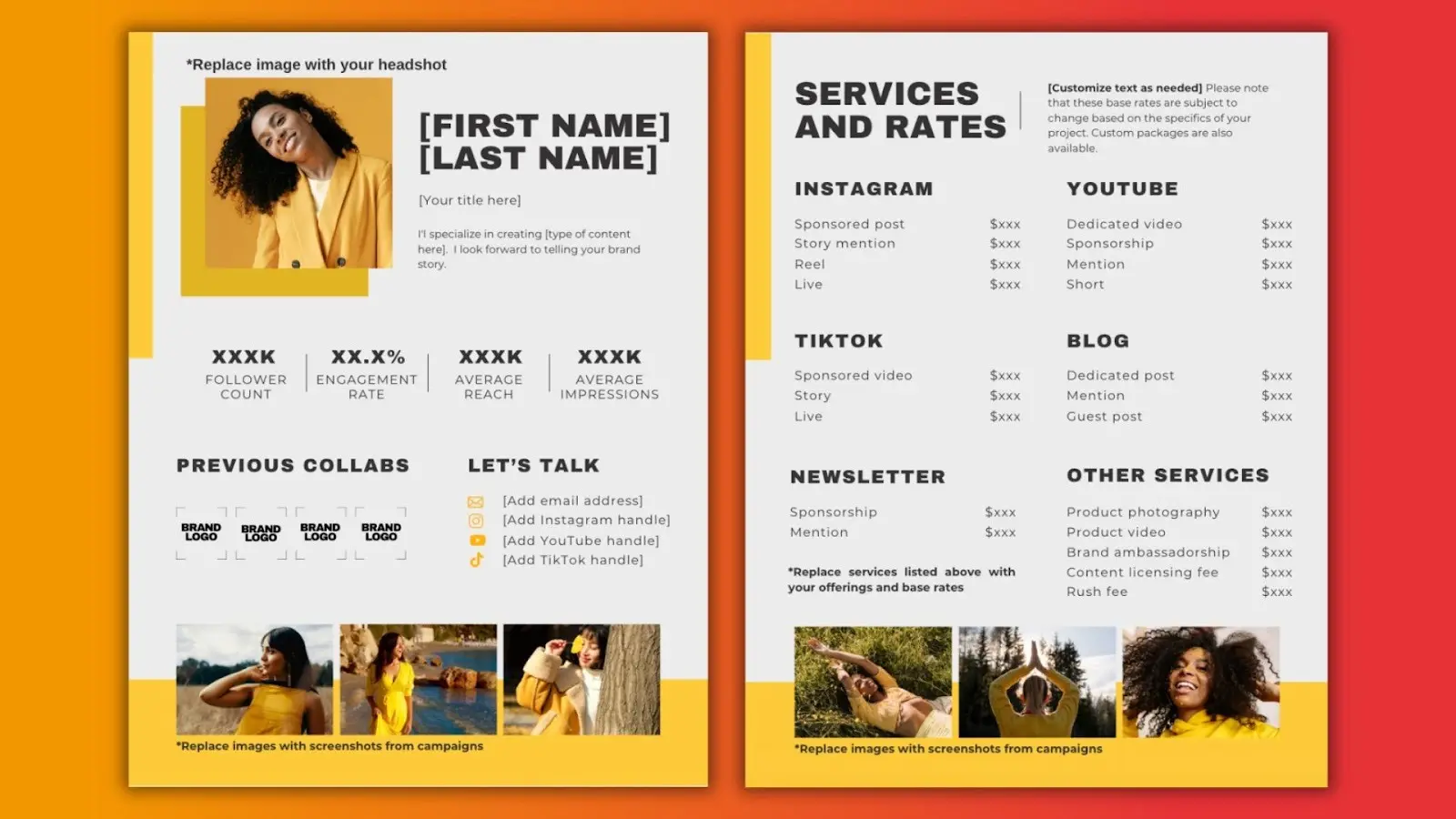
You can download impact.com’s free rate card template that helps you present your rates confidently and negotiate on equal footing with brands.
Use a contract checklist to prevent confusion
A clear contract is one of the most effective ways to protect yourself and establish a professional partnership from the start. The brand will likely provide a contract, but you need to know what to look for and take a proactive role in reviewing terms.
Different brands will have their own standards around topics like exclusivity, usage rights, and turnaround times. Getting clarity about those details upfront avoids misunderstandings and sets the tone for a professional, long-term relationship.
“Our most valued long-term partners are truly invested in building a long-term relationship with us. Part of that is about being honest and open with us about their expectations around the partnership.” – Josh Rivera, Senior Manager of Engagement Marketing at Sweetwater
Before you sign, make sure your agreement covers:
- Scope of work: Define exactly what you’re delivering and how many assets are included.
- Formats and timelines: List formats, due dates, and approval checkpoints.
- Revision limits: Set boundaries to prevent endless feedback loops.
- Terms: Include amount, payment method, and payment schedule.
- Usage rights and exclusivity: Specify where and how bands can use your content, and for how long.
- Commissions or affiliate components: Outline how performance-based payments will be tracked and paid.
- Approval process: Note how many review rounds are included and who gives final sign-off.
- Renewal option: Add a clause to extend the partnership for another 3-6 months at predefined terms. It shows you’re open to ongoing work and saves time when both sides want to continue.
When you establish boundaries like these early on, brands know exactly where they stand. They’ll remember you as someone who handles partnerships professionally.

Forge beneficial brand deals with the right contract
Uncover the seven essential clauses to look for in your contract.
Track invoices and renewal cycles to stay ahead
When brands see that you’re on top of invoices, deliverables, and campaign dates, they trust that you’re serious about the business side of content creation.
Creators who consistently track their work avoid payment delays, missed deadlines, and last-minute scrambles—and they position themselves as partners brands want to keep hiring.
Here’s what to track:
- Invoice status: Log when each payment is sent, received, or pending.
- Content log: Keep a running list of what’s been submitted, approved, and posted.
- Renewal reminders: Set alerts for 2-3 weeks before a contract ends to reach out early.
“Strong finance hygiene, organized delivery of files, and tracking of licenses and releases signal a great long-term partner.” — Norman Scott, Influencer Marketing Lead, UPLIFT Desk
Strategy 3. Report performance and ROI to prove long-term value
If you want a brand to renew, show them why they should. Organized performance reporting turns your content into evidence of real business impact, something brands can confidently take back to their teams.
Brands want to see good numbers consistently. They’re looking for creators who can show repeatable results and apply what they’ve learned to future campaigns.
Here are some repeatable practices that will help you highlight your value as a long-term partner:
Share post-campaign insights to demonstrate value
Sharing results and audience insights helps brands understand what worked, and positions you as a strategic partner who’s invested in improving together. According to impact.com research, 42 percent of brands consider achieving key KPIs a top factor in considering long-term creator partnerships.
Summarize everything on a single page like a dashboard, deck, or short PDF. A simple analysis template keeps your reporting consistent from one campaign to the next. So you can focus on insights, not formatting.
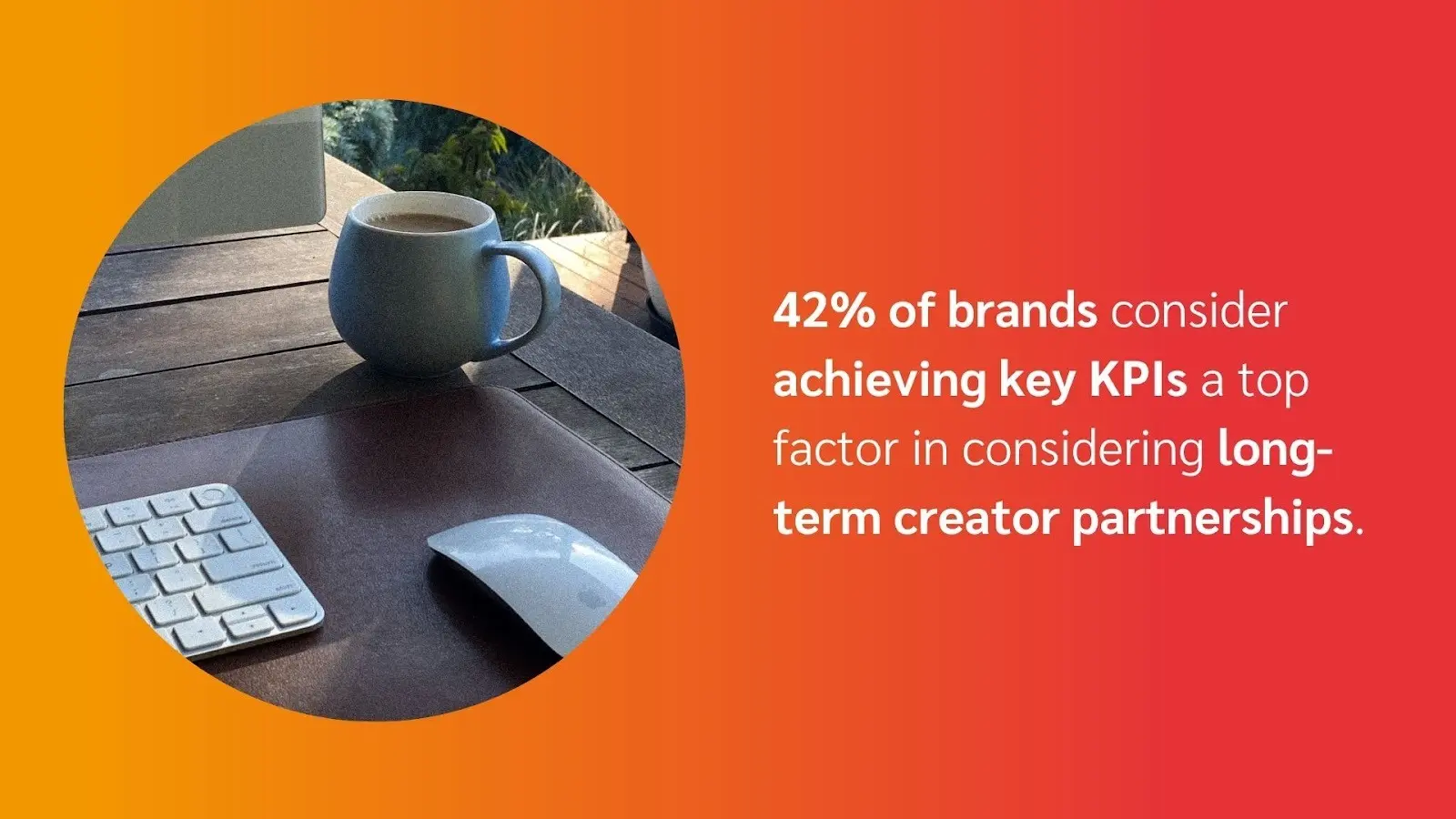
Source: What brands want: building successful creator partnerships
Track and highlight key metrics like:
- Impressions and reach: Show how far your content traveled.
- Engagement rate: Highlight likes, comments, and shares to demonstrate resonance.
- Click-throughs and conversions: Connect your creativity to tangible business outcomes.
- Saves or watch time: Reveal how deeply your audience interacts with your content.
Numbers tell part of the story, but audience sentiment adds depth. Highlight strong comments, share reactions, and note creative moments that resonated most.
“We look for evidence of repeatable performance—testing trails with lift metrics and learnings that carry across campaigns. A great partner demonstrates data fluency by sharing simple dashboards (views, saves, CTR, watch time, sentiment), explaining why something worked—not just what happened—and proposing the next tweak. ” — Jodie Louw, Affiliate Marketing Manager, UPLIFT Desk
Offer forward-looking recommendations
The best creators help brands plan what comes next, using insights to suggest ways to make future collaborations even stronger. That forward-looking mindset will help brands plan budgets and future campaigns with more confidence, setting you apart as a strategic partner.
“While single campaign metrics are always important, we place much more value on long term trends, open communication, and a demonstrable desire for constant improvement.” – Josh Rivera, Senior Manager of Engagement Marketing at Sweetwater
Here’s what you can do to be a truly collaborative partner:
- Refine your approach. Suggest tweaks to posting times, messaging, or call-to-action formats that could boost engagement next round.
- Expand creative ideas. Share concepts for new content angles, themes, or formats based on what resonated most with your audience.
- Forecast results. Use past data to set realistic targets for impressions, engagement, or conversions.
- Show accountability. Present honest takeaways, even when something underperformed, and how you’ll adapt next time.
When brands see that you can connect creativity to outcomes, and learn from every iteration, they won’t think twice about renewing.
“We value confidence with accountability: simple forecasts, clear targets, and a willingness to prove to the business that the approach will resonate using UTMs, dashboards, and honest post-mortems.” — Jodie Louw, Affiliate Marketing Manager, UPLIFT Desk
Implement these systems to turn great collaborations into lasting partnerships
Long-term success as a creator comes from building partnerships that grow with you. The creators that brands keep coming back to are the ones who communicate clearly, negotiate professionally, stay organized, and consistently demonstrate performance through structured reporting.
When your processes are smooth, reliable, and repeatable, brands experience a partnership that feels effortless on their side. That’s what makes them want to rehire you.
By building these systems into your workflow, you make it easy for brands to see your value—and even easier for them to say yes to working with you again.
Discover other helpful tips for maximizing the value of your brand partnerships:
- Hybrid payments: A path to higher-paying brand sponsorships for creators (blog)
- How to increase affiliate conversions: 5 research-backed strategies for content creators (blog)
- The creator’s profit playbook: 9 advanced affiliate marketing strategies for sustainable revenue growth (blog)
FAQS
Recurring sponsorships give influencers stability and creative freedom. Instead of chasing one-off deals, you build predictable income and stronger brand relationships. Long-term partnerships also make your content feel more authentic, since your audience sees you genuinely using and trusting the product over time.
Brands renew with creators who are reliable, professional, and easy to work with. They look for clear communication, on-time delivery, and content that aligns with their goals. Sharing performance insights, staying proactive, and showing genuine enthusiasm for the brand all increase your chances of being invited back.
Use tools that help you stay organized and transparent. Platforms like impact.com let you track deliverables, payments, and performance in one place. You can also use Airtable, Notion, or Google Sheets to log campaign stages and set reminders for follow-ups. The key is keeping everything in one system so no opportunity slips through the cracks.
Focus on metrics that show real impact. Highlight engagement rates, click-throughs, conversions, and audience growth to demonstrate performance. Pair these with qualitative insights like audience comments, saves, or sentiment to show why the content resonated. When you connect the numbers to brand goals, you make renewal decisions simple.