

Coupon sites carried P.E Nation’s affiliate program
When WiredCo took over in October 2024, coupon publishers drove roughly 48% of P.E. Nation’s program revenue, followed by cashback partners. They were good at capturing existing demand, but they did little to create new demand.
The way the program ran held it back. Partners were paid flat fees, invoices were prepared by hand, and tracking lived in spreadsheets. A single sale could be credited to more than one partner. Monitoring was minimal until brand bidding increased among coupon partners and other publishers, at which point checks began.
Why the platform alone was not enough
P.E Nation had been on impact.com since June 2023, under its previous agency. The program ran on the platform, but day-to-day work still had to be done by hand. Monthly reports tracked high-level performance but offered little insight into how each partner contributed throughout the journey. The team needed a partner that could use the platform to its full potential.

WiredCo came in with senior affiliate expertise and a plan to build P.E Nation’s own capability, so the team could eventually run the channel itself. Using impact.com, the agency ended duplicate crediting, where more than one partner was credited for the same sale, by configuring the program to reward only the correct partner for each transaction.
The early results were strong enough that WiredCo stayed on to manage and grow the program. Kel Hannon, Digital and Online Trading Manager at P.E Nation, describes the result.
Partners that cover every stage
The WiredCo team stopped asking one partner type to do everything. Instead, it mapped each partner to a stage in the customer journey, from first discovery through to purchase. Partners, once seen as the bottom of the funnel, now often introduce customers to a brand, so the stages below describe roles rather than fixed positions.
| Journey stage | Partner type | Role in the journey |
|---|---|---|
| Discovery | Content publishers | Introduce P.E Nation to new audiences through editorial and product roundups, and support how the brand appears in AI and search-led discovery |
| Discovery and consideration | Creators | Show the product in context through voices their audiences trust |
| Consideration and conversion | Bank rewards and card-linked offers | Reach members of large rewards programs, many of whom are new to the brand |
| Decision | Loyalty partners | Give points-driven members a reason to choose P.E Nation |
| Decision and purchase, often starting early | Selected cashback partners | Bring in sticky audiences whose visits often start early in the journey |
| Purchase | Coupon partners | Capture demand at the point of sale |
Filling those stages required a way to find partners at scale. WiredCo used the Marketplace on impact.com to search for prospects, evaluate each one using detailed partner profiles, and reach out via built-in outreach tools, which helped it scale partner acquisition more efficiently.
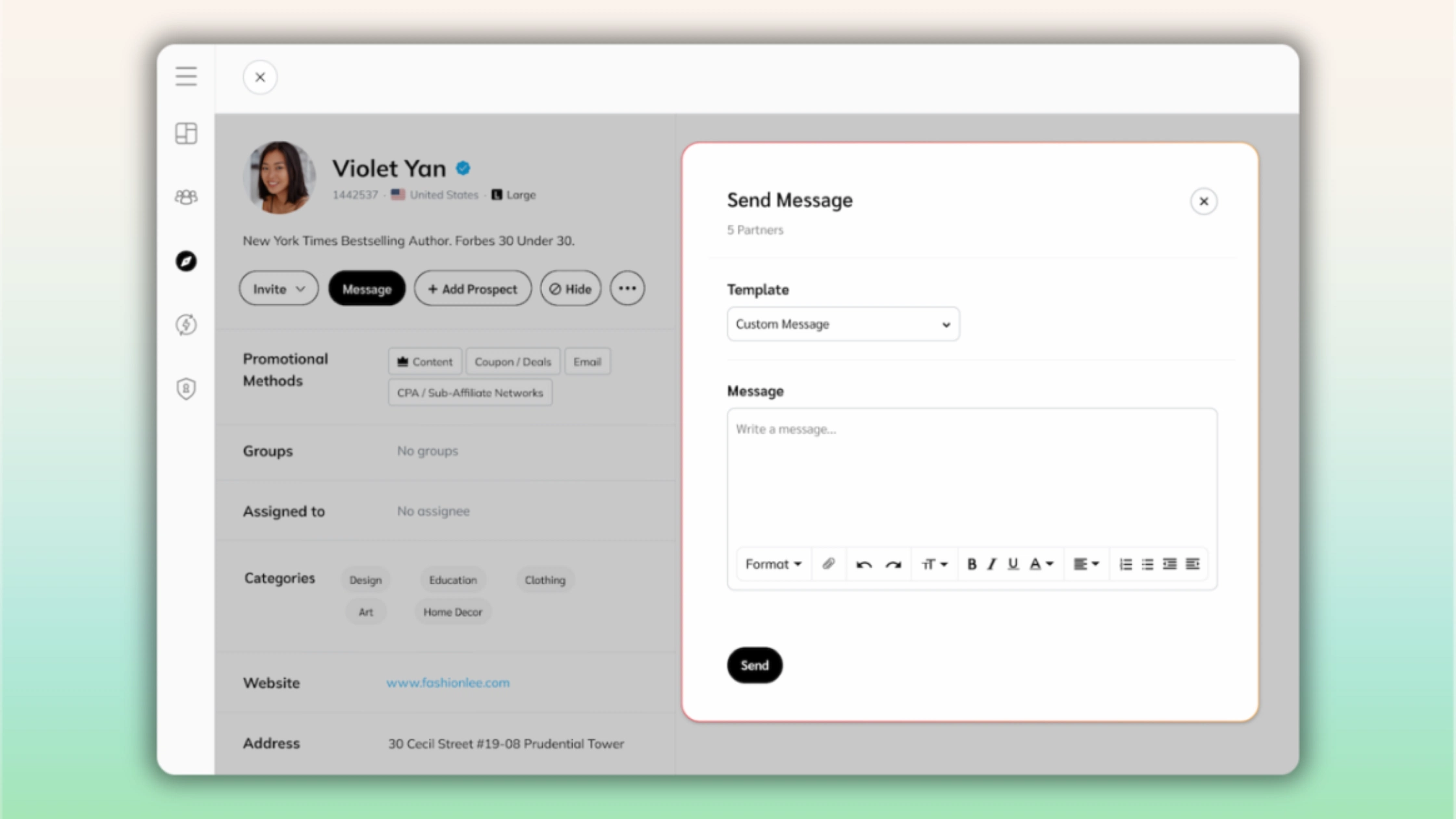
Message and email prospects from within the platform
WiredCo used the same process to test new loyalty and card-linked partners. Active partners rose 30%, spanning loyalty, banking, creator, and commerce partnerships. Loyalty and card-linked partners contributed to 67% of year-over-year revenue growth.
How a card-linked campaign reached lapsed buyers
Strengthening relationships and widening the partner base started a conversation with a card network, which led to a test with a major Australian bank’s rewards program.
The campaign was built around acquisition and aimed to grow basket size, which helped reach an incremental audience. The offer went to cardholders who had not shopped with P.E Nation in six to 12 months or more.
Members activated it themselves, and they often exceeded the qualifying spend. In P.E Nation’s view, each sale was one the brand would otherwise have been unlikely to win.
Paying partners for the value they add
Flat fees did not distinguish between the role a partner played. WiredCo replaced them with tailored contracts and Dynamic Payouts, so each commission matched the partner type and the value it delivered. This allowed the team to invest in high-performing partnerships, incentivize meaningful customer outcomes, and manage payments more efficiently.
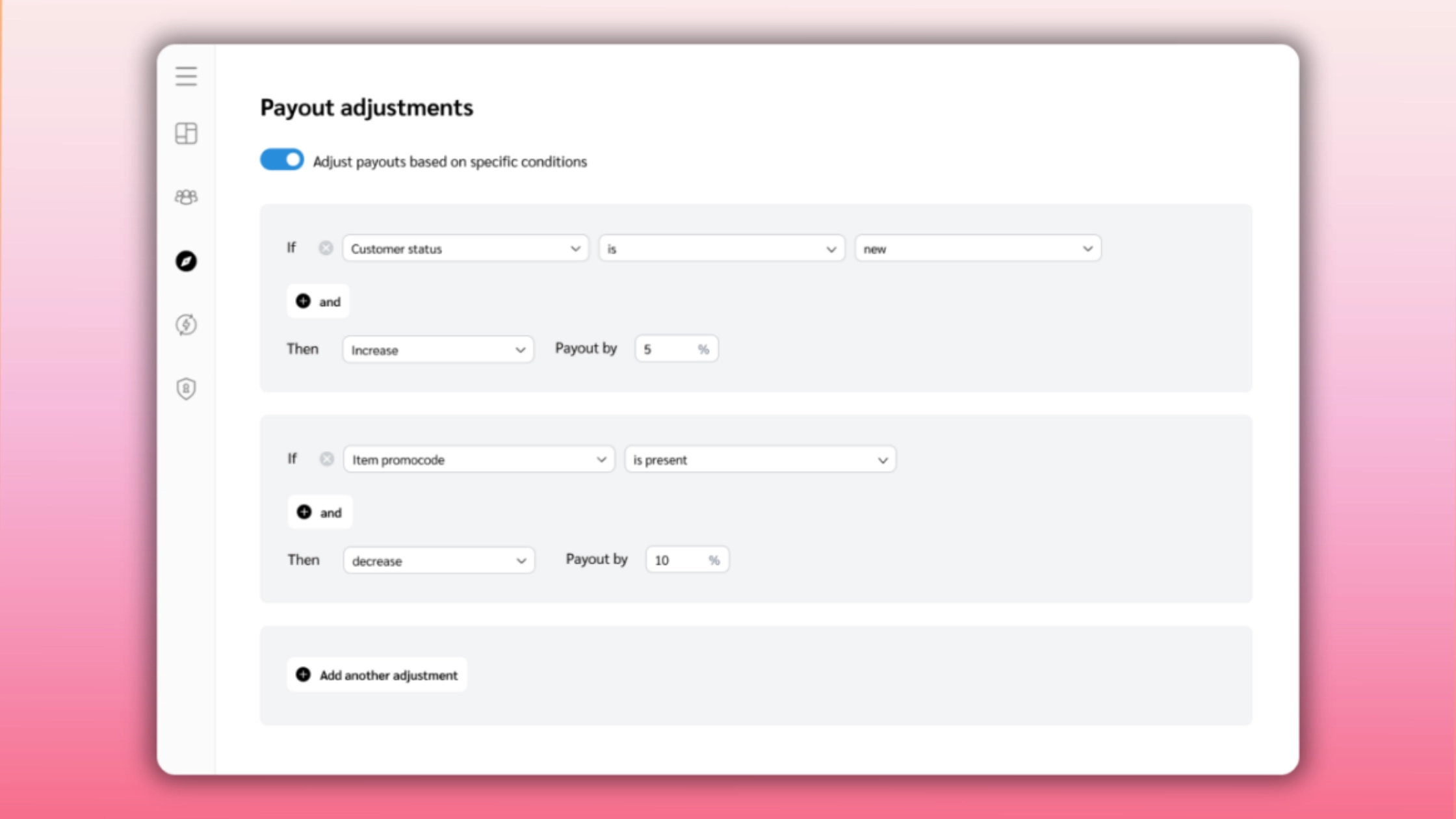
Align payout to partner value with Dynamic Payouts
Two examples show how the structure differs.
| Partner type | How it is paid | Why it is paid that way |
|---|---|---|
| Cashback partner | Higher rate for new customers than for returning ones | Cashback reaches a wide audience, so the higher rate goes to customers who grow the brand, not to repeat purchases. |
| Card-linked offers (bank rewards) | One commission rate on qualifying sales | The targeting already limits offers to lapsed customers, so one rate fits every sale |
Measuring what each partner really delivered
A single sale could be claimed by more than one partner, and reporting said little about who had done the work. The team needed to know which partners were actually moving customers toward a purchase.
Creators became the clearest test of that question. Promo Code Tracking tied each sale to the creator behind it, so the team could attribute sales, measure the incremental value each creator added, and invest more in the creators who performed.
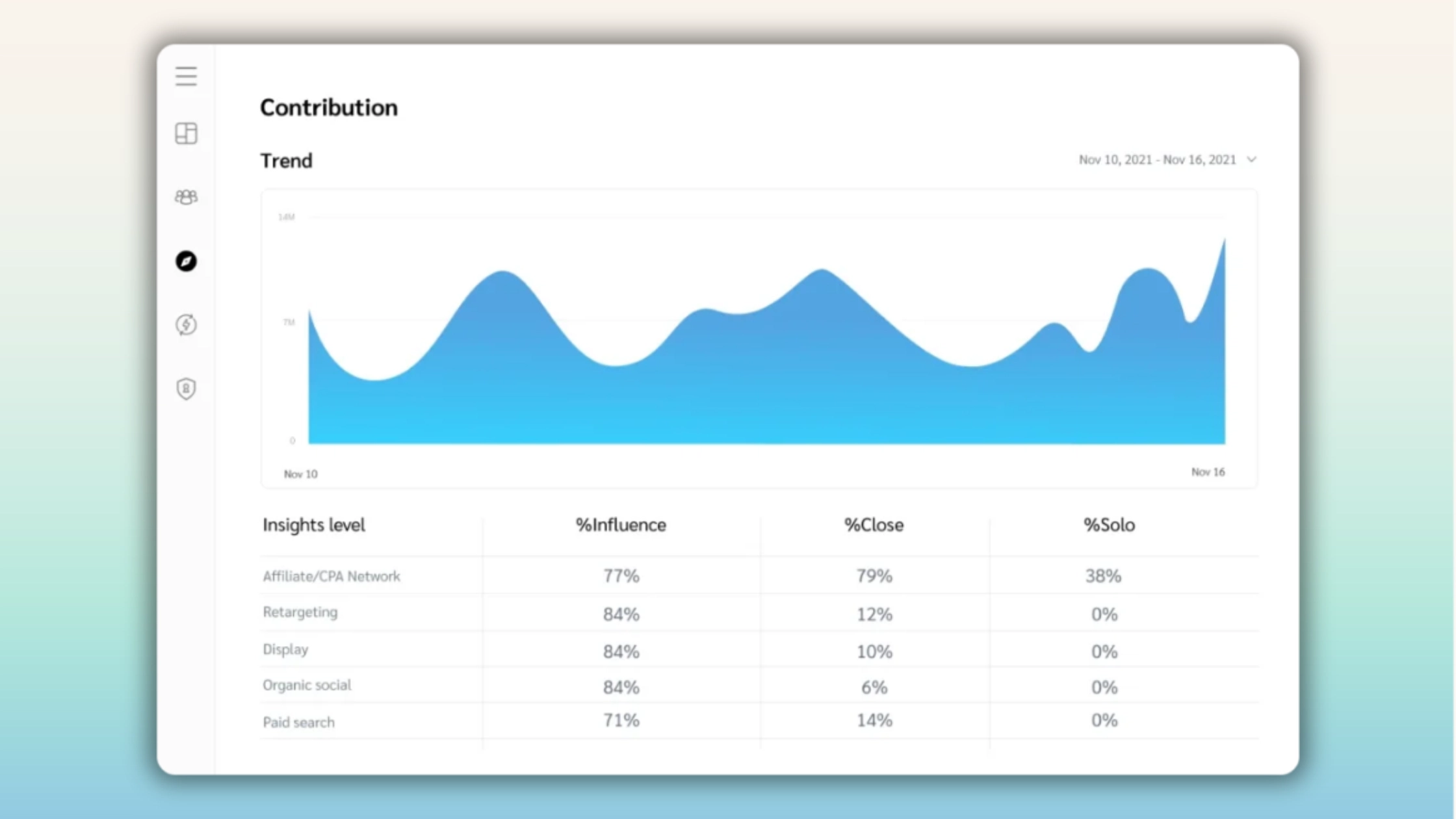
The Contribution Report shows every role in the path to purchase.
Using Optimize, WiredCo gained deeper insight into how much incremental value each partner contributed across the customer journey, as well as greater visibility into attribution and customer touchpoints.
With that picture, decisions about partner investment and incentives rested on what each partner actually delivered. Commissions came to reflect that value while staying compelling for partners and customers alike.
Protecting promo codes and partner activity
Protecting that investment mattered as brand bidding rose. Protect and Monitor gave the team greater visibility into partner activity, so compliance issues surfaced early and promotions ran as intended. The code strategy needed that protection most.
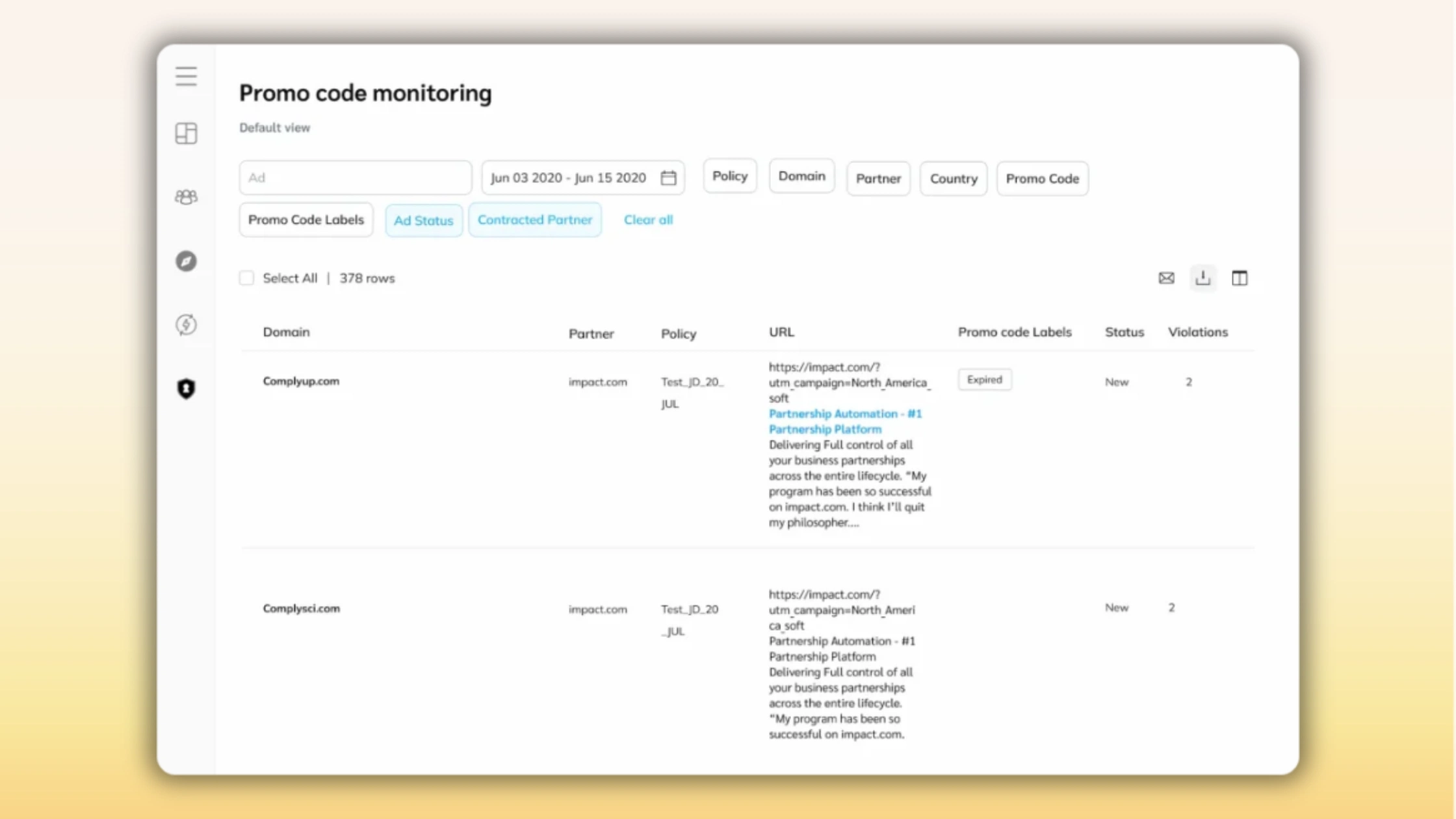
Promo Code Monitoring tracks where your codes appear online
Revenue grew twice as fast as costs
Moving partners into roles that matched their value changed what the program produced. Within a year, the program grew faster than its spending. That gap matters most for a program that once relied on partners that mainly captured existing demand.

- Revenue reached $1.77M, up 58% from $1.12M the year before.
- Costs rose only 29.1%, to $153k.
- Return on ad spend (ROAS) climbed 22% to 11.51x, up from 9.4x.
- Actions rose 33.1% to 9,962, from 7,482.
Recruitment, commissioning, reporting, and attribution are now centralized in impact.com, reducing manual administration and enabling faster optimization.
For a program that once leaned on coupon sites, the change in where growth comes from is the bigger story. Campaigns aimed at lapsed buyers and loyal members bring in people who were not already coming back. Discount codes at checkout rarely do that.
3 moves to build your own mix
Hannon says any brand with a mostly lower-funnel program can start with three moves.
- Analyze partner performance. Find out which partners bring in new customers and which ones convert shoppers who were already coming to you. Look at order values and the mix of new and existing customers for each partner.
- Align commission with value. A flat last-click rate favors the partner closest to the sale and undervalues the partners that started the journey. Pay more for new customers and less for sales that would likely have happened anyway.
- Diversify on purpose. Add content, creator, and card-linked partners with a clear role in mind. Then treat your partners as a team that works together to drive one sale, not as separate channels working alone.
P.E Nation started with coupon partners doing most of the selling. Today, partners work at every stage of the journey. The program that once captured only demand now creates it, too.
Further reads:
- How Hill House Home grew its affiliate from a six to a seven-figure channel and lifted AOV 31% (case study)
- How Pepperstone scaled its creator program across APAC and LATAM with 18m+ impressions (case study)
- How to find affiliate marketing partners at scale through AI-powered discovery (blog)
- How content creators are reshaping the affiliate marketing model (blog)