
Trust, partnership, and community content now decide which brands AI recommends.
Now in its fifth year in Sydney, iPX opened with a bold claim from Nick Randall‘s keynote. “We’ve moved from the search era to the answer era,” he said, “from browsing to recommendations, clicks to answers.” It was the idea that shaped the whole day.
iPX26 Sydney highlights

“Commerce partnerships are not a channel anymore. They are how you get recommended, how you scale revenue, and how you connect the offsite to the onsite.”
– Nick Randall, AVP Customer Growth, impact.com
From Clicks to Citations
Session: Keynote – Winning the Answer Era with partnerships
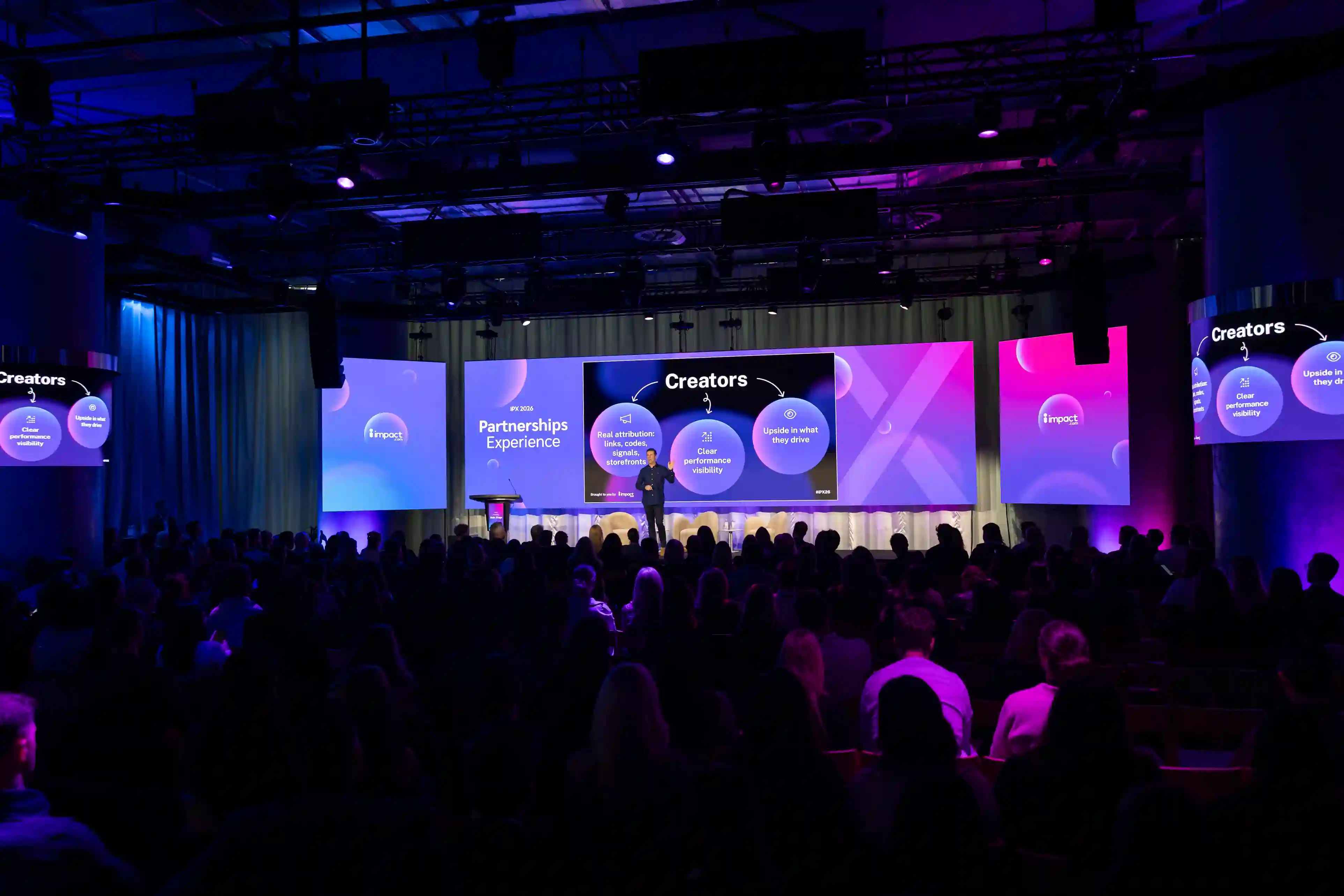
Nick Randall’s keynote at iPX26 Sydney
Nick Randall, AVP Customer Growth at impact.com, opened with the stat behind that shift. Sixty-five per cent of AI active consumers, he said, now start their purchase journeys outside a standard web search, many deliberately, to avoid sponsored results.
“The old model rewarded whoever won the click. The new model rewards whoever earns the click.”
– Nick Randall, AVP Customer Growth, impact.com
An AI assistant recommending a product isn’t pulling from a brand’s website or paid media, but synthesizing creator reviews, affiliate content, and community discussion. “You can’t buy your way into that answer, but you can partner your way in.”
He then turned to retail media. “Retailers are no longer just retailers,” he said. “They are publishers, they are media companies, and every shelf is a placement, every surface is shoppable.” Amazon’s ad business alone is projected to hit $82 billion globally this year, with Australian retail media spend forecast to reach $3.07AUS billion by 2028. His advice was simple, stop running affiliate and retail media as separate playbooks, and start treating retailers as distribution partners.
Creator pay is moving the same way. Randall’s line doubled as the day’s thesis. “Commerce partnerships are not a channel anymore. They are how you get recommended, how you scale revenue, and how you connect the offsite to the onsite.”
What AI Is, and Isn’t, Changing
Session: How AI is (and isn’t) changing consumer behavior
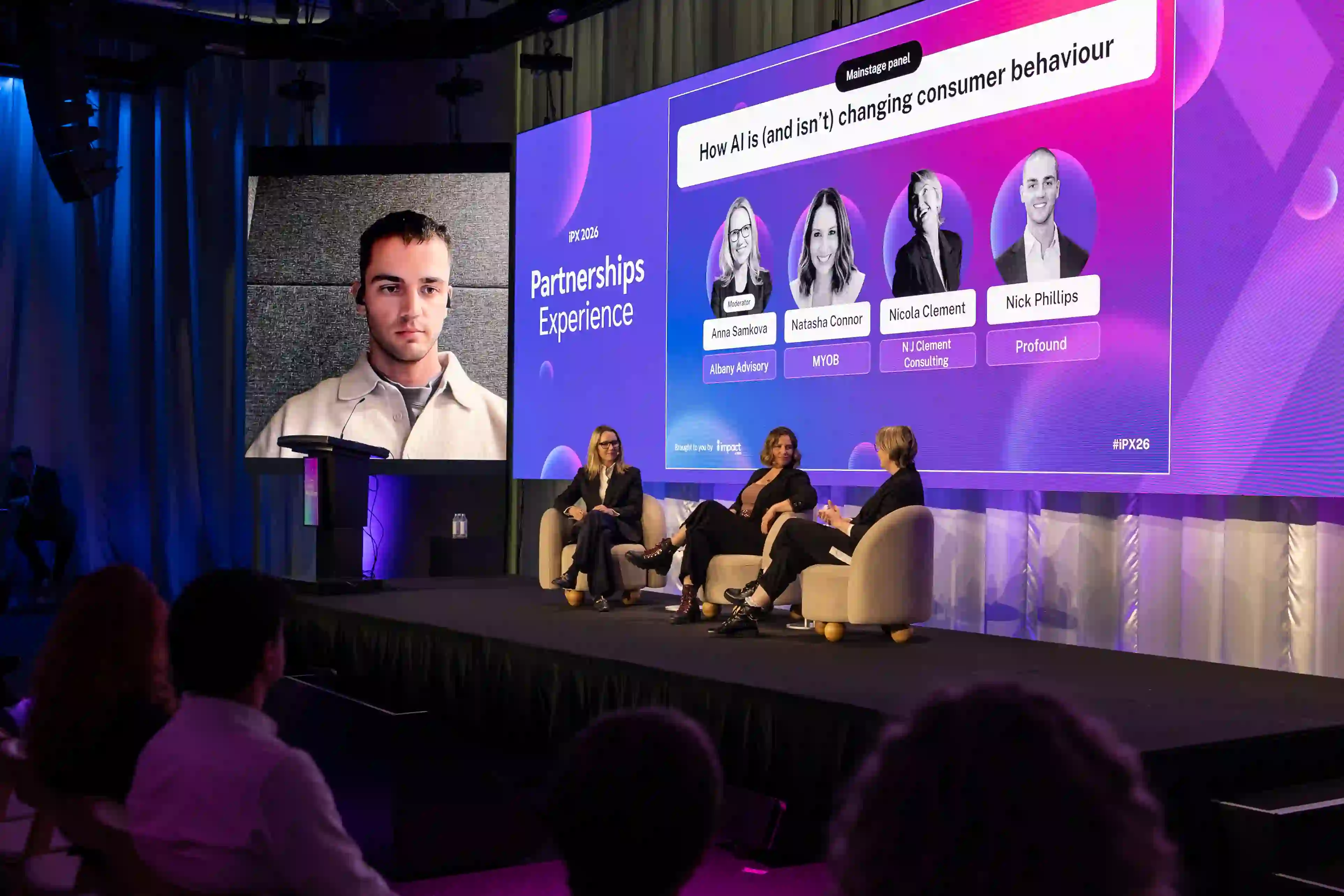
The ‘How AI is (and isn’t) changing consumer behavior’ panel at iPX26 Sydney
The panel that followed, with Nicola Clement, N J Clement Consulting, and Natasha Connor of MYOB, joined virtually by Nick Phillips of Profound, and moderated by Anna Samkova of Albany Advisory, returned to first principles.
Clement’s advice to a client who felt they couldn’t produce enough content to “feed the machine” set the tone. “You’re never going to be mass market,” she told them. “Why do you feel like you need to feed the machine?” When every brand uses the same AI tools trained on the same data, she argued, content trends toward average, and brands that stand out will have a distinct point of view, expressed by people, not generated at scale.
Connor backed this with her own number, close to 60 percent of the budget toward brand building, since performance is becoming more automated. Phillips made the case for daily monitoring over a one-off check.

“These models are probabilistic. You can ask the same question twice and get a very different answer.”
– Nick Phillips, Profound
The panel closed on a line that echoed all day. Brands need to be discoverable by agents, but credible to humans.
Creators Take the Wheel
Session: Creators Shaping Brand Discovery: Shifting from Attention to Action
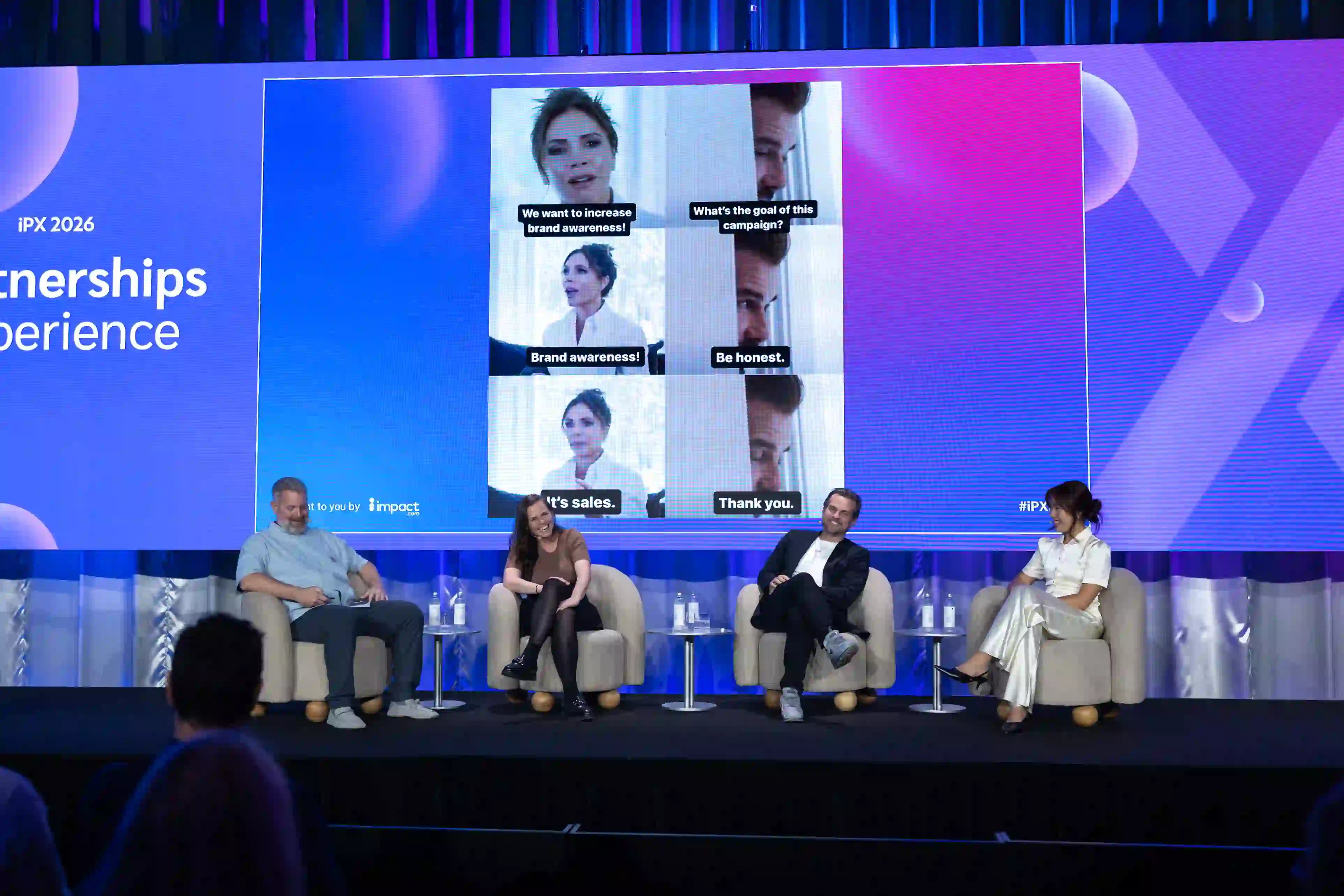
The ‘Creators Shaping Brand Discovery’ panel iPX26 Sydney
Moderated by impact.com’s Senior Director of Creator Consulting Jeff Melton, with Diana Vidovic of Envato, Patrick Whitnall of AIMCO, and creator Vanessa Li of Creator Atelier, the panel worked through what “performance creator marketing” actually means. Vidovic’s definition was the cleanest, working with creators against measurable outcomes, sales, sign-ups, or engagement, rather than paying for reach alone.
Whitnall cited joint AiMCO and Marketing Association of Australia research, 84 percent of member brands are now investing in the space, and 77 percent expect that to double within two years. Li distinguished between two kinds of creator, the performance-focused one who thinks like a salesperson, and the cinematic one who runs a production agency at a fraction of the cost.

“Not every impression is created equal. One influencer impression weighs more than your paid ad.”
– Diana Vidovic, Envato
From Channel to Core
Session: From Channel to Core: How Partnership Marketing Became the Growth Engine (Rakuten Advertising, sponsored)
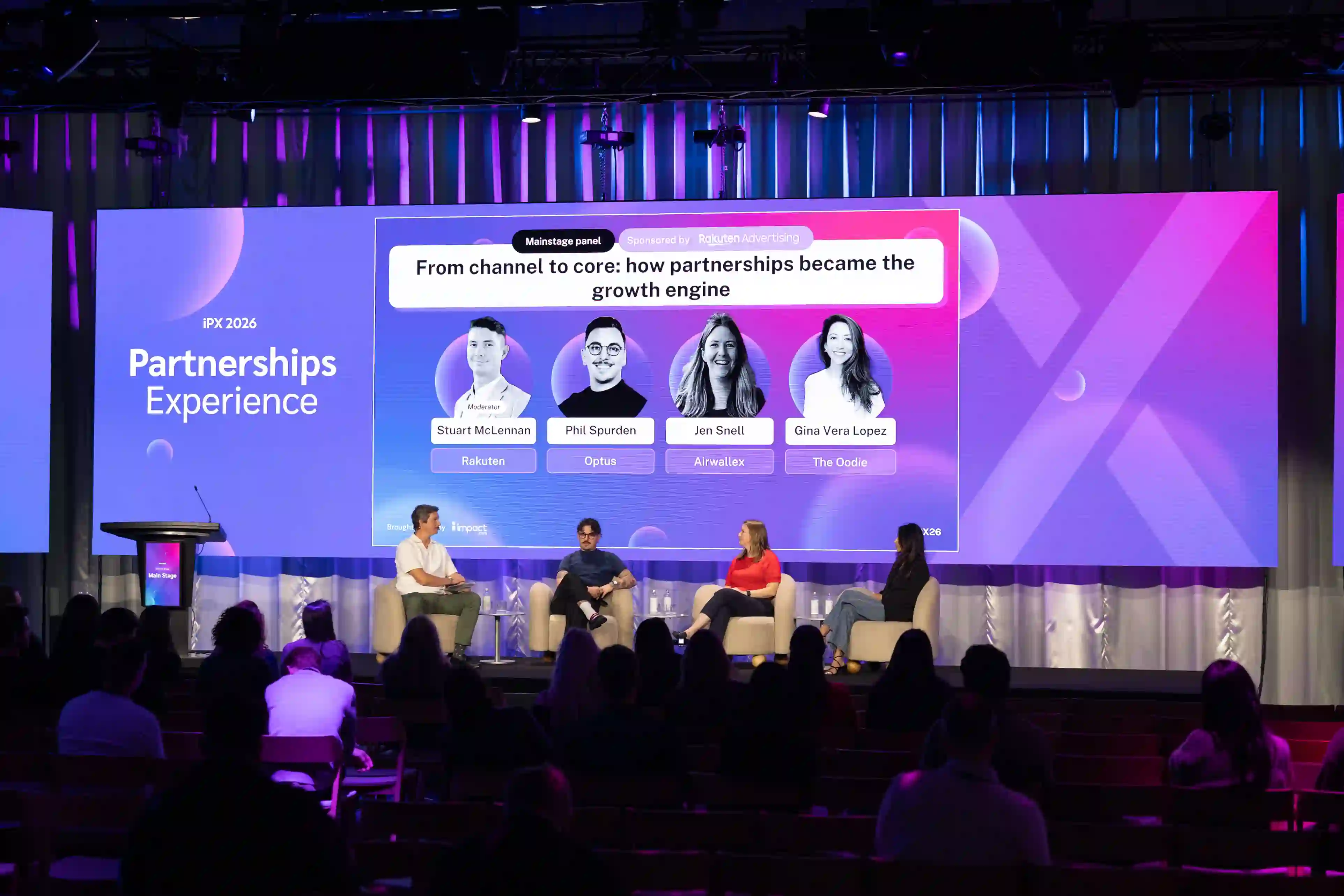
The ‘From Channel to Core’ partnerships panel at iPX26 Sydney
Moderated by Stuart McLennan, SVP APAC at Rakuten Advertising, with Phil Spurden of Optus, Gina Vera Lopez of The Oodie, and Jen Snell of Airwallex, this panel made the case that partnership marketing has stopped being a bolt-on channel and has become core infrastructure.
Vera Lopez gave the clearest picture of what that shift looks like in practice. At The Oodie, affiliates have moved from a purely conversion channel into a source of trust, discovery, and product education, credibility built through relationships like the one with Good Housekeeping, whose Sleep Awards recognized The Oodie’s Cooling Blanket.

“We’re seeing affiliates less as a last-click channel and more as part of the broader advocacy, education, and brand ecosystem.”
– Gina Vera Lopez, The Oodie
The Oodie has also moved beyond last-click ROAS to track AI visibility and search volume, work that now sits with the affiliate team, and found voucher partners contributing alongside content ones. Vera Lopez’s team uses Claude to analyse which partners drive the most new customers and shifts investment accordingly.
Spurden argued partnerships need to make sense to the CFO as well as the CMO, with a long-term view of the audience rather than a channel-by-channel pitch. Snell pointed to Airwallex’s own programme as proof that creator partnerships work beyond D2C, too.
Vera Lopez’s closing was a call to action that the partnership function needs the resourcing, cross-functional support, and test budgets of a proper growth channel, not a hustle run by one person on the side.
What Brands Owe Their Publishers
Session: The new partnerships playbook
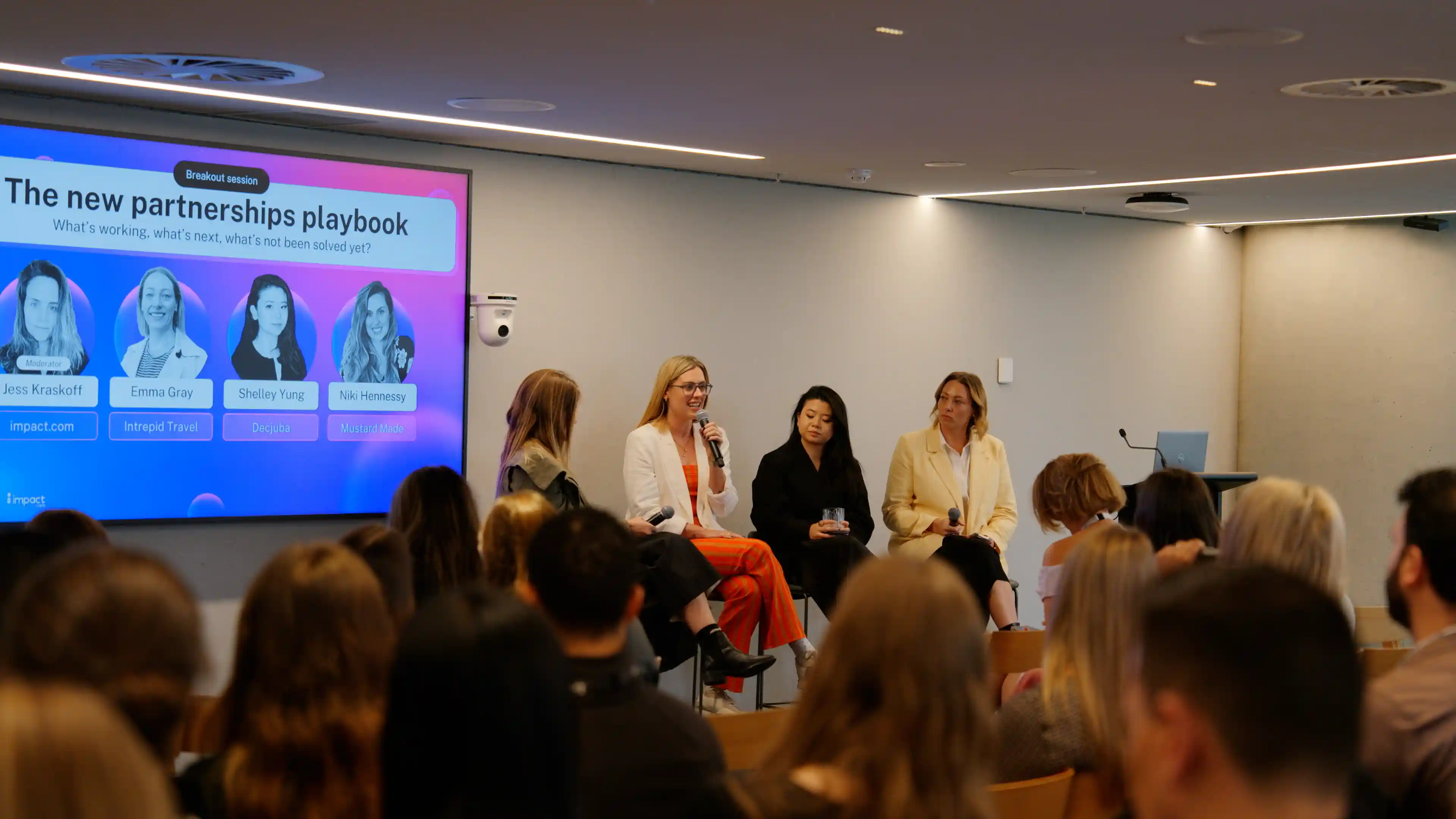
‘The new partnerships playbook: what’s working, what’s next, what’s not been solved yet?’ panel at iPX Sydney
Shelley Yung, performance marketing manager at Decjuba, described building a full funnel affiliate program from scratch, resisting the pull to measure every partner against the nearest sale. A denim campaign built around creator and LTK content, rather than a discount code, drove sales up 70 percent year on year, a result last click measurement alone wouldn’t have shown.

“If we measure everyone on bookings, we naturally favor those driving demand closer to the point of purchase.”
– Emma Gray, Intrepid Travel
Emma Gray of Intrepid Travel argued for matching measurement to how long a customer takes to decide, arguing publishers and creators who inspire a future traveler deserve credit long before they’re ready to book.
Niki Hennessy of Mustard Made gave the sharpest example of brand discipline over reach. Her team turned down a creator with more than 20 million followers offering free product alone, because the partnership wasn’t brand safe, a call credited to running the programme out of PR rather than performance. She also flagged that Mustard Made’s long-term creators and niche publishers now appear most often in AI-generated citations.
Retail Media Grows Up
Session: Beyond D2C: Expanding Commerce Partnerships to Retail Media
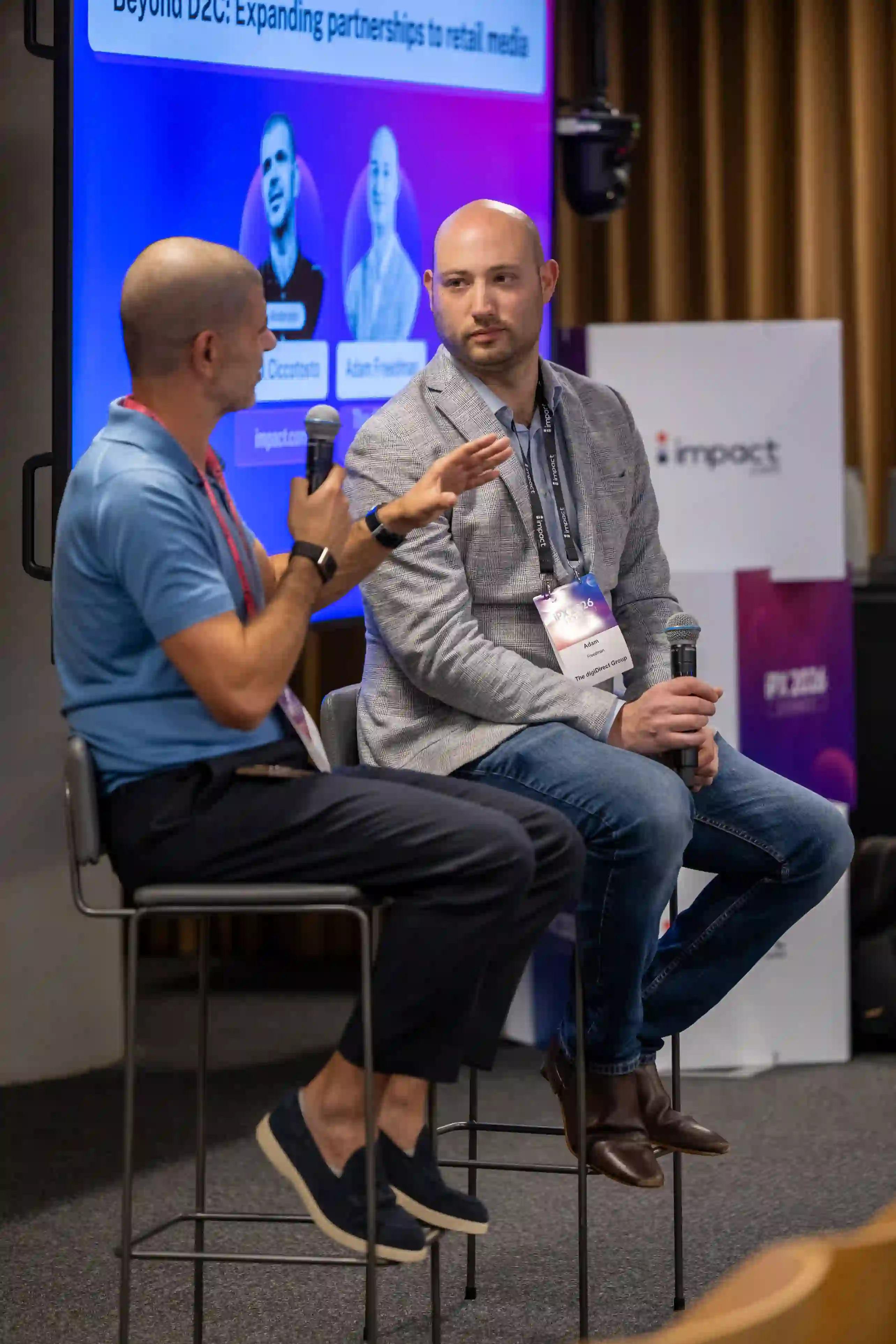
The ‘Expanding Commerce Partnerships to Retail Media’ panel at iPX Sydney
Max Ciccotosto, Chief Product Officer at impact.com, was joined by Adam Freedman, Head of Brand, Loyalty and Communications at the digiDirect Group, home to Booktopia and Angus and Robertson, to discuss retail media beyond search ads.
Freedman was candid that Australia is still catching up to the UK and US, with only a handful of retailers running mature programs. His fix for the internal politics that usually stall retail media, brand, merchandising, and performance teams pulling in different ways, was removing bureaucracy and agreeing on what success looks like before a campaign starts.

“Stop leading with impressions. Start sending the data that shows who was reached.”
– Adam Freedman, Head of Brand, Loyalty and Communications, digiDirect Group
Challenger Brands Find Their Edge
Session: How Challenger Brands Use Partnerships to Scale (The Thoughtful Agency, sponsored)
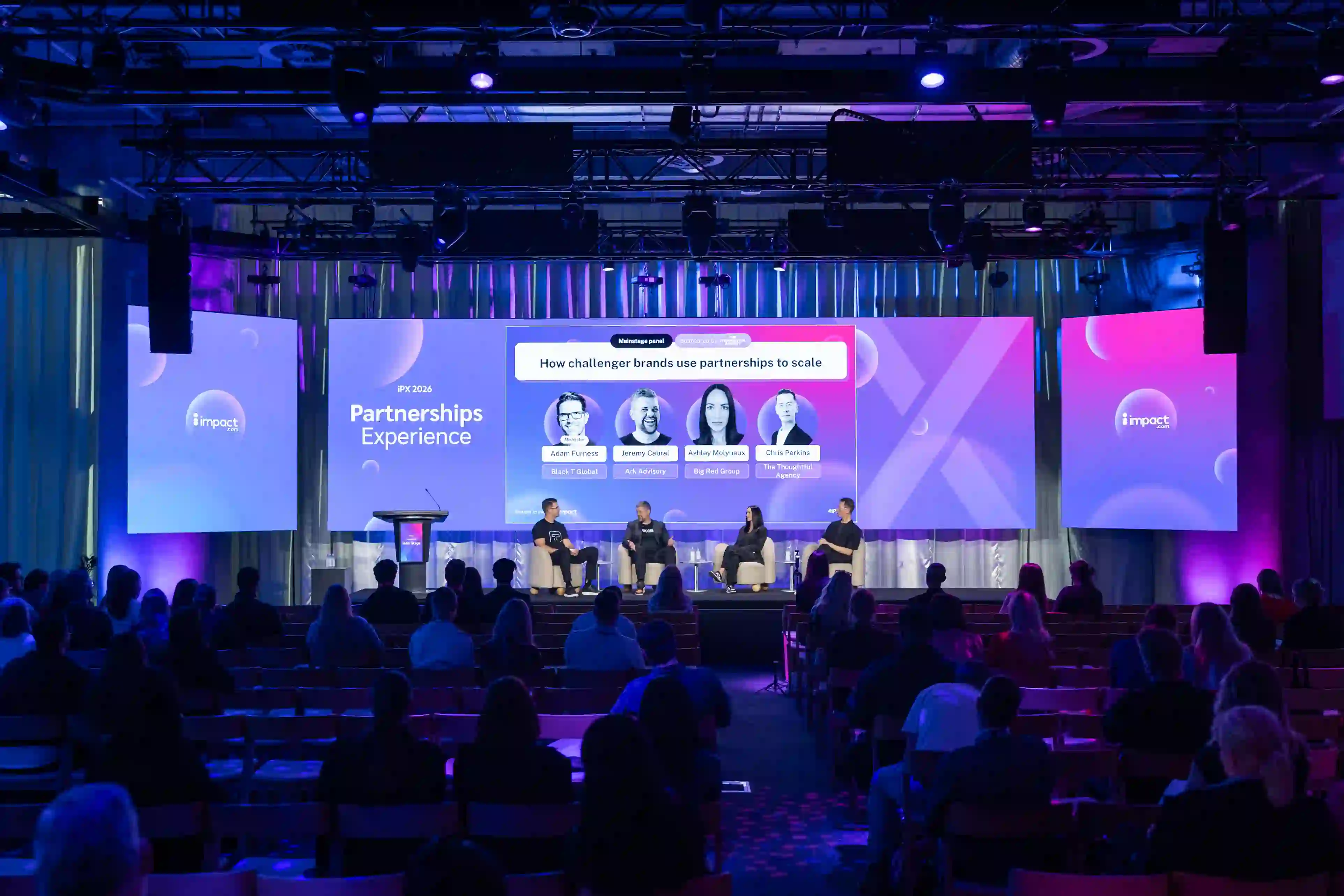
The ‘How Challenger Brands Use Partnerships to Scale’ panel at iPX Sydney
The final theme came from a session on how challenger brands compete with partnerships rather than media spend. Jeremy Cabral, founder of Ark Advisory and co-founder of Finder, told the story of a solo, non-technical founder who built a car insurance comparison site, launched it on Reddit, and generated 4,000 quotes in 72 hours without spending a dollar on paid media, a reminder that brands have a 12 to 18 month window to build the evidence that gets them chosen by AI agents before that becomes how most purchases happen.
Ashley Molyneux of Big Red Group, parent company of RedBalloon and Adrenaline, offered the counterpoint that the first move for most brands isn’t a bigger budget but auditing what they’re already spending. Chris Perkins of The Thoughtful Agency closed with the sobering advice to question everything a partner, publisher, or network tells you, since an industry changing this fast has little settled truth left.

“Question everything a partner, publisher or network tells you.”
– Chris Perkins, Affiliate & Partnerships Director, The Thoughtful Agency
The Future of Discovery Is Still Human
Session: Keynote – The Human Core of AI: Why Connection and Judgment Are the Future of Partnerships
The day came to a close with a keynote from psychologist and business leader Kate Andison. Her talk on ‘The Human Core of AI’ explored how AI is rewiring the way we focus, decide, and collaborate, and what cognitive science tells us about turning that pressure into peak performance.
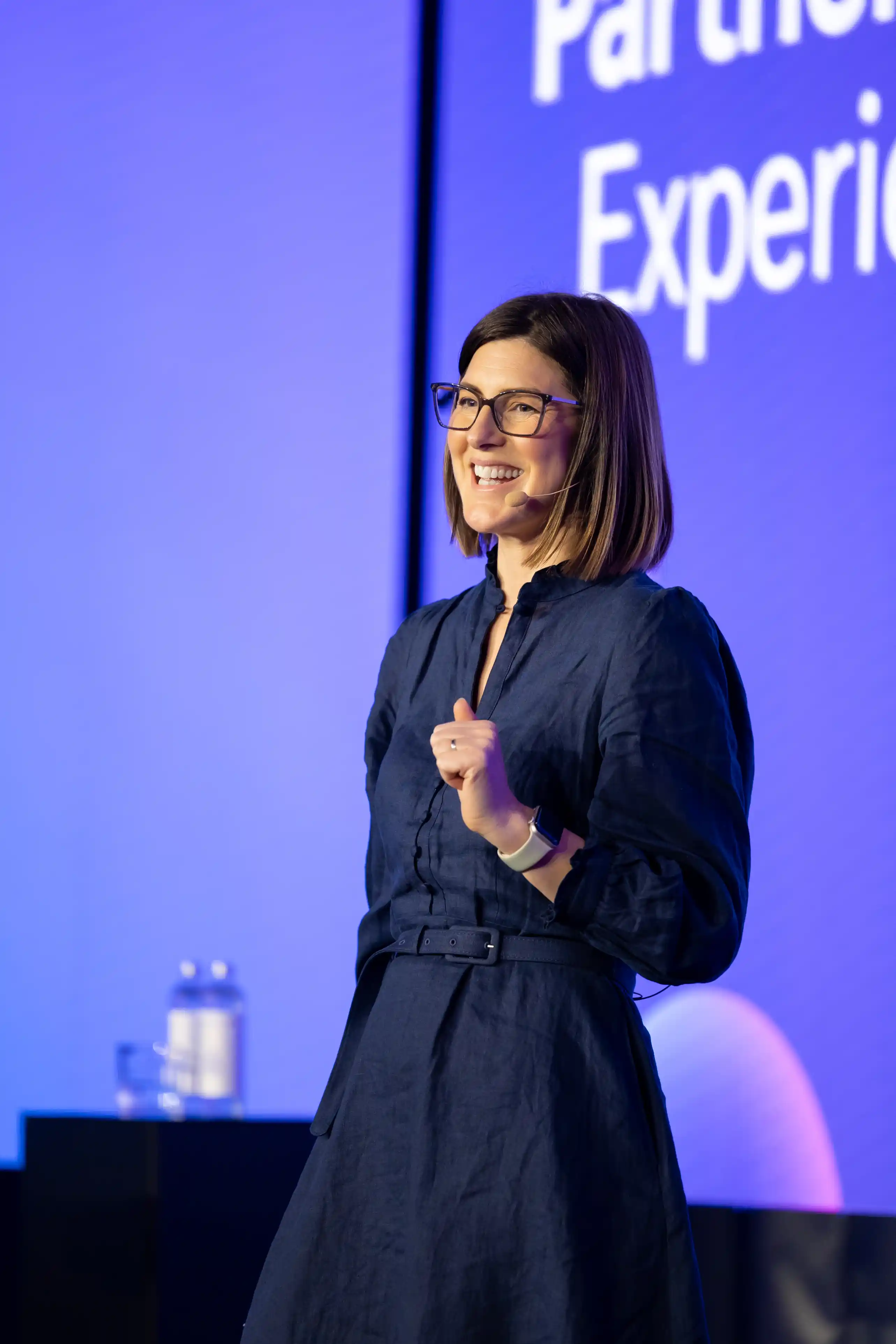
Kate Andison’s closing keynote, The Human Core of AI, at iPX26 Sydney
It was a fitting end to a fantastic day. Every session, in its own way, pointed to the same dynamic: the tools for reaching a customer keep getting more automated and further from any one brand’s control, yet the trust that gets a brand recommended is still built by people, through content, community, and partnership.
For all the talk of AI, iPX26 was a good reminder that ours is still a very human industry.
And check out our event photos as proof of that!