

Anyone running a partnership program today already knows that a single task can turn into a full-time job in its own right.
Between structuring fair commission terms, proving the channel’s value to leadership, and keeping reporting straight across every partner type you manage, it’s easy to feel like you’re one person doing the job of ten.
Whether you’re scaling an established affiliate program or trying to bring creators, referral partners, and B2B relationships into the same system, without the right platform behind you, you’ve probably run into:
- Wanting to launch a creator or influencer program without waiting on someone else’s roadmap
- Relying on last-click attribution that can’t show what’s actually incremental versus revenue you’d have gotten anyway
- Managing a growing list of partner types across tools that don’t talk to each other
- Watching commission costs climb as a percentage of your own growth, instead of getting more efficient as you scale
The best partnership management platform solves all of this: one system to manage every partner type, commission logic that reflects what a partner is actually worth, and real-time visibility into what’s working—without a dashboard that only one team member can read
Below are the CJ (formerly Commission Junction) alternatives worth knowing about, so you can find the platform that actually fits where your program is headed next.
| Platform | Model | Best for | What makes it distinct |
|---|---|---|---|
| impact.com | Unified partnership platform | Programs running affiliate, creator, referral, and B2B partnerships together | One system for every partner type, with event-level commissioning and real-time attribution |
| Awin | Affiliate network | Retail brands wanting an established network, particularly in the UK/EU | Deep reach in voucher, discount-code, and publisher/press partnerships |
| Partnerize | Enterprise partnership automation platform | Large, high-volume programs at multi-region scale | Full-suite tooling built for large enterprise partner operations |
| PartnerStack | B2B SaaS partner relationship management platform | SaaS companies running channel, co-sell, and referral programs | Sales-led workflows like co-selling and deal registration, with hands-on onboarding |
| Levanta | Amazon-first affiliate and creator platform | Ecommerce brands centered on Amazon, Walmart, or Shopify | Hands-on CSM support and creator marketplace at a lower upfront cost for smaller Amazon sellers |
| Everflow | Technical affiliate tracking platform | Performance marketers who already handle partner recruitment themselves | Native server-to-server integrations and precise tracking, without a full partnership suite |
1. impact.com

impact.com is a partnership management platform built to run affiliate, creator, referral, and B2B partnerships from one system.
Rather than a network you plug into, it’s software your team operates directly—so your partner data, commission logic, and reporting all live in one place instead of scattered across a marketplace and a handful of side tools.
Ultimately, impact.com makes it possible to run and scale every kind of partnership your program needs, without adding a new vendor every time you want to try something beyond classic affiliate marketing.
Key feature #1: Unified management for affiliate, creator, referral, and B2B partnerships in one platform
Many partnership platforms are built primarily around a single partner type—most often affiliates—leaving you to bolt on separate tools the moment you want to run a creator program or a customer referral initiative. This kind of platform fragmentation is often what stalls enterprise partnership programs. impact.com runs all of them through the same contracting, tracking, and payment engine.
Imagine you’re a partnerships manager at a retail brand who’s spent two years building a solid affiliate program, and now leadership wants to launch a creator storefront initiative on top of it. Instead of evaluating a second platform and reconciling two sets of reporting, you build the creator program within the system you already use, using the same partner records and the same source of truth for performance.
The result: your partner mix can grow in whatever direction actually drives revenue, without your tech stack growing right alongside it.

Key feature #2: Dynamic commissioning that flexes by SKU, event, region, and customer lifecycle stage
Flat, one-size-fits-all commission rates treat every conversion the same, whether it’s a high-margin repeat customer or a heavily discounted one-time sale. impact.com’s contract engine lets you have a more dynamic commission strategy. You can set different rates by product margin, customer status, region, or a specific qualifying event, all automatically enforced.
Say you’re running a subscription business where a first-time customer is worth far more to you long-term than someone who’s already churned twice. With event-level commissioning, you pay your partners in a way that actually reflects that, rewarding the behavior you want more of rather than paying the same rate regardless of the outcome.
impact.com can custom contract terms tailor partner commissions by product, region, customer status, and qualifying event—rewarding the outcomes that matter.
Key feature #3: Real-time, self-serve reporting with cross-channel attribution.
Reporting that requires a specialist to pull and interpret data slows everyone down and buries the answer to the one question that actually matters: which partners are driving revenue you wouldn’t have gotten otherwise. impact.com’s Data Lab and Optimize Suite provide real-time, self-serve reporting that automatically deduplicates partner conversions against paid media.
This works for a lean marketing team where nobody has time to become the “reporting person.” With self-serve dashboards, anyone on the team can open the platform and get a straight answer, and you can bring finance a number that accounts for incrementality instead of just total clicks.
impact.com allows you to build custom Data Lab views to explore partner performance and get more detailed answers from your reporting, on demand.
Key feature #4: Transparent pricing with reliable global payments.
Pricing that scales as a percentage of your own success creates a strange incentive—the better your program performs, the more it costs to run. impact.com uses a flat, transparent SaaS fee instead, with centralized global payments so partners get paid reliably and on schedule, in whatever currency they need.
Picture a program expanding into new international markets. Instead of navigating a patchwork of currency conversions and unpredictable platform costs that climb with volume, your software spend stays the same while your partner payouts run smoothly everywhere you operate.
2. Awin
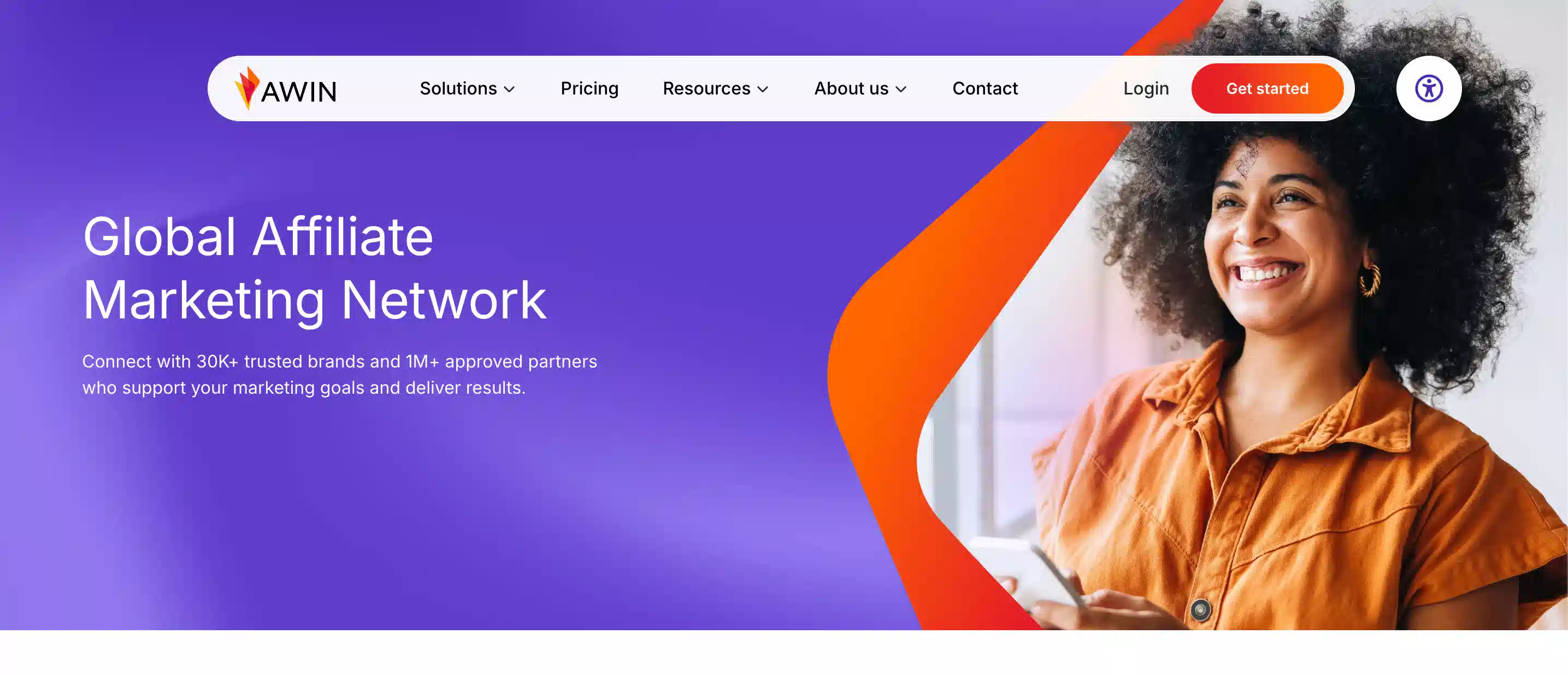
Awin is an established, long-running affiliate network known for stability and deep reach in classic affiliate, voucher/discount-code, and publisher or press partnerships, particularly across the UK and European market.
Key features:
- Large network of voucher, discount-code, and content/press publishers
- Long-standing reputation for reliable, low-disruption affiliate revenue
- Affiliate-network model built around classic affiliate and discount-driven partnerships
3. Partnerize
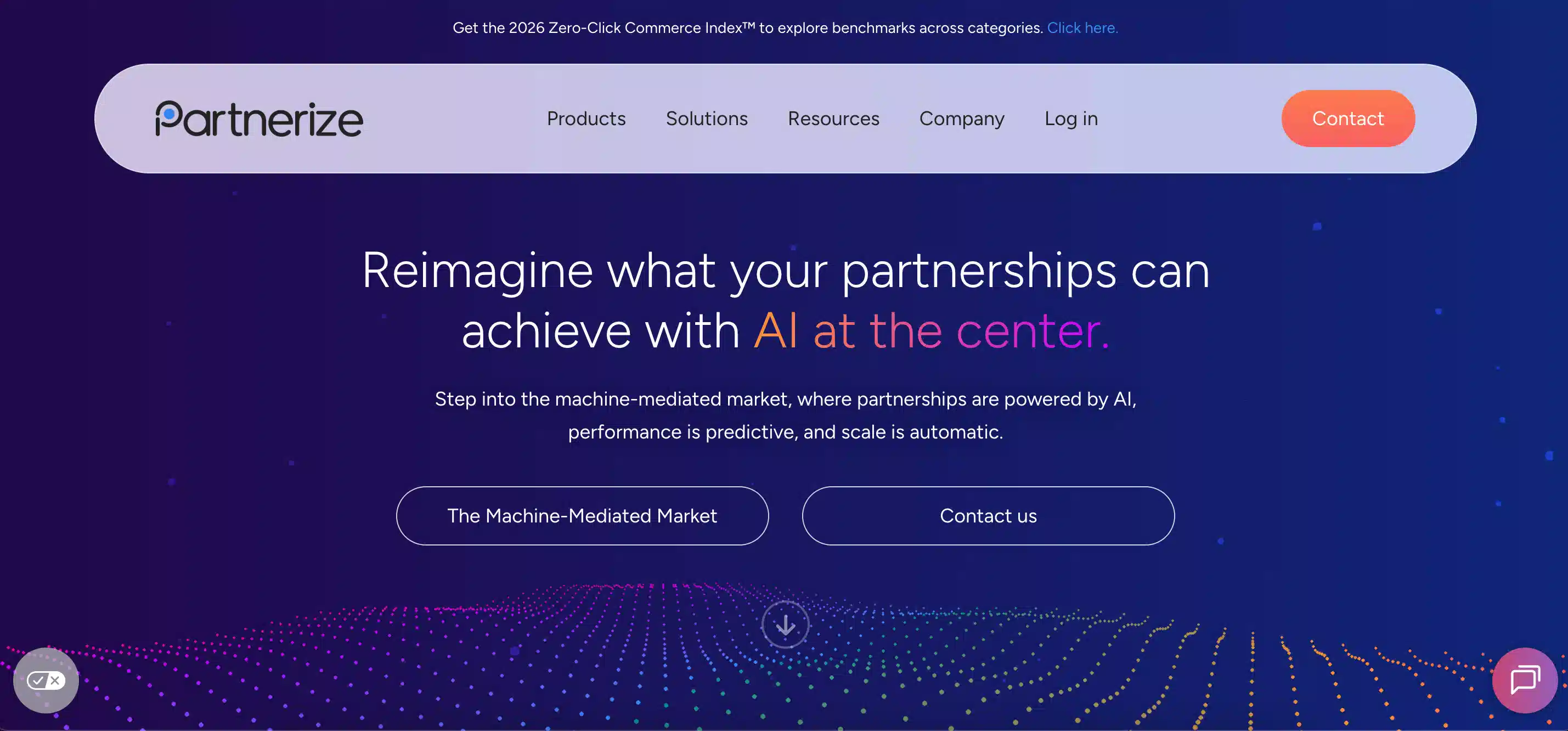
Partnerize is an enterprise partnership automation platform used by large, established brands running high-volume affiliate programs.
Key features:
- Full-suite tooling for partner discovery, recruitment, optimization, and payment
- Rules-based, tiered commissioning
- Optional managed-service support for large, multi-region brands
4. PartnerStack
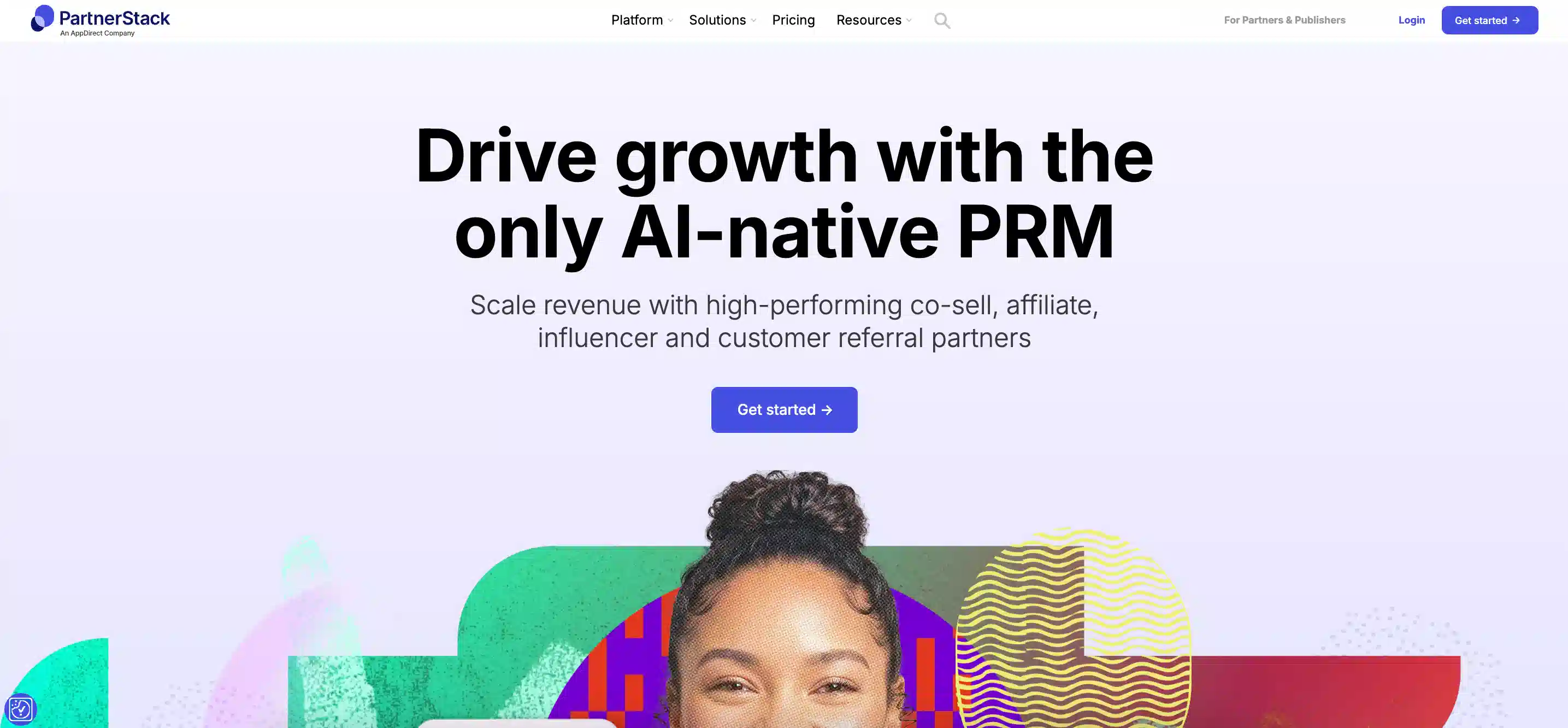
PartnerStack is a partner relationship management platform built for B2B SaaS companies, with a strong focus on sales-led motions. Its customer success model is frequently described as hands-on, with prescriptive onboarding for teams standing up a channel program.
Key features:
- Marketplace of 130,000+ active B2B partners across SaaS programs
- Built-in co-sell, deal registration, and reseller workflows
- Hands-on onboarding and customer success support
5. Levanta
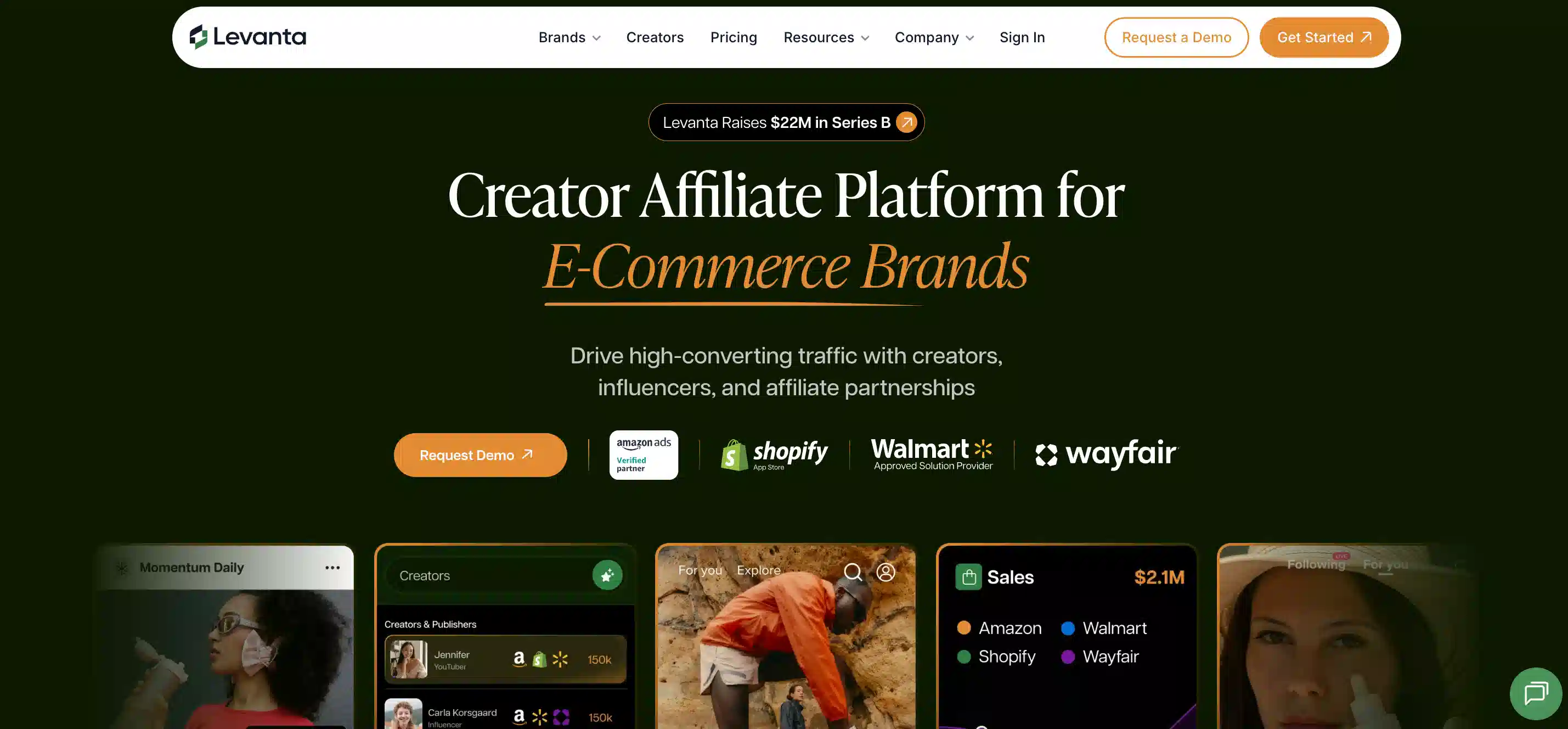
Levanta is an Amazon-first affiliate and creator platform, with expanded integrations into Walmart and Shopify. It’s often evaluated as a point-solution option for ecommerce brands running Amazon-centric partner programs.
Key features:
- Amazon-first integrations, with expanded support for Walmart and Shopify
- Hands-on CSM support and creator marketplace with AI-assisted discovery
- Product seeding program with fulfillment handled through Amazon
6. Everflow
Everflow is a technical, tracking-first affiliate platform built around high-volume click and conversion data, with native server-to-server integrations and precise handling of tracking parameters. It’s best suited for brands with processes already in place for partner recruitment and relationship management.
Key features:
- Native server-to-server integrations and precise click/parameter tracking
- Streamlined, tracking-focused platform rather than a full partner discovery and lifecycle suite
- Real-time conversion tracking and reporting
Finding the right fit for your program
Every platform above is genuinely good at what it’s built for. The question is which one matches the program you want to build. A marketplace-native ecommerce brand has different needs than a B2B SaaS company running referral programs, and both differ from a multi-partner program trying to unify affiliate, creator, and B2B relationships in one place.
If that last one sounds like where your program is headed, impact.com is built specifically for it—one platform, every partner type, and reporting your whole team can actually use.
FAQ
The key features to look for in a CJ alternative include support for every partner type a program needs—affiliate, creator, referral, or B2B—in one platform, along with commission logic flexible enough to pay differently by product, region, or customer type. Real-time, self-serve reporting and transparent, predictable pricing are also worth prioritizing as a program scales.
Among CJ alternatives, impact.com is software run directly, unifying affiliate, creator, referral, and B2B partnerships with commission logic and reporting the brand controls. Awin operates as a network instead, connecting advertisers to an existing pool of publishers with the network sitting between the two. The right choice depends on whether a team wants direct ownership over its entire partner ecosystem or access to a large existing publisher pool.
Switching to a CJ alternative can improve how a team manages and scales partnerships, particularly when the current setup requires separate tools for different partner types or reporting that only one person can interpret. A unified platform with flexible commissioning and self-serve reporting typically makes it easier to diversify a partner mix and prove the channel’s value as the program grows.